
Eggplant lace bug
Urentius hystricellus
Description
How to identify
The eggplant lace bug (Urentius hystricellus) is a small insect belonging to the family Tingidae within the order Hemiptera.
These insects are named for the distinctive, delicate, lacy appearance of their wings and pronotum, which features a complex reticulated pattern.
Adults are tiny, typically measuring between 3 and 4 mm in length, and their coloration usually ranges from pale yellowish-brown to dark brown.
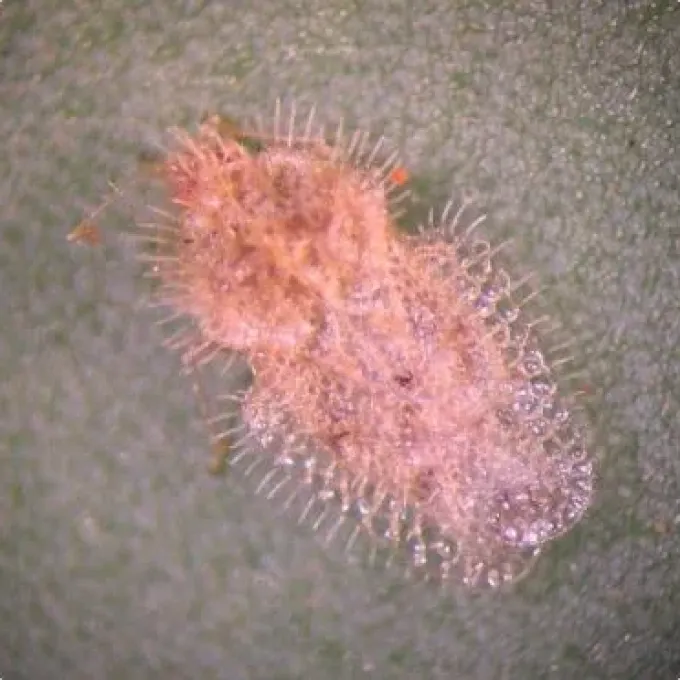
Nymphs are wingless and often covered with small spines, making them look significantly different from adults while occupying the same microhabitats.
They are cryptic insects, preferring to live on the undersides of leaves, which allows them to remain unnoticed until the infestation reaches a significant level.
What it damages
This pest primarily targets plants in the Solanaceae family, with eggplant being the most common and severely affected host in many regions.
Aside from cultivated crops, the bug thrives on various wild solanaceous weeds, which serve as crucial reservoirs for the pest throughout the growing season.
Feeding is performed by piercing the leaf tissue with mouthparts and extracting cell sap, which disrupts the photosynthetic ability of the plant.
Heavy infestations lead to widespread chlorosis and necrosis of leaf tissue, causing the leaves to wither prematurely and fall off the stem.
The resulting damage reduces the plant's overall vigor and yield, significantly impacting the quality and size of the harvested vegetable fruits.
When it appears
The eggplant lace bug is highly sensitive to climate conditions, thriving particularly in warm, dry weather that accelerates its life cycle.
In temperate zones, they overwinter as adults in protected areas, such as leaf litter, crop debris, or cracks in the soil surface.
As spring temperatures rise, the overwintered adults emerge and begin moving onto emerging host plants to feed and lay eggs.
Multiple generations can occur throughout the summer months, with the population density peaking during the hottest and driest parts of the season.
As the weather begins to cool, the insects prepare for diapause, seeking out safe overwintering sites to survive the dormant period until the next spring.
Signs of infestation
The most immediate sign of an infestation is the appearance of tiny white or pale yellow spots on the upper leaf surface, commonly referred to as stippling.
Turning the leaf over reveals the presence of small black or dark-colored dots, which are the excrement of the lace bugs, alongside shed nymphal skins.
As the feeding damage progresses, the entire leaf may turn yellow and eventually develop brown, necrotic patches as the plant tissue dies.
Severe infestations often cause the leaves to curl, dry out, and drop, resulting in significant defoliation of the infested plants by mid-summer.
- Stippling and chlorotic spots on the upper leaf surface.
- Accumulation of black fecal matter on the undersides of leaves.
- Visible presence of adult lace bugs and nymphs in clusters.
Control measures
Sanitation is a critical control measure; removing all crop residues and weeding the area thoroughly helps destroy overwintering sites for the pest.
Crop rotation is highly recommended to disrupt the life cycle of the lace bug and prevent the buildup of local populations in a single field.
When monitoring indicates that the population has reached economic threshold levels, application of systemic insecticides is often necessary for effective control.
Biological control agents, such as predatory bugs and lacewings, can play a role in suppressing the lace bug population if pesticide use is minimized.
Consistent field scouting and the use of yellow sticky traps can help track the migration and activity of the pests, allowing for targeted intervention.
Taxonomy
- Latin name
- Urentius hystricellus
- Order
- Hemiptera (bugs, aphids, leafhoppers)
- Family
- Tingidae
- EPPO code
- URENHY
Discussion
No discussions yet — be the first.