
Urentius
Urentius
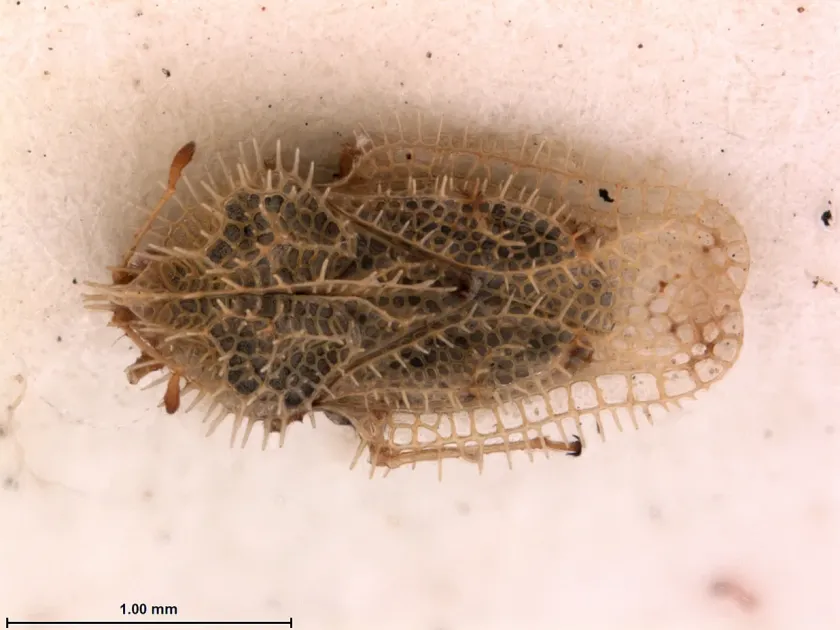
Description
How to identify
Urentius is a genus of insects belonging to the lace bug family (Tingidae) within the order Hemiptera. These small insects are named for the intricate, reticulated, lace-like appearance of their pronotum and hemelytra.
Adult insects are typically 3 to 4 millimeters long. Their bodies are flattened, and their color ranges from pale brown to yellowish, providing excellent camouflage against the surfaces of leaves where they feed.
Nymphs resemble smaller versions of the adults but lack fully developed wings. Often, they possess small spines on their bodies, which is a characteristic feature for many species within this genus.
These pests are cryptic and sedentary, preferring to stay on the underside of leaves. Due to their minute size and camouflaging coloration, they often escape detection until the infestation reaches a significant level.
Identification to the species level generally requires microscopic examination of the head structure and the shape of the pronotal projections, as these morphological traits are specific to the Urentius genus.
What it damages
Urentius species primarily target plants in the mallow family (Malvaceae). In agricultural settings, they are known to cause notable damage to okra crops and various ornamental mallow plants.
As piercing-sucking insects, they feed on plant sap. By inserting their mouthparts into the leaf tissue, they extract cell contents, which disrupts photosynthesis and leads to the gradual collapse of leaf parenchyma.
In high-density populations, the damage can be severe, causing the degradation of vegetative mass. This significantly affects the plant's metabolic processes and reduces overall health and yield potential.
Prolonged feeding results in chlorosis and necrotic patches on the leaves. Eventually, severely affected foliage may wither, curl, and drop off, which can lead to stunted growth or total plant failure in susceptible varieties.
Beyond physical tissue damage, Urentius may act as a vector for various plant diseases. During the feeding process, they can transmit phytoplasmas and viruses, potentially spreading infections throughout a crop field.
When it appears
The life cycle of Urentius is highly dependent on ambient temperature. Adults typically overwinter in plant debris, under fallen leaves, or within the top layer of soil, emerging during the early spring.
Activity begins as soon as temperatures stabilize above 18-20 degrees Celsius. In the spring, the insects migrate from their wintering sites to colonize host plants and initiate the first generation.
Multiple generations can occur throughout the growing season. The peak of infestation is usually observed during the hottest summer months when the development rate is accelerated by high temperatures.
Hot and dry weather conditions are particularly favorable for population growth. Under such circumstances, the development time from egg to adult is shortened, leading to rapid population explosions.
As autumn approaches and temperatures drop, the insects begin to seek shelter. They enter a state of diapause, remaining in protected areas until the return of favorable spring conditions.
Signs of infestation
The most prominent sign of a Urentius infestation is the appearance of small, pale, or yellowish stippling on the upper leaf surface. Over time, these spots coalesce, creating a bleached or mottled appearance.
Inspecting the underside of the leaf often reveals the presence of adult insects, nymphs, and small, dark, shiny dots of excrement. You may also find empty nymphal skins (exuviae) left behind after molting.
Severe infestations lead to yellowing, browning, and curling of the leaves. Plants may appear generally sickly, and in extreme cases, partial or total defoliation can occur, drastically weakening the plant.
The aesthetic value of ornamental plants is often compromised early in the infestation process due to the visible stippling. For edible crops, the stress of the infestation leads to reduced fruit size and quality.
While adults are relatively immobile, they can be seen moving slowly when disturbed. If a plant is shaken over a white sheet of paper, the dislodged insects become clearly visible against the light background.
Control measures
Effective management of Urentius requires an integrated approach that combines sanitation, cultural practices, and, when necessary, targeted chemical interventions to suppress populations.
Sanitation is critical; destroying crop residues after harvest is essential to reduce the number of overwintering individuals. Deep plowing can also help expose hidden pests to predators and environmental stresses.
Controlling weed hosts, particularly those in the Malvaceae family, in and around the fields is an important preventive measure. This eliminates reservoir sites that could otherwise harbor the pest.
Chemical control should be implemented based on monitoring and economic thresholds. Systemic insecticides are generally effective because they move into the leaf tissue where the lace bugs feed.
- Apply systemic insecticides or contact sprays as directed by local guidelines.
- Monitor plants weekly, focusing on the undersides of leaves during the peak growing season.
- Encourage natural enemies, such as lady beetles and minute pirate bugs, which feed on lace bug nymphs.
- Ensure adequate irrigation and fertilization to maintain plant vigor and help them recover from feeding damage.
Taxonomy
- Latin name
- Urentius
- Order
- Hemiptera (bugs, aphids, leafhoppers)
- Family
- Tingidae
- EPPO code
- URENSP
Discussion
No discussions yet — be the first.