
Swallow-tailed moth
Urapteryx sambucaria
Description
How to identify
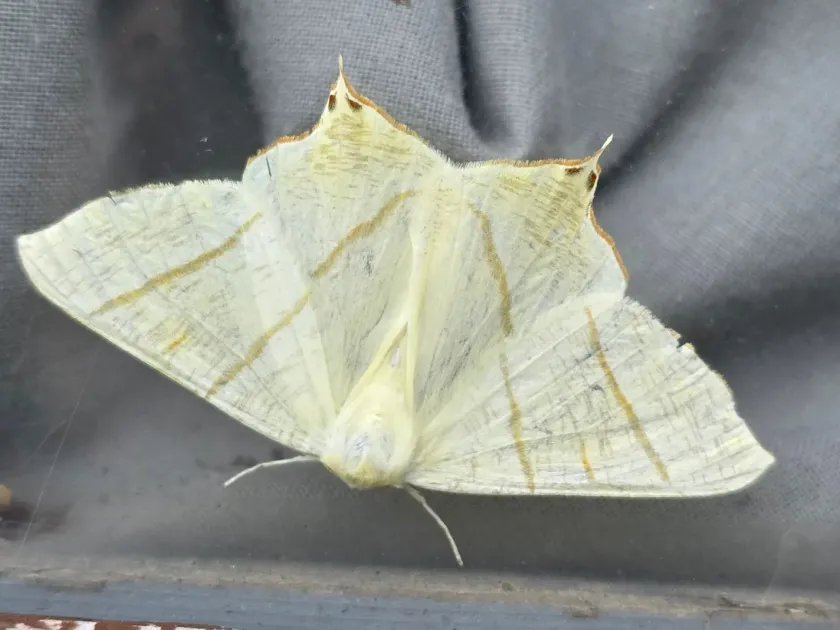
The Swallow-tailed moth (Urapteryx sambucaria) is a prominent species within the Geometridae family, recognizable by its pale yellow wings marked with two distinct dark lines.
The common name comes from the elongated tails on the hindwings, which bear a striking resemblance to some tropical butterfly species but belong to a moth.
Larvae are famous for their mimicry; they look almost exactly like small, woody twigs, making them incredibly difficult to spot during daylight hours.
The caterpillars reach up to 50 mm in length and exhibit the typical "looper" or "inchworm" movement pattern characteristic of the Geometridae family.
Pupation occurs within a loose silk cocoon often spun between leaves or tucked into bark crevices, where the pupa remains protected until the adult moth emerges.
What it damages
These moths are polyphagous, meaning they can thrive on a wide variety of woody host plants, often colonizing gardens and orchards quite rapidly.
The primary damage is caused by larvae feeding on leaves, which can lead to significant defoliation if a colony is left unchecked on a young tree.
Plants such as elder, hawthorn, ivy, and various fruit trees like apple and plum are frequently targeted, showing irregular holes and gnawed edges on leaves.
While mature, healthy trees can usually withstand moderate feeding, young nursery saplings or newly planted shrubs are at risk of severe growth retardation.
Persistent defoliation can weaken the tree's immune system, making it more susceptible to secondary environmental stresses or opportunistic fungal infections.
When it appears
The lifecycle begins with the overwintering of young larvae, which remain attached to host plants in a dormant state throughout the colder months.
As spring temperatures rise, the caterpillars emerge from their winter torpor to begin feeding on fresh, emerging buds and young leaf tissue.
Adult moths are typically on the wing during June and July, with the nocturnal activity peak coinciding with the main breeding and egg-laying period.
A second generation of larvae can appear in late summer, necessitating continued monitoring of the garden's foliage until the cooler autumn weather arrives.
Gardeners should prioritize inspections during the early spring bud-burst and mid-summer to prevent the larval population from reaching critical thresholds.
Signs of infestation
The most common sign is the appearance of gnawed or skeletonized leaves, which often serve as the first visible indicator of a localized infestation.
Closely inspecting twigs is essential; if what appears to be a twig moves when touched, it is almost certainly a Swallow-tailed moth caterpillar.
The presence of spun silk threads binding leaves together often marks the location of a pupa or a hiding spot for the feeding larvae.
Adult moths are often attracted to artificial light sources at night, which can serve as a warning sign that the moths are present and laying eggs nearby.
Small, pale eggs found on the undersides of leaves provide an early warning of a potential larval outbreak before significant leaf damage occurs.
Control measures
Manual removal of caterpillars is a practical control strategy for smaller gardens, especially when done in the evening when larvae are most active.
Pruning out infested branches during winter or early spring helps remove overwintering larvae, effectively reducing the next generation's population.
Biological insecticides containing Bacillus thuringiensis are highly effective and environmentally friendly, targeting larvae without harming non-target beneficial species.
If chemical control is necessary, select horticultural pesticides safe for fruit trees and apply them during the early stages of larval development for best results.
Maintaining a balanced garden ecosystem by encouraging predatory insects and local bird populations helps manage moth numbers naturally throughout the season.
Taxonomy
- Latin name
- Urapteryx sambucaria
- Order
- Lepidoptera (butterflies)
- Family
- Geometridae
- EPPO code
- URAPSA
Discussion
No discussions yet — be the first.