
Urapteryx
Urapteryx
Description
How to identify
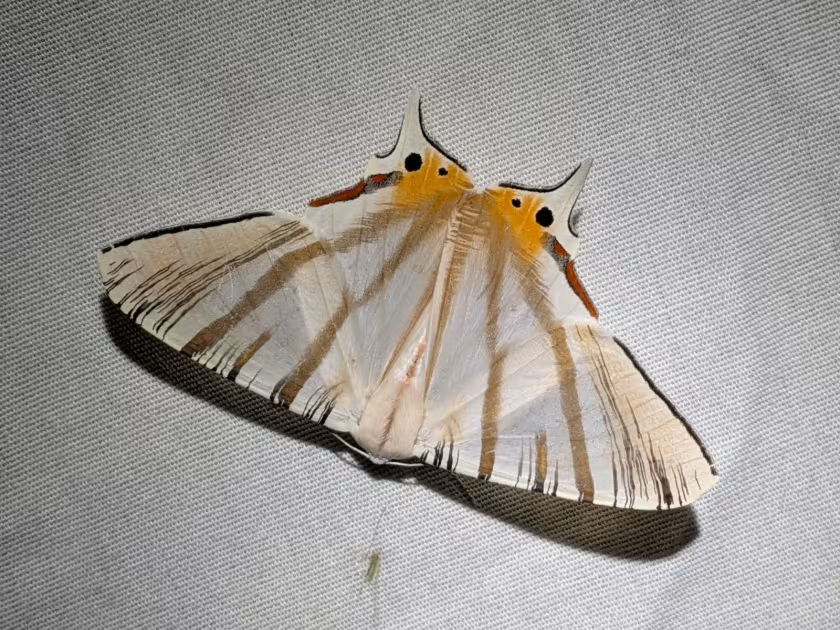
Urapteryx is a genus of moths belonging to the Geometridae family. These insects are easily identifiable by the distinctive tail-like projections on their hindwings, which are a hallmark feature of the genus.
The adult moths have a slender body and wings, typically showing light or whitish colorations with fine, darker patterns that allow them to blend into the bark of trees during the day.
The larvae, known as loopers or inchworms, have a characteristic body structure with few abdominal prolegs, leading to a unique movement pattern where they appear to measure the surface they walk on.
Pupation usually occurs within loose cocoons spun in leaf folds or bark crevices, providing a safe environment for the insect to undergo metamorphosis.
While often found in woodland areas, Urapteryx populations can migrate to cultivated crops, becoming a concern for arborists and gardeners when their numbers surge.
What it damages
Urapteryx caterpillars are polyphagous, meaning they can thrive on a wide variety of deciduous trees and shrubs, making them a generalist pest in many regions.
They are particularly known to damage fruit-bearing trees, such as apples, pears, and stone fruits, by consuming the foliage and reducing the tree's overall vigor.
Beyond fruit trees, they are frequently encountered on ornamental species like linden, birch, and elm, often causing visible damage to the canopy of park trees.
Severe infestations can lead to partial or total defoliation, which hampers photosynthesis and leaves the host plant susceptible to diseases or secondary pests.
Under drought conditions, the loss of leaf mass caused by these larvae can be fatal to younger trees or those already struggling with poor soil conditions.
When it appears
The flight period for adult Urapteryx moths typically occurs during the summer months, specifically peaking in June and July depending on the local climate.
Eggs are deposited by the females on the underside of leaves or within bark fissures, where they remain until the larvae hatch to begin their feeding cycle.
Caterpillars are most active during the height of the summer, feeding voraciously to build up the necessary energy for their transformation into the pupal stage.
Most species in this genus follow a univoltine life cycle, meaning there is typically only one generation per year, though warmer climates may occasionally support a partial second brood.
The insect typically overwinters as a pupa, hiding in protected spots or leaf litter to survive the cold winter temperatures before emerging the following year.
Signs of infestation
The most prominent sign of a Urapteryx infestation is the presence of jagged, irregular feeding patterns on the leaves, which can escalate to extensive defoliation.
- Holes appearing in the leaf surface as young larvae start their initial feeding stages.
- Silk threads hanging from branches, used by the larvae for movement or to escape predators.
- Accumulation of frass (caterpillar droppings) on the leaves or the ground beneath the tree canopy.
- The presence of adult moths with distinctive "tails" resting on tree trunks during daylight hours.
- Reduced growth rates and stunted development of new shoots on heavily affected plants.
Control measures
Managing Urapteryx requires an integrated approach that focuses on early detection and the use of targeted control methods to minimize chemical exposure.
In small gardens, manual removal of caterpillars and monitoring for moth activity during the summer can significantly reduce the potential population for the following year.
For larger infestations, chemical control using approved insecticides is effective, particularly when applied while the larvae are still in their early developmental stages.
Biological control agents, such as formulations containing Bacillus thuringiensis, offer an effective and eco-friendly alternative for managing Geometrid larvae.
Maintaining strong, healthy trees through regular pruning, irrigation, and soil fertilization is key to increasing the plant's natural resistance to caterpillar damage.
Taxonomy
- Latin name
- Urapteryx
- Order
- Lepidoptera (butterflies)
- Family
- Geometridae
- EPPO code
- URAPSP
Discussion
No discussions yet — be the first.