
Ulonemia
Ulonemia
Description
How to identify
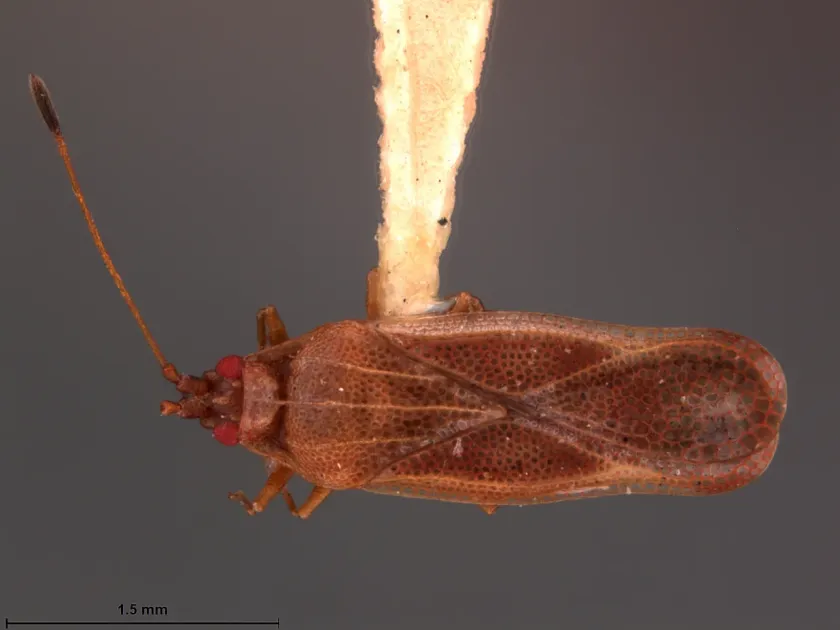
Ulonemia is a genus of insects belonging to the family Tingidae, commonly known as lace bugs. These insects are characterized by their intricate, reticulated wing and pronotal patterns, which resemble fine lace when viewed under magnification.
Adult specimens typically range from 3 to 5 millimeters in length. Their coloration is usually muted, featuring shades of light brown or beige, which provides excellent camouflage against the foliage of their host plants.
The mouthparts are specialized for piercing and sucking, allowing these bugs to extract plant fluids directly from the vascular tissue of leaves. They possess delicate antennae and legs suited for slow, deliberate movement across the leaf surface.
The nymph stage often appears significantly different from the adult, frequently covered in small spines or filaments that serve as a defense mechanism against predatory insects inhabiting the same environment.
Lace bugs are generally non-migratory and sedentary. Once they settle on a suitable plant, they tend to remain there for long periods, leading to localized colonies that can grow in size throughout the growing season.
What it damages
Ulonemia species are often polyphagous, targeting a variety of plant species, particularly those in the Asteraceae family. They are frequently found on weeds in unmanaged areas before migrating to cultivated vegetables or ornamental plants.
The primary damage is caused by the extraction of sap from the leaf cells. This feeding process results in the removal of chlorophyll, which causes visible chlorosis and stresses the plant’s overall physiological health.
Heavy infestations can lead to stunted growth, reduced flowering, and a significant decrease in the quality and yield of crops. Plants become more vulnerable to secondary infections due to the weakened state of the tissue.
The presence of fecal spots, which are dark and sticky, further degrades the leaf surface. This buildup can promote the growth of sooty mold, which blocks sunlight and inhibits the process of photosynthesis.
Because the damage is often cumulative, many gardeners do not notice the infestation until the yellowing or spotting becomes severe, which makes late-stage intervention more challenging.
When it appears
The lifecycle of Ulonemia is heavily dependent on environmental temperatures. Adults typically overwinter in protected sites such as leaf litter, plant debris, or crevices within tree bark, surviving the colder months in a state of diapause.
As spring temperatures rise, the adults emerge to seek out host plants. The timing of their emergence is usually synchronized with the initial growth of vegetation, providing them with an immediate food source.
Summer marks the period of highest activity and reproduction. Optimal temperatures accelerate the life cycle, allowing for multiple generations to occur in a single season, leading to rapid population spikes.
The number of generations depends on the duration of the warm season. In many regions, the population persists throughout the entire summer, placing continuous pressure on host plants until the onset of autumn.
As autumn approaches and temperatures drop, the bugs prepare for the winter months by seeking out suitable hibernation sites, thus completing their annual seasonal cycle.
Signs of infestation
The earliest symptom of infestation is the appearance of light, yellowish stippling on the upper side of the leaves. These spots gradually expand and coalesce, eventually causing the entire leaf to lose its color.
If you inspect the underside of the leaves, you will likely find the adults and nymphs, alongside characteristic dark, sticky excrement spots that appear as small black dots on the leaf tissue.
Another reliable sign of lace bug presence is the accumulation of cast-off nymphal skins (exuviae) that remain adhered to the underside of the leaves after the nymphs molt.
Severely affected foliage becomes pale and brittle, often curling at the edges and dropping prematurely. The overall aesthetic of the plant suffers significantly as the infestation progresses.
- Stippled or mottled yellow spots on leaves.
- Dark fecal spots on the underside of foliage.
- Visible presence of lace-winged adults and spiny nymphs.
- Premature yellowing and leaf drop.
Control measures
Effective control begins with good sanitation. Removing plant debris, fallen leaves, and weeds from the garden in autumn significantly reduces the number of overwintering sites, lowering the initial population in the following spring.
For minor infestations, physical control can be effective. This involves regularly washing the foliage with a strong stream of water to knock the bugs off, or hand-removing the most heavily infested leaves.
Biological control, such as using horticultural oils or insecticidal soaps, can be very effective against nymphs while posing a lower risk to beneficial insects compared to broad-spectrum chemical treatments.
Systemic insecticides should only be used as a last resort in cases of severe infestation where other methods have failed. Always adhere strictly to label instructions regarding safety and pre-harvest intervals.
Maintaining strong, healthy plants through appropriate fertilization, watering, and soil management is essential. Robust plants are more resilient to insect feeding and can recover more quickly from potential damage.
Taxonomy
- Latin name
- Ulonemia
- Order
- Hemiptera (bugs, aphids, leafhoppers)
- Family
- Tingidae
- EPPO code
- ULONSP
Discussion
No discussions yet — be the first.