
Sharp-tailed grouse
Tympanuchus phasianellus
Description
How to identify
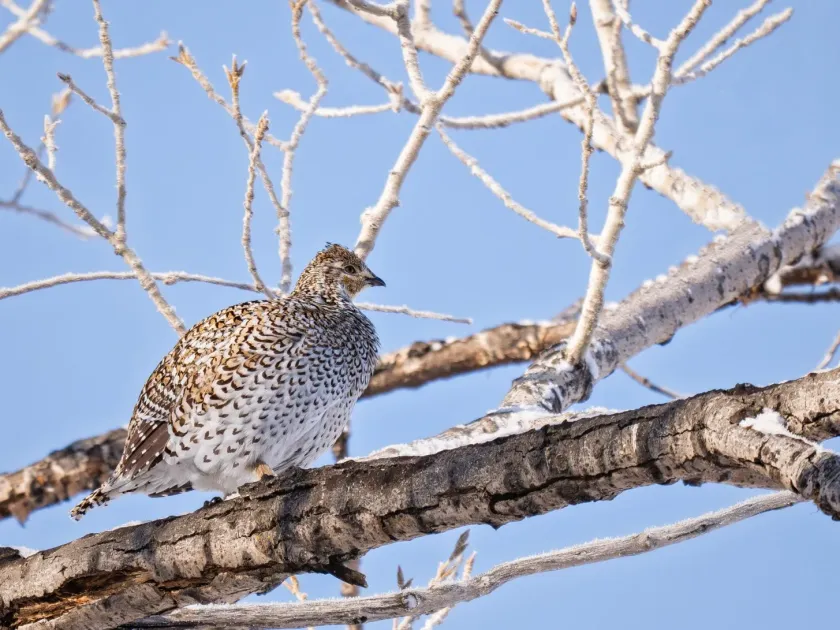
The sharp-tailed grouse (Tympanuchus phasianellus) is a medium-sized bird belonging to the Phasianidae family within the Galliformes order.
It is distinguished by its wedge-shaped tail with white outer feathers, which is highly visible during flight and serves as a primary identification mark.
The plumage is a mottled mix of brown, white, and black, providing excellent camouflage in grasslands and agricultural field environments.
Male birds exhibit distinctive violet-colored air sacs on their necks during mating displays, which they inflate to produce hooting sounds.
With an average weight of around 0.7 to 1.1 kg, these birds are sturdy and well-adapted to surviving in open terrains near shrubby vegetation.
What it damages
Sharp-tailed grouse can cause significant damage to grain crops by consuming sprouted seedlings, especially during early spring when natural food is scarce.
They are known to target wheat, barley, and oat fields, often feeding in large groups that can clear patches of crops in a very short amount of time.
During the harvest season, the birds feed directly on mature heads of grain, leading to yield loss and potential damage to the overall quality of the crop.
Trampling is another significant factor, as groups of birds move through dense fields, breaking stems and causing lodging of the grain plants.
Their presence can lead to irregular stand development, where the birds have fed extensively, making the field more susceptible to weed competition.
When it appears
Activity on agricultural land peaks during early spring, when grouse seek out the nutritious greens of emerging spring crops to replenish their energy.
Late summer and autumn present another high-risk period, as flocks gather to feed on ripening grains before the onset of the colder winter months.
Winter often drives them towards grain storage facilities and sheltered field margins where they search for leftover seeds or waste grain.
The breeding season occurs in spring, and during this time, birds may be less mobile as they prioritize nesting grounds, but local populations remain active.
The severity of crop damage is often correlated with the drought conditions in the surrounding wild habitats, pushing birds toward cultivated fields.
Signs of infestation
Look for three-toed tracks in soft soil or muddy areas of the field, which indicate the recent passage of a flock through the crop rows.
Damaged seedlings that appear nipped or pulled from the soil are a strong indicator of grouse activity in the field during the growth phase.
Large, distinct droppings found in patches on the ground are reliable signs that a group of birds has spent time feeding in that specific location.
Flattened areas of the crop, combined with missing kernels from the heads of grain, confirm that birds have been foraging at the site.
Early morning or late evening sightings at the field edges, especially near brushy corridors, are common indicators of the birds' presence and movement patterns.
Control measures
Visual deterrents such as holographic tapes or inflatable owl decoys can be effective, provided they are moved frequently to maintain the element of surprise.
Acoustic deterrents that emit distress calls or predator sounds are highly successful in scaring flocks away from protected areas of the farm.
Maintaining a clean field border by removing unnecessary brush can reduce the cover that attracts these birds to your agricultural land.
Chemical seed treatments that impart an unpleasant taste or odor to the young plants can effectively discourage birds from feeding on emerging sprouts.
Adjusting harvesting techniques to reduce grain spillage and conducting tillage shortly after harvest removes the food source, discouraging long-term occupation.
Taxonomy
- Latin name
- Tympanuchus phasianellus
- Family
- Phasianidae
- EPPO code
- TYMPPH
Discussion
No discussions yet — be the first.