
Common quail
Coturnix
Description
How to identify
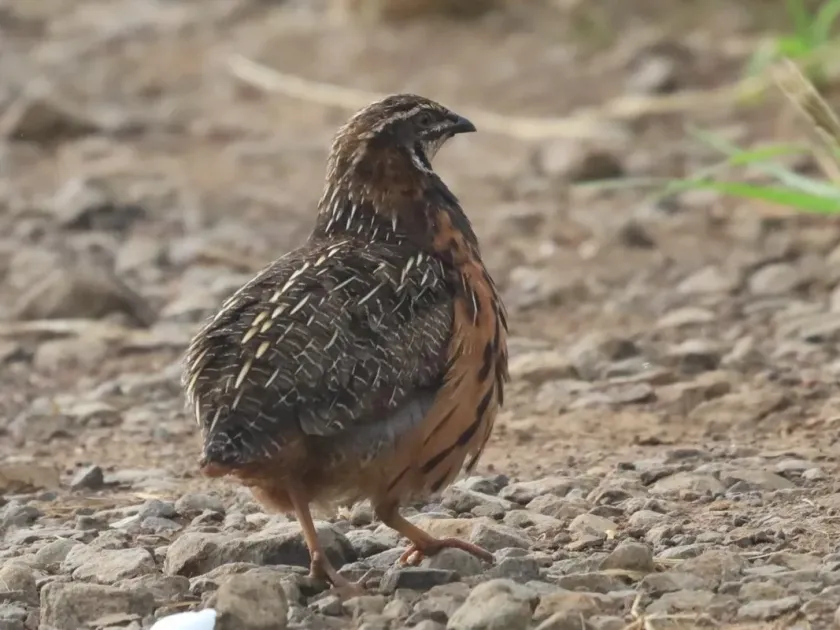
The common quail (Coturnix coturnix) is the smallest member of the pheasant family (Phasianidae). It is a small, ground-dwelling bird characterized by a mottled brown plumage with distinct light and dark longitudinal stripes, providing excellent camouflage within grasslands and cereal fields.
Adult quails measure approximately 16–20 cm in length and weigh up to 150 grams. Due to their elusive nature and habit of hiding in dense vegetation, they are rarely seen, preferring to run or crouch when approached rather than taking flight.
The biology of the species is centered around a terrestrial lifestyle. Quails rarely fly, instead traversing through dense crop stalks with great agility. In agricultural landscapes, they typically nest and feed in areas with high vegetation density, which protects them from predators.
Breeding occurs during the spring and summer months. Females lay a large clutch of eggs directly on the ground in shallow scrapes. Once hatched, the chicks grow rapidly, following their mother into the fields to forage for seeds, grains, and insects.
In an agricultural context, the common quail is considered a facultative pest. While they provide some benefit by consuming weed seeds, their high density in certain agricultural regions can lead to measurable economic losses due to their consumption of cultivated grains.
What it damages
The primary crops affected by common quail are cereals such as wheat, barley, millet, and oats, as well as buckwheat. Damage can occur at various developmental stages, ranging from early seedling consumption to the harvesting stage of mature grain.
During the early growth stages, quails may peck at young sprouts. This behavior leads to patches of uneven crop density, which can interfere with uniform growth and sometimes necessitate reseeding, adding to production costs.
The most significant damage occurs during the milk and dough development stages of the grain. Quails concentrate on the edges of fields, pecking grains directly from the ears, which leads to direct yield loss and lower quality of the remaining harvest.
Beyond the direct consumption of grain, quails cause substantial damage through physical trampling. Large groups of birds moving through the fields flatten stalks, making mechanized harvesting more difficult and increasing losses due to grain shattering on the ground.
Additionally, bird presence leads to the contamination of crops with droppings and feathers, which can affect the overall phytosanitary quality of the grain, particularly in high-moisture conditions that promote fungal growth.
When it appears
The common quail is a migratory species that arrives in agricultural areas during late spring as temperatures rise. Their presence becomes most noticeable during the active growing season of cereals, which provide optimal cover for their foraging activities.
Peak activity occurs during June and July, coinciding with the brood-rearing period when the birds' energy requirements are at their highest. During this time, they are highly active in fields that are reaching the grain-filling stage.
By August, as harvest approaches, quails may congregate in small groups, focusing their feeding on late-maturing grain crops. This period demands increased vigilance from farmers to protect the fields until harvest can be completed.
Migration to southern regions begins with the onset of autumn cooling in September. Therefore, the threat posed by quails is strictly seasonal and limited to the vegetative and reproductive phases of major cereal crops.
Successful management relies on timing protection measures to match the grain-filling period. By focusing resources on this specific window, farmers can effectively reduce the impact of the pest without unnecessary interventions.
Signs of infestation
Initial signs of presence include small, shallow depressions in the soil at the base of plants where birds have been resting. You may also observe trampled paths through the crop, indicating the movement of a bird or a small group.
Evidence of feeding is visible on the grain ears: the rachis (central stalk of the ear) remains, but the grains have been neatly plucked. This is distinct from rodent damage, as birds remove the grain entirely while leaving the ear structure largely intact.
The presence of bird droppings between crop rows is a reliable indicator of prolonged activity. You might also find discarded seed husks, which represent the remains of the birds' foraging efforts during their time in the field.
Auditory signs, such as the distinctive, repetitive "wet-my-lips" call of the males, are the most reliable way to confirm their presence. These sounds are most frequent during early morning and late evening, helping identify the exact location of the birds.
Visual confirmation occurs when birds flush from the ground as a person enters the field. They typically fly low for a few meters before diving back into the thick cover, demonstrating their high level of adaptation to field environments.
Control measures
The most effective management method is the use of bioacoustic devices that emit predator calls or distress signals. These systems create a sense of constant threat, discouraging quails from remaining in the area.
Visual deterrents, such as reflective tape, holographic devices, or scarecrows, can be effective if they are relocated frequently. Constant movement of the deterrents prevents the birds from becoming habituated to them.
Maintaining clean field borders by removing weeds and tall grass is a crucial preventive measure. Eliminating these refuge sites makes the field less attractive for nesting and foraging, significantly reducing the bird population in the crop area.
Timely harvest is essential to minimize the window of opportunity for birds to cause damage. Using short-duration varieties or optimizing harvest timing reduces the risk of substantial losses to mature grain.
- Deploying gas-powered cannons for auditory repulsion.
- Mechanical destruction of overgrown field margins.
- Cultivating buffer zones with non-attractive crop species.
Taxonomy
- Latin name
- Coturnix
- Family
- Phasianidae
- EPPO code
- COTXSP
Discussion
No discussions yet — be the first.