
Northern bobwhite
Colinus
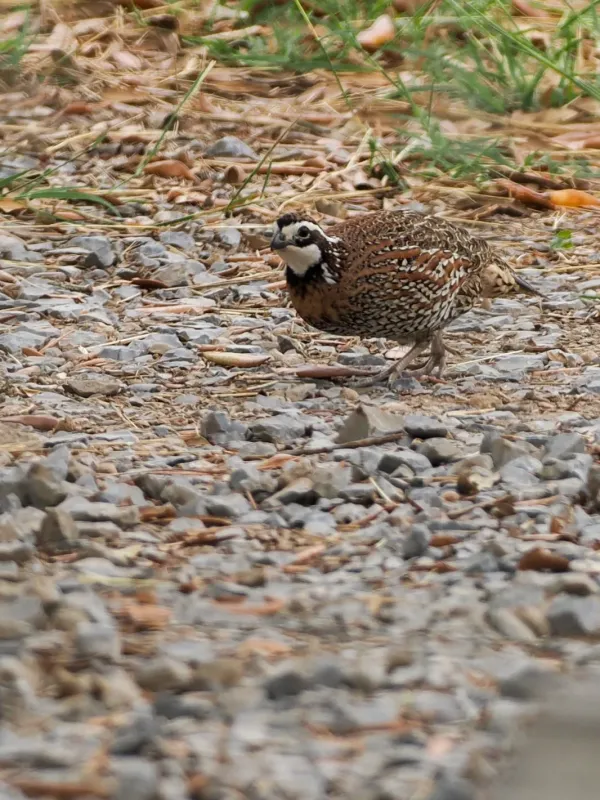
Description
How to identify
The Northern bobwhite (Colinus virginianus) is a ground-dwelling game bird belonging to the New World quail family, order Galliformes. They typically grow to about 25 centimeters in length.
They possess a mottled plumage featuring shades of brown, gray, and white, providing excellent camouflage against dry grass, soil, and agricultural debris found in fields.
Males are easily identified by a prominent white stripe over the eye and a white throat patch, while females tend to have more muted, yellowish facial markings.
These birds are equipped with short, rounded wings and strong legs, adapted for terrestrial movement rather than long-distance flight, making them permanent residents of field edges.
They are highly social creatures that live in coveys, particularly during the non-breeding season, and maintain strict home ranges within farm ecosystems.
What it damages
Northern bobwhites primarily damage agricultural operations by consuming newly planted seeds, especially corn and cereal grains, which can result in patchy crop germination.
During the development stages, they peck at cereal heads and young vegetable plants, causing physical tissue damage that slows down plant maturation and affects yield.
On vegetable farms, they may damage ripening fruits that lie close to the ground, introducing entry points for secondary bacterial or fungal infections in the produce.
Extensive trampling by a covey of quail causes soil compaction and damage to seedling stems, particularly along the field margins adjacent to dense cover or hedges.
In cases of high population density, the combined effect of seed consumption and seedling damage can necessitate costly replanting efforts on smaller agricultural plots.
When it appears
Their impact is most severe during the spring planting season when seeds are easily accessible on the surface or buried at shallow depths in the soil.
Throughout the summer, they utilize tall-growing crops as shelter and foraging grounds, causing localized damage while feeding on green shoots and emerging fruit.
During the harvest period, they congregate on fields where grain has been spilled, which, while cleaning up waste, can sometimes lead to damaging late-season standing crops.
Winter months may see them venturing near grain storage sites or feeding stations if food sources in their natural habitat become scarce due to snow cover.
The presence of these birds follows the phenological cycle of the farm, shifting from seed foraging in spring to vegetative and fruit feeding during the summer months.
Signs of infestation
Small, cone-shaped depressions in the soil surface are a hallmark sign of bobwhites searching for recently sown seeds after a field has been planted.
Dropped feathers and droppings found along the edges of the fields provide clear evidence of the birds' movement and regular feeding routes across the land.
Areas of the field with stunted growth or sparse germination, particularly near dense shrubbery or woodland edges, indicate localized feeding activity.
Marks of pecking on low-hanging fruits or damaged stem tissue near the ground level are physical indicators of their presence in vegetable or specialty crop rows.
Distinctive whistling calls, particularly the famous bob-white whistle, are heard during dawn and dusk and indicate the presence of coveys in the immediate vicinity.
Control measures
Acoustic deterrents that broadcast predator calls or distress signals are effective at causing the birds to abandon feeding grounds near vulnerable crop areas.
Visual aids, including motion-activated lights or reflective tapes, create a hostile environment that keeps the quail away from high-value crop sections.
Ensuring proper seed depth during mechanical planting is a critical agronomic practice to reduce the accessibility of seeds to foraging ground birds.
Managing hedgerows and clearing unnecessary weeds along the field margins reduces the natural cover available, making the field less attractive for quail to inhabit.
For high-value vegetable production, utilizing physical barriers or netting during the early growth stages is the most reliable way to prevent bird-related damage.
Taxonomy
- Latin name
- Colinus
- Family
- Phasianidae
- EPPO code
- COLISP
Discussion
No discussions yet — be the first.