
Northern bobwhite
Colinus virginianus
Description
How to identify
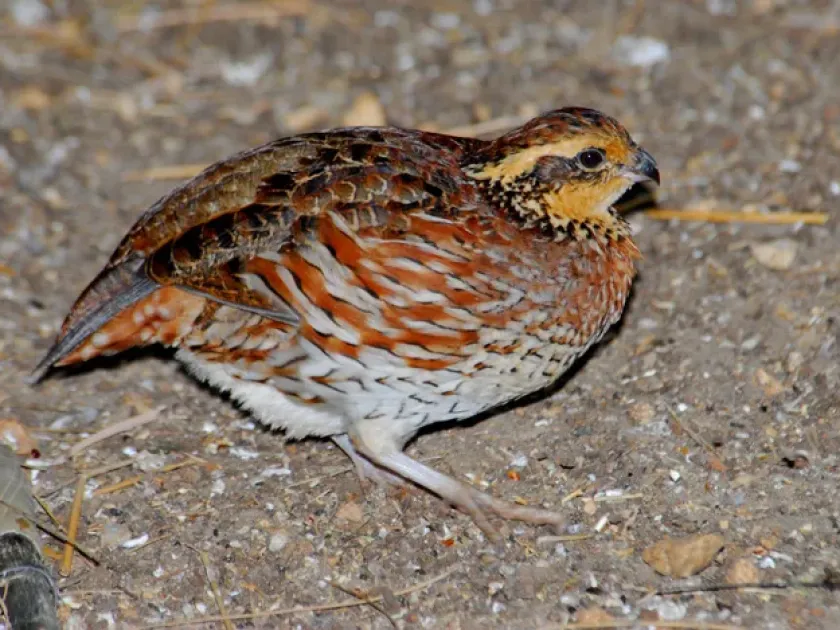
The northern bobwhite (Colinus virginianus) is a ground-dwelling bird species belonging to the Odontophoridae family within the Galliformes order. These birds are known for their small, round bodies and shy, cautious nature.
Males are easily identified by their distinct white throat and eye stripe framed by black borders. Females have a more subdued, mottled brown appearance that blends perfectly with dry grass and soil.
They typically reach 24–28 cm in length and inhabit shrubby areas, field edges, and brushy fence rows, often staying close to agricultural land where food is abundant.
During the non-breeding season, these birds gather in social groups known as coveys. Their tendency to remain motionless when threatened often masks their presence until damage becomes apparent.
Despite their popularity in wildlife management, they are often considered pests by farmers because they capitalize on cultivated grains found in open fields.
What it damages
The primary agricultural damage caused by northern bobwhites involves the consumption of seeds immediately after planting, particularly affecting wheat, sorghum, and corn crops.
By excavating sown seeds, the birds create gaps in the crop stands, which leads to reduced plant density and potentially significant yield losses across the field.
At the seedling stage, the birds nip off young shoots, often pulling them entirely from the ground, which can ruin entire rows of emerging agricultural plants.
As the crops reach maturity, the birds feed on maturing grains from heads or cobs, reducing the overall weight and quality of the harvested produce.
Additionally, their collective feeding habits cause trampling, which compacts the soil and provides a competitive advantage for opportunistic weeds to colonize the damaged areas.
When it appears
The highest level of damage occurs during the spring planting season when freshly sown fields provide an easily accessible and nutrient-rich food source for the coveys.
During the summer months, the birds transition to feeding on ripening grain crops, causing localized damage as they move through the fields during the milking and dough stages.
Autumn brings increased activity as the birds scavenge for waste grain after harvesting operations, sometimes damaging winter cover crops that have been freshly seeded.
Winter behavior is generally more stationary, but if fields remain unplowed or food sources are scarce elsewhere, they may congregate in areas with stored crop waste.
The population density and resulting pest pressure are highly dependent on the severity of the previous winter and the availability of suitable nesting habitat nearby.
Signs of infestation
Signs of northern bobwhite presence include distinctive small, three-toed tracks in loose soil, especially concentrated in furrows where seeds were recently buried.
Finding uprooted seedlings with visible remains of the seed coat at the base is a classic indicator that bobwhites have been feeding on the new emergence.
Small circular bare patches in the field, often accompanied by bird droppings, indicate areas where a covey has spent time feeding or resting during the day.
Observing a covey of birds flushing suddenly when walking through the field is the most direct confirmation of their current population level in the area.
Broken or pecked grain heads and cobs at the edge of the field, near dense vegetation or hedgerows, signify their presence and feeding activities during crop maturation.
Control measures
Acoustic deterrents that replicate the sounds of predatory hawks or owls are highly effective at discouraging bobwhites from settling and feeding within crop areas.
Visual repellents, such as reflective tape or realistic predator decoys, should be deployed strategically around the perimeter of the field to frighten the birds away.
Agronomic practices, such as ensuring deeper seed placement during planting, significantly reduce the bird's ability to locate and extract seeds from the soil surface.
Seed treatments with repellent chemical agents can make the seeds unpalatable to birds, providing a protective barrier during the critical germination phase.
Regular maintenance of field boundaries, including the removal of tall brush and weeds, minimizes the habitat suitability for nesting and loafing, effectively driving the birds elsewhere.
Taxonomy
- Latin name
- Colinus virginianus
- Family
- Phasianidae
- EPPO code
- COLIVI
Discussion
No discussions yet — be the first.