
Chukar
Alectoris
Description
How to identify
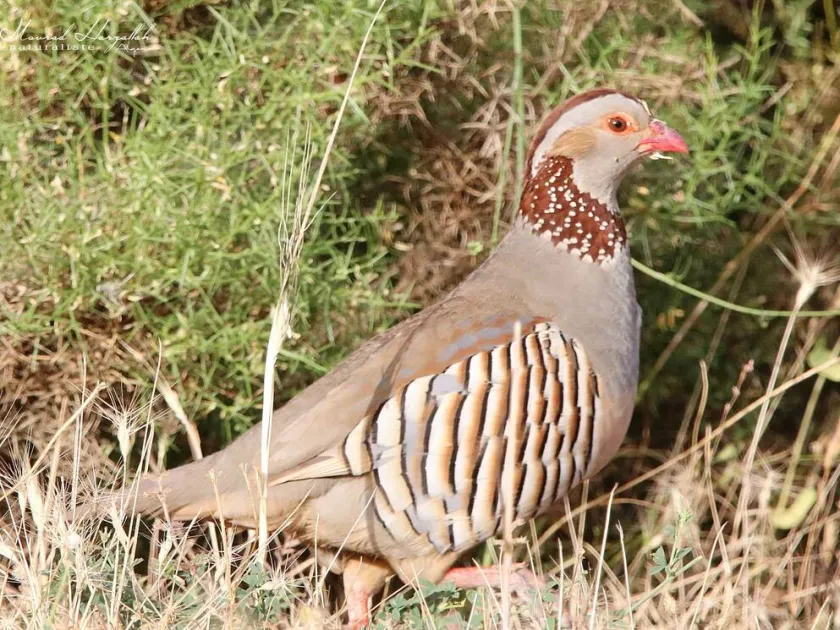
The Chukar (Alectoris chukar) is a game bird of the pheasant family, Phasianidae. It is characterized by a stout body with distinctive black and white bars on the flanks and a black band running across the eyes and throat.
These birds are naturally found in rocky, arid terrain, but they frequently expand their range into agricultural lands located near these habitats in search of abundant food sources.
Chukars are primarily ground-dwelling birds. They are excellent runners and prefer to rely on their camouflage rather than flight to escape from perceived threats, making them resilient in field environments.
The life cycle of the Chukar is marked by ground-nesting behavior. They form shallow depressions in the soil, which are often lined with vegetation, providing safety for their brood.
Population densities can fluctuate based on seasonal food availability. High numbers of Chukars in agricultural areas during the ripening phase of crops can lead to significant economic losses for farmers.
What it damages
Chukars cause substantial damage by feeding on cereal crops such as wheat, barley, and millet. They peck at the ears of the grain, leading to direct yield loss and reduced grain quality.
Beyond cereals, these birds can severely impact young vegetable seedlings. By uprooting or clipping emerging shoots, they can destroy large sections of a crop in a short period.
The trampling caused by groups of birds feeding in a field creates gaps in the crop stand, which allows weeds to proliferate and further complicates farm management and harvesting operations.
During dry seasons, Chukars are known to feed on melons and other cucurbits. They peck through the skin to reach the moist flesh, ruining the fruit and rendering it unmarketable.
The total severity of the infestation depends on the size of the flock; consistent presence of these birds in fields necessitates proactive management to avoid widespread crop destruction.
Signs of infestation
The primary sign of a Chukar infestation is the presence of distinct bird tracks in the soft soil, which are easily distinguishable from other poultry due to their size and the pattern of the toes.
Observers may find discarded or pecked grain ears at the edges of fields. Regularly scouting these perimeter areas is essential for detecting the presence of the birds early in the season.
Feathers found near field margins or nesting sites are strong indicators that the birds are utilizing the area for shelter or as a staging ground before entering the crop.
Presence of droppings throughout the field confirms active feeding areas. Monitoring these spots helps the agronomist determine the areas where deterrent measures should be prioritized.
The vocalizations of the Chukar, which are distinct, loud, and rhythmic, can often be heard early in the morning, serving as a reliable auditory cue of their presence.
Control measures
The most effective strategy for managing Chukar populations involves the use of visual deterrents, such as reflective tape, motion-activated lights, or decoys representing natural predators.
Bioacoustic devices that play alarm calls of the species or the cries of raptors can significantly reduce the amount of time birds spend feeding in specific areas of the crop.
Cultural control methods, including timely harvesting and maintaining field edges free of excessive weeds, reduce the attractiveness of the area to birds by minimizing food and shelter.
Physical barriers such as netting are effective for high-value crops but are usually limited to smaller areas due to the high costs associated with installation and maintenance.
- Rotate deterrent devices regularly to prevent birds from becoming habituated.
- Implement perimeter monitoring during the critical dough stage of grain development.
- Deploy a combination of visual and auditory devices for maximum effectiveness.
Taxonomy
- Latin name
- Alectoris
- Family
- Phasianidae
- EPPO code
- ALCTSP
Discussion
No discussions yet — be the first.