
Hairy snail
Trochulus
Description
How to identify
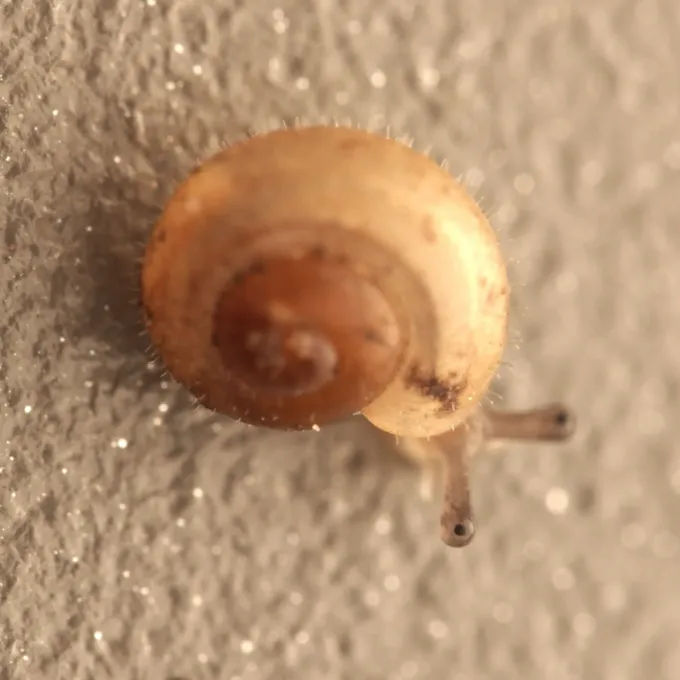
The hairy snail (genus Trochulus) belongs to the Hygromiidae family, order Stylommatophora. The common name refers to the tiny, hair-like bristles on the surface of the shell, which are typically prominent on younger individuals.
These snails possess a flattened, conical-shaped shell that usually ranges from 7 to 12 millimeters in diameter. The shell coloration generally spans from horn-like to reddish-brown, sometimes featuring subtle spiral bands.
The soft body of the snail is typically pale gray or yellowish-white, an adaptation that helps it blend into natural debris. This species is highly adaptable, inhabiting various environments from forest margins to cultivated garden beds.
Unlike larger slugs, these snails lead a relatively hidden lifestyle, spending much of their time in the lower, damp strata of vegetation. Identification is often challenging due to their small size and cryptic habits.
Agronomists and gardeners typically identify them by inspecting the underside of leaves and soil surface during moist or nocturnal conditions. Distinguishing them from other snail species is crucial for proper population assessment.
What it damages
Hairy snails feed on a wide variety of agricultural crops, preferring succulent plant tissues. They pose a significant threat to vegetables, berries, and ornamental plants that offer moisture-rich leaves.
Seedlings of crops such as lettuce, cabbage, and cucumbers are particularly vulnerable and can be completely consumed by the snails in a short period. This leads to poor crop establishment and reduced overall yields.
In strawberry and berry patches, snails cause damage by creating deep cavities in the fruit, which ruins marketability and invites secondary fungal infections, such as grey mold.
Ornamental plants suffer from visible leaf damage, characterized by irregular holes and skeletonization, which impairs the plant's ability to photosynthesize effectively and reduces aesthetic appeal.
Furthermore, the slime trail left by the snails contaminates produce, potentially spreading pathogens throughout the crop. Their excrement can also degrade the quality of harvested vegetables.
When it appears
The activity cycle of the hairy snail is closely tied to soil moisture and ambient temperature. They emerge from winter dormancy in early spring when temperatures remain consistently above 5-8 degrees Celsius.
Peak damage generally occurs during wet, rainy summer months, which provide the optimal environment for movement and reproduction. During prolonged droughts, they retreat into the soil or under mulch to wait for favorable conditions.
Breeding continues throughout the growing season, allowing for multiple generations per year. Eggs are laid in moist, shaded soil or beneath organic matter, where embryos can develop protected from drying out.
As autumn arrives, activity levels decrease as the snails prepare for winter. They can survive freezing temperatures by burying themselves deep within the soil profile or protected garden debris.
Continuous monitoring throughout the growing season is essential for early detection. Targeted observations during damp weather are the most effective way to gauge the current infestation levels.
Signs of infestation
The most reliable sign of a hairy snail infestation is the appearance of irregular, chewed holes in leaves. The edges of these holes often look frayed and may show traces of dried, shiny mucus.
Visible silvery trails left by dried slime on stems, garden paths, or greenhouse surfaces serve as a definitive indicator of mollusk presence in the area.
Sudden disappearance of tender seedlings is another major warning sign. In many cases, these snails cut the stems of young plants at ground level, leading to rapid plant loss.
- Ragged leaf edges on lower foliage.
- Shiny, silvery mucus tracks.
- Damage to fruit skins and berries.
- Clusters of snails found under moist garden mulch.
Inspecting common hiding spots such as compost piles, wooden boards, and overgrown vegetation during dawn or dusk will help identify active snail populations.
Control measures
Controlling the hairy snail requires a multi-faceted approach. Maintaining a clean garden by removing weeds and plant debris is the most effective way to eliminate their preferred hiding places.
Implementing mechanical barriers such as crushed eggshells, wood ash, or fine gravel around vulnerable plants creates a dry, abrasive surface that snails avoid crossing.
Trapping techniques, such as placing containers filled with beer or damp cloths, are highly effective for catching and removing individuals. Hand-picking in the evening remains a viable option for small-scale gardens.
In commercial agriculture, the use of molluscicide pellets containing iron phosphate is often recommended. These are safer for pets and wildlife compared to older chemical alternatives.
Encouraging natural predators such as hedgehogs, birds, and carabid beetles supports ecological pest control, helping to keep snail populations in check naturally throughout the season.
Taxonomy
- Latin name
- Trochulus
- Order
- Molluscs
- Family
- Hygromiidae
- EPPO code
- TRHUSP
Discussion
No discussions yet — be the first.