
Trochoidea elegans
Trochoidea elegans
Description
How to identify
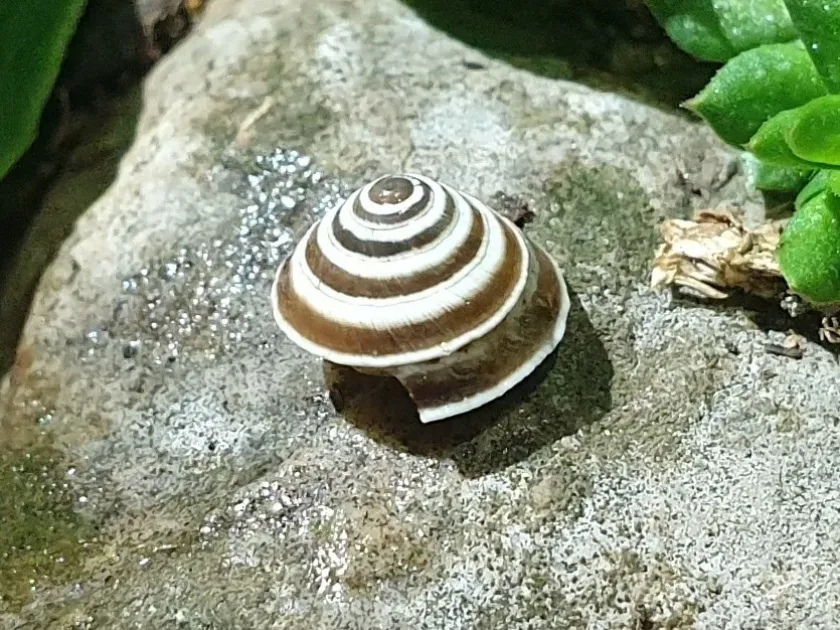
Trochoidea elegans is a species of air-breathing land snail, a terrestrial pulmonate gastropod mollusc in the family Hygromiidae. The shell is small, typically conical, and features a distinctive striped pattern.
Adult shells generally measure between 10 and 14 millimeters in width. The shell surface is often whitish or light-colored with dark, elegant spiral bands, providing camouflage in dry environments.
The soft body of the snail is greyish or brownish. Like most land snails, they rely on a moist environment but are highly adapted to tolerate the arid conditions typical of their Mediterranean habitat.
The snail uses its shell as a vital refuge, retreating into it during periods of high heat or low humidity to prevent desiccation. They are capable of forming an epiphragm to seal the shell aperture.
Their life cycle involves egg-laying in damp soil or under decaying organic matter. The young snails emerge and begin feeding immediately, growing as they consume surrounding vegetation.
What it damages
Trochoidea elegans acts as a generalist herbivore, causing significant damage to various crops including vegetables, ornamental plants, and young seedlings in nurseries.
They feed by rasping the leaf surfaces with their radula, resulting in ragged holes and shredded tissue. This feeding behavior severely impacts the plant's ability to photosynthesize and grow.
Seedlings and young transplants are particularly vulnerable. A few individuals can destroy a young plant overnight, leading to significant stand losses in commercial field production.
Beyond physical consumption, the snails leave trails of mucus across the foliage and fruit. This residue is unsightly and can harbor secondary fungal or bacterial infections.
High infestations lead to reduced harvest quality and marketability. Crops tainted by slime or showing visible feeding damage often become unacceptable for human consumption.
When it appears
The activity of Trochoidea elegans is strictly regulated by environmental moisture. They are most active during the cooler, wetter months of spring and autumn in their native range.
During the peak of summer, when temperatures are high and humidity is low, these snails undergo aestivation. They attach themselves to stems, fence posts, or rocks, remaining dormant.
Feeding activity spikes during the night or immediately after rainfall. During these periods, they emerge from their hiding spots to graze on succulent plant tissue.
The damage season aligns with the entire vegetative growth period. Early spring is critical for protecting emerging seedlings, while autumn activity threatens maturing crops.
During winter months, snails seek shelter in deep soil cracks, under leaf litter, or within rock crevices to avoid frost and maintain a stable internal temperature until spring.
Signs of infestation
The most reliable sign of an infestation is the presence of irregular feeding holes on leaves. These holes often appear with jagged, irregular margins characteristic of snail grazing.
Dried, shimmering mucus trails are clear indicators that snails have been moving across the soil or plant surfaces during the night, even if the pests themselves are hidden.
Finding empty shells or live specimens hiding at the base of plants or under garden debris is a definitive sign of their presence and established population.
Premature wilting of plants without evidence of root-rot disease often suggests that these snails have been feeding on the stems or crowns of the plants during the previous night.
The accumulation of faecal matter near the feeding sites further confirms the presence of these gastropods and their high activity levels within the garden area.
Control measures
Integrated pest management is essential for controlling Trochoidea elegans. Start by maintaining a clean field environment, removing weeds and debris where snails seek daytime refuge.
Hand-picking remains a practical solution for smaller gardens. Collect the snails at night or early morning and dispose of them in soapy water or by physical crushing.
Physical barriers are highly effective. Placing rings of copper tape, coarse sand, wood ash, or lime around sensitive plants irritates the snails' foot and creates a deterrent zone.
Chemical control using baits containing metaldehyde or iron phosphate is effective. These should be applied near infested areas, ensuring they are not placed directly on food crops.
Key cultural practices include:
- Regular tilling of the soil to disturb nesting sites and eggs.
- Using drip irrigation to keep the surface soil drier, making the area less attractive.
- Encouraging natural predators such as hedgehogs, frogs, and predatory beetles.
Taxonomy
- Latin name
- Trochoidea elegans
- Order
- Molluscs
- Family
- Hygromiidae
- EPPO code
- TOCHEL
Discussion
No discussions yet — be the first.