
Pittosporum psyllid
Trioza vitreoradiata
Description
How to identify
The Pittosporum psyllid (Trioza vitreoradiata) belongs to the order Hemiptera and the family Triozidae. These tiny insects, often referred to as jumping plant lice, are highly specialized feeders.
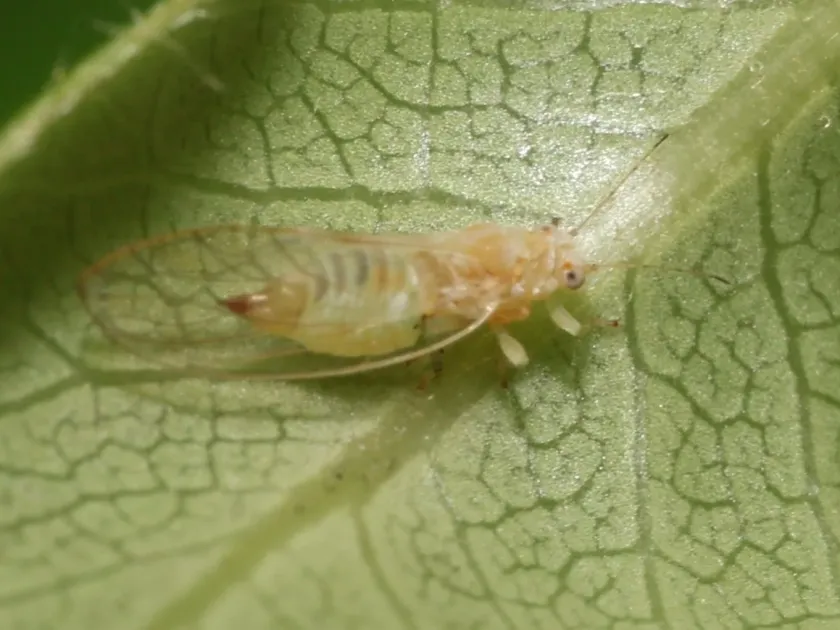
Adult psyllids are small, winged insects with jumping hind legs. They are generally light brown or yellowish in color, which provides camouflage against the foliage of their host plants.
Nymphs are often sedentary and may be covered in white, waxy secretions that act as a protective barrier against environmental conditions and minor predators.
The life cycle involves incomplete metamorphosis, meaning the nymphs resemble miniature, wingless versions of the adults, developing through several instars before maturity.
Taxonomic identification of this species is usually confirmed by examining the wing venation patterns under a microscope to distinguish them from other Trioza species.
What it damages
The primary host for this pest is the genus Pittosporum, with Pittosporum tobira being particularly susceptible to heavy infestations in landscape settings.
Psyllids feed by inserting their stylets into the phloem of young leaves and shoots, extracting essential nutrients and fluids, which weakens the plant's overall health.
Feeding triggers a physiological response in the plant tissue, causing the leaves to curl and develop characteristic galls, which significantly reduces the plant's ornamental value.
Severe infestations result in stunted growth of new shoots, leaf drop, and an overall lack of vigor, making the plants more susceptible to other secondary infections.
Like many hemipterans, these pests excrete honeydew, a sugary substance that facilitates the growth of sooty mold, which can smother leaves and hinder the photosynthetic process.
Signs of infestation
The most distinctive sign of infestation is the deformation of new leaf growth, which appears tightly curled or cupped due to the feeding activity of the nymphs underneath.
Small pits, galls, or bumps on the upper surface of the leaves are common symptoms, correlating with the feeding sites of the nymphs on the leaf undersides.
A sticky, shiny residue on leaves or stems indicates the presence of honeydew, often accompanied by the accumulation of white, waxy material shed by the developing psyllid nymphs.
Black sooty mold growth on leaves is a secondary sign that suggests the psyllid population has been present for some time and is effectively exploiting the plant.
In cases of high infestation, one may observe the adult psyllids jumping away when the foliage is gently disturbed or shaken during inspection.
Control measures
Manual removal of heavily infested and deformed shoots is the first line of defense, ensuring that the plant's resources are redirected to healthy growth.
Systemic insecticides are the most effective chemical intervention, as they are absorbed by the plant and kill the psyllids as they feed on the sap.
Integrated Pest Management (IPM) strategies emphasize monitoring during the peak growth season, especially in spring, to detect populations before they cause widespread damage.
Enhancing the garden ecosystem to attract natural predators, such as lady beetles, lacewings, and parasitic wasps, can provide long-term biological suppression of the pest.
- Application of horticultural oils to smother nymphs and eggs.
- Watering the plant regularly to reduce stress and improve resistance to damage.
- Ensuring proper spacing and ventilation in plantings to discourage localized outbreaks.
Taxonomy
- Latin name
- Trioza vitreoradiata
- Order
- Hemiptera (bugs, aphids, leafhoppers)
- Family
- Triozidae
- EPPO code
- TRIZVR
Discussion
No discussions yet — be the first.