
Mauran jumping plant louse
Bactericera maura
Description
How to identify
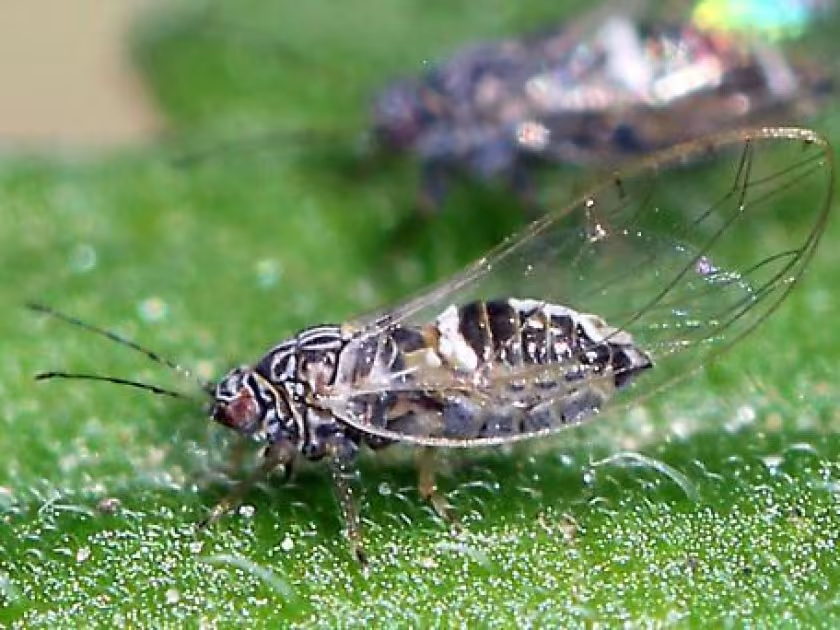
The Mauran jumping plant louse (Bactericera maura) belongs to the Triozidae family. These are small insects with strong hind legs, allowing them to jump effectively when disturbed.
Adults are typically dark-colored, ranging from brown to black, which is characteristic of the species. They measure approximately 2–3 mm in length and possess transparent wings that are held roof-like over the body.
Nymphs are flattened and often secrete waxy, thread-like filaments, which serve as a protective cover and a visual indicator of their presence on the host plant.
These insects thrive in environments with moderate humidity and temperature. Their activity cycle typically aligns with the active growth phase of vegetable crops in the spring and early summer.
Identification is often confirmed by the presence of waxy excretions on the undersides of leaves, which are unique to psyllid infestations compared to other sucking insects.
What it damages
The primary hosts of Bactericera maura are Solanaceous crops, including potatoes, tomatoes, and eggplant, as well as various wild relatives within the Solanaceae family.
Both adults and nymphs feed on phloem sap. This feeding process drains plant nutrients and disrupts normal physiological development, leading to stunted growth and reduced yields.
During heavy infestations, the damage to the plant tissue can be significant. Plants show signs of stress, including chlorosis and tissue necrosis around the feeding sites.
A major concern is the insect's potential role as a vector for various plant pathogens, including viruses and phytoplasmas that can cause systemic diseases in solanaceous plants.
The secretion of honeydew promotes the growth of sooty mold, which further blocks sunlight and interferes with the plant's ability to perform photosynthesis.
Signs of infestation
One of the earliest signs is the curling or distortion of leaves, often referred to as "psyllid yellows," where leaves take on a chlorotic appearance.
The growth of the plant becomes retarded, and internodes may shorten, creating a rosette effect at the shoot tips. This often mimics symptoms of viral infection.
Nymphs can be found in clusters on the undersides of leaves. They are small, oval, and relatively stationary, often surrounded by their distinctive white waxy filaments.
The presence of sticky honeydew on foliage is a strong indicator of an active infestation. This substance may attract ants and trigger the development of black sooty mold.
Flower drop and poor fruit development are common outcomes of sustained psyllid feeding during the flowering and fruiting stages of the host plants.
Control measures
Cultural control is essential. This includes the removal of alternate weed hosts, especially wild Solanaceae, from the perimeter of fields to break the insect's life cycle.
Implementing crop rotation and ensuring sufficient distance between different Solanaceous crops helps minimize the localized build-up of psyllid populations.
Monitoring using yellow sticky cards is recommended to detect the arrival of adult psyllids early, allowing for timely intervention before populations reach critical levels.
Chemical control involves the application of systemic insecticides when thresholds are exceeded. It is crucial to rotate chemical classes to prevent the development of resistance.
Biological control methods, including the conservation of natural predators such as lady beetles and lacewings, can play a significant role in managing populations in an integrated pest management program.
Taxonomy
- Latin name
- Bactericera maura
- Order
- Hemiptera (bugs, aphids, leafhoppers)
- Family
- Triozidae
- EPPO code
- TRIZMU
Discussion
No discussions yet — be the first.