
Carrot psyllid
Trioza viridula
Description
How to identify
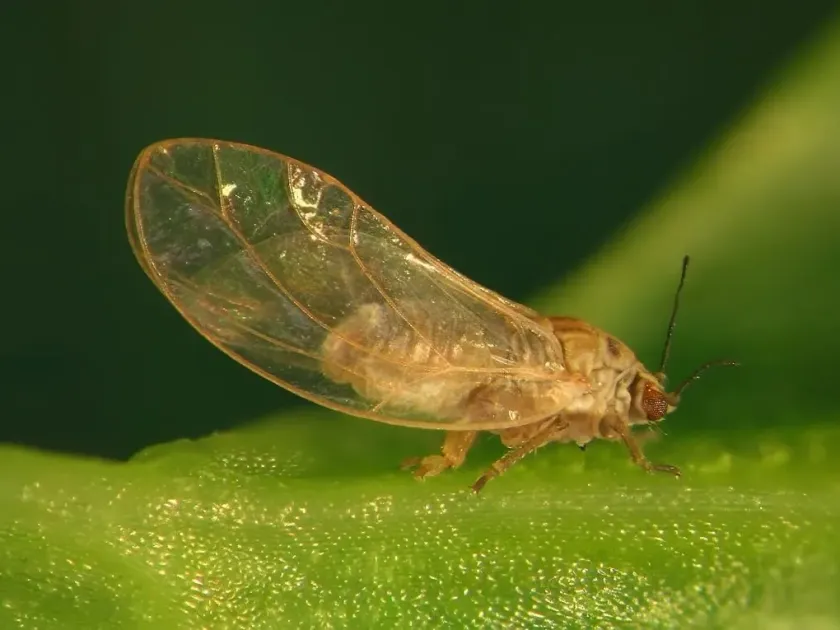
The carrot psyllid (Trioza viridula) belongs to the order Hemiptera and the family Triozidae. It is a tiny insect, approximately 1.5–2 mm long, recognized by its pale green to yellow body and well-developed jumping legs.
Adult psyllids are mobile and move between their wintering grounds and summer host plants using their wings. Their life cycle includes egg, nymph, and adult stages, with nymphs being sedentary feeders.
These insects prefer to overwinter on coniferous trees, specifically spruce and pine, which explains why fields adjacent to forests are at higher risk of initial infestation.
In spring, when temperatures reach approximately 10-12°C, the overwintered adults migrate to carrot crops to begin laying eggs on young foliage.
The reproduction rate of this pest is quite high, often leading to rapid population surges during warm and dry periods in early summer.
What it damages
The primary host is carrot, but the psyllid also infests related species in the Apiaceae family, including celery, parsnips, and wild relatives.
Both adults and nymphs feed by sucking sap from the phloem of young leaves and petioles, which severely disrupts the plant's nutrient transport system.
The feeding process causes hormonal changes in the plant tissue, leading to stunted growth and severe deformation of the foliage, commonly referred to as curly-top symptoms.
Besides direct damage, the psyllid is a known vector for phytoplasma pathogens, which can lead to diseases like carrot yellows, resulting in widespread crop failure.
The marketability of the produce is heavily impacted, as infested carrots often become small, woody, and develop an unpleasant taste, rendering them unfit for consumption or storage.
Signs of infestation
The most distinctive symptom is the curling and distortion of the foliage. Leaves become tightly crinkled, and the petioles harden and thicken significantly.
Plants often exhibit general chlorosis, with foliage turning yellow or reddish, which can be easily mistaken for nutrient deficiencies by inexperienced growers.
On the undersides of the leaves, one can often spot the small, sedentary nymphs covered in a characteristic white waxy secretion produced during their development.
The infestation is typically uneven, appearing in clusters or starting from field margins near woody habitats before spreading across the rest of the crop.
- Severe leaf curling and deformation;
- Stunted plant development;
- Yellowing or reddish leaf margins;
- Increased density of the leaf rosette due to abnormal growth.
Control measures
Effective management begins with spatial planning; avoiding planting carrots near coniferous forests can significantly reduce the risk of early colonization by psyllids.
Cultural practices such as early sowing allow plants to pass through their most vulnerable growth stages before the peak population density of the pest arrives.
Using physical barriers like floating row covers or fine-mesh nets can effectively prevent the adults from reaching the carrots to lay their eggs during the vulnerable seedling stage.
Chemical control involving systemic insecticides is recommended when monitoring indicates that population levels have exceeded the economic threshold for the region.
Monitoring using yellow sticky cards is a standard practice for timing the application of pesticides and assessing the success of integrated pest management strategies.
Taxonomy
- Latin name
- Trioza viridula
- Order
- Hemiptera (bugs, aphids, leafhoppers)
- Family
- Triozidae
- EPPO code
- TRIZVI
Discussion
No discussions yet — be the first.