
Blackberry psyllid
Trioza tripunctata
Description
How to identify
The blackberry psyllid (Trioza tripunctata) belongs to the order Hemiptera and the family Triozidae. These are small, jumping insects that are highly specialized in their host plant selection.
Adults are identified by their clear wings featuring three distinct dark spots, a characteristic that gives the species its specific name. Their body color ranges from tan to dark brown.
The nymphs of this pest are relatively sessile, flattened, and often covered in a waxy secretion. They typically reside within the distorted leaf tissues they feed upon.
This insect thrives in humid and shaded environments, often colonizing thicket-like plantings where microclimatic conditions favor rapid population growth.
Monitoring should be focused on the tender tips of shoots during the spring and early summer, as this is where adults lay their eggs and nymphs begin to congregate.
What it damages
Trioza tripunctata primarily attacks blackberries and, to a lesser extent, raspberries. It is a sap-sucking insect that feeds on the vascular tissues of young, growing shoots.
By extracting plant sap, the psyllid causes severe physiological stress to the host, inhibiting normal development and nutrient transport within the plant's stems.
The damage caused by the psyllid leads to systemic disruption of growth patterns, rendering the affected portions of the plant incapable of proper photosynthesis.
If left unmanaged, the infestation can significantly reduce the vitality of the plant, leading to stunted shoots, poor cane development, and overall decreased yields.
Furthermore, the pest is suspected of playing a role in the transmission of certain plant pathogens, which can lead to permanent damage to the blackberry plantation.
Signs of infestation
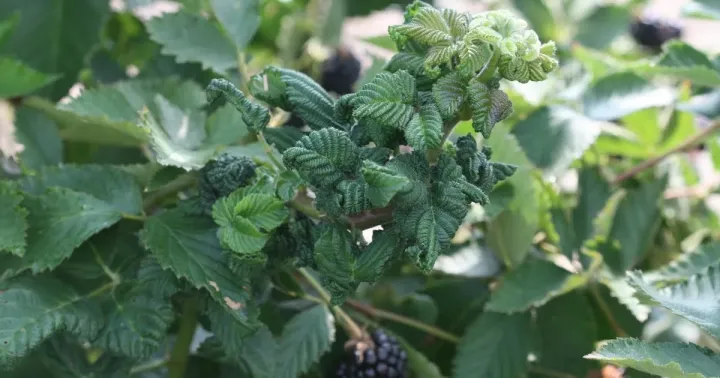
The most prominent sign of infestation is the curling and distortion of new leaves at the shoot tips. These leaves often fold into a boat-like shape, protecting the nymphs inside.
Affected shoots exhibit shortened internodes, resulting in a stunted or bushy appearance known as "rosetting." The foliage often turns reddish or yellow due to the insect's salivary toxins.
Visible sticky residues on the leaf surfaces are a common indicator of psyllid activity. These secretions often attract secondary fungal infections like sooty mold.
Over time, the affected shoots may dry out or fail to produce proper fruit buds, severely limiting the potential harvest for the current and following seasons.
Gardeners will notice that infested bushes look significantly different from healthy ones, showing poor apical dominance and a general lack of vigor during the growing season.
Control measures
Sanitation is the primary line of defense. Growers should regularly inspect and prune infested shoot tips, then immediately dispose of them to disrupt the life cycle of the pest.
Good plantation management, including adequate spacing and pruning to improve airflow, significantly reduces the humidity levels that the blackberry psyllid prefers.
Chemical control with systemic insecticides is most effective when applied early in the spring, just before the leaves begin to curl and shield the developing nymphs.
Using yellow sticky traps can help track the migration of adult psyllids into the field, allowing for more precise timing of protective sprays or biological interventions.
Maintaining plant health through balanced fertilization ensures that blackberry bushes are more resilient to the physiological stress caused by psyllid feeding.
Taxonomy
- Latin name
- Trioza tripunctata
- Order
- Hemiptera (bugs, aphids, leafhoppers)
- Family
- Triozidae
- EPPO code
- TRIZTI
Discussion
No discussions yet — be the first.