
Oak psyllid
Trioza remota
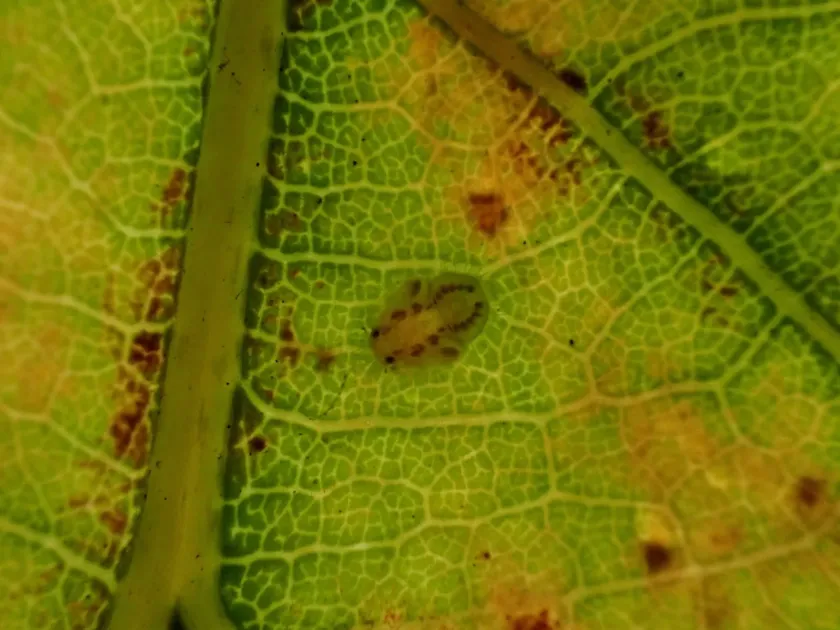
Description
How to identify
The oak psyllid (Trioza remota) is a member of the Psyllidae family within the order Hemiptera. These small, jumping insects are commonly known as plant lice and are specialized pests primarily associated with oak trees (Quercus species).
The life cycle consists of three distinct stages: egg, nymph, and adult. Adult psyllids are characterized by their clear, net-veined wings and robust hind legs adapted for jumping, allowing them to move rapidly between host plants during the warmer months.
The development of the nymph is unique as it induces the formation of galls on the host leaves. These nymphs remain confined within these structures, protected from the environment and many predators until they complete their development into adults.
Overwintering occurs in the adult stage. The insects find shelter in protected areas such as bark crevices, leaf litter, or other debris near the base of the oak trees, demonstrating a high degree of survival resilience during harsh winter conditions.
As spring approaches, adults emerge and synchronize their reproductive activity with the flushing of new oak buds. This timing ensures that the emerging nymphs have immediate access to the fresh, nutrient-rich tissues required for their growth.
What it damages
The damage caused by Trioza remota is primarily localized to the leaves. By feeding on phloem sap, the nymphs disrupt the plant's ability to effectively transport nutrients, which can lead to localized stress in the affected branches.
The formation of galls is the most significant form of physical damage. These swellings are reactions of the plant to the saliva injected by the feeding nymph. While a few galls may not harm a mature tree, severe infestations can lead to substantial leaf disfigurement.
When infestation levels are high, the cumulative loss of photosynthetic leaf area can lead to reduced tree vigor. This makes the host tree more susceptible to secondary stressors, such as drought, fungal infections, or wood-boring insects.
In nursery settings, the presence of these pests is particularly detrimental. The resulting aesthetic and physical damage to seedlings can render them unmarketable or significantly delay their development, leading to financial losses for the forestry industry.
The excretion of honeydew by nymphs further exacerbates the damage by fostering the growth of sooty mold. This black fungal layer covers the leaf surface, further inhibiting photosynthesis and reducing the overall health of the tree canopy.
Signs of infestation
The most recognizable sign of an oak psyllid infestation is the presence of leaf galls. These are small, localized, blister-like swellings that vary in color from pale green to deep red, typically found on the undersides of leaves.
Honeydew, a sticky substance secreted by the nymphs during feeding, is another key indicator. Its presence on the foliage often attracts ants and wasps, which can serve as a secondary visual clue to the presence of the psyllids.
Deformed or curled leaves, especially during the peak spring and summer growth phases, are common symptoms of heavy colonization. If the infestation is severe, premature leaf yellowing and early leaf drop may occur.
Adult psyllids can be observed by carefully inspecting the foliage. They are quite skittish and will jump or fly away when the branch is disturbed, which is a common behavioral trait used by agronomists to confirm the presence of the pest.
- Distinctive reddish leaf galls.
- Sticky honeydew residue on foliage.
- Sooty mold growth on leaves.
- Premature yellowing and leaf distortion.
- Sudden jumping activity when branches are shaken.
Control measures
Effective management begins with monitoring during the early spring. By tracking the emergence of adults, managers can determine the optimal timing for intervention before the nymphs establish themselves within the protective galls.
Chemical control involving systemic insecticides is the most effective approach for established infestations. These products are absorbed by the plant tissues and reach the nymphs inside the galls, providing reliable protection for young or highly valuable trees.
Biological control remains a vital component of integrated pest management. Conserving populations of natural predators such as lady beetles, lacewings, and parasitic wasps helps regulate psyllid numbers without the need for broad-spectrum chemical sprays.
Silvicultural practices, including the removal of heavily infested leaf litter, can help reduce the overwintering population of adults. Maintaining optimal soil moisture and nutrient levels also helps trees withstand the stress caused by the feeding insects.
It is recommended to implement a rotation of treatments to prevent the buildup of resistance in the pest population. Always consult local extension services for specific pesticide regulations and recommended threshold levels before starting control programs.
Taxonomy
- Latin name
- Trioza remota
- Order
- Hemiptera (bugs, aphids, leafhoppers)
- Family
- Triozidae
- EPPO code
- TRIZRE
Discussion
No discussions yet — be the first.