
Laurel psyllid
Trioza parviceps
Description
How to identify
The Laurel psyllid (Trioza parviceps) is a small sap-sucking insect belonging to the family Triozidae. These pests are specialized to target the bay laurel tree (Laurus nobilis).
Adult psyllids are very small, measuring only a few millimeters. They are characterized by their jumping behavior and transparent wings that allow them to fly between branches and neighboring plants.
The nymphs go through several developmental stages. During this time, they remain almost stationary, feeding on the leaves and often producing a waxy, white secretion for protection.
The life cycle is closely synchronized with the growth of new laurel shoots. The insects rely on the succulent tissues of young leaves for their survival and reproduction.
Trioza parviceps is well-adapted to Mediterranean climates where its host plant is commonly grown, allowing it to maintain stable populations throughout the year.
What it damages
The primary damage is caused by both nymphs and adults feeding on the sap of young laurel leaves. This feeding activity is particularly harmful during the active growth phase in spring.
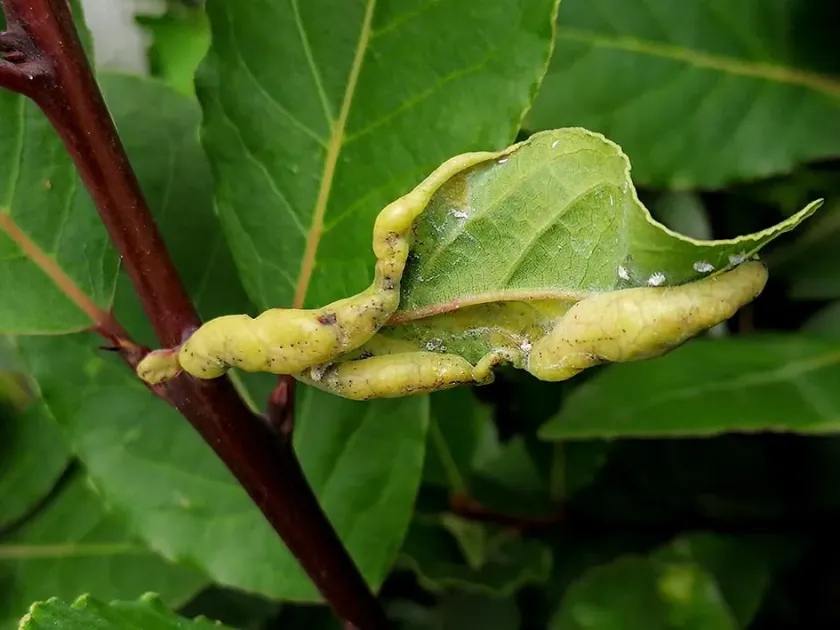
As the insects feed, they inject saliva into the plant tissues, which disrupts normal development. This results in severe leaf deformation, curling, and the formation of characteristic galls or lumps.
Heavy infestations can lead to stunted growth of new shoots, reduced leaf size, and a general decline in the plant's health and aesthetic appeal.
The sticky honeydew secreted by the nymphs creates a favorable environment for the growth of sooty mold, which blocks sunlight and hinders the plant's photosynthesis process.
If left unmanaged, the cumulative damage can lead to premature leaf drop and, in extreme cases, the overall weakening of the tree, making it vulnerable to other stressors.
When it appears
The activity of the Laurel psyllid begins early in the spring, coinciding with the first flush of new leaves on the bay laurel tree.
In temperate zones, several generations of the pest can occur within a single growing season, leading to a constant threat during the summer months.
During the autumn, the insects look for sheltered areas on the tree or in the surrounding environment to overwinter, waiting for the return of warmer temperatures.
High humidity and mild temperatures are ideal for the rapid development of nymphs, while extremely hot and dry weather may slightly slow down their population growth.
Monitoring should be most intense during the initial leaf-growth phase in late winter and early spring to prevent the establishment of the first generation.
Signs of infestation
The most noticeable sign of a psyllid infestation is the curling and distortion of young leaves, which often look wrinkled or bumpy.
Upon closer inspection, the undersides of the leaves often reveal small, stationary nymphs covered in waxy or cottony white filaments.
Leaves affected by the pest often display a sticky, shiny residue, which is the honeydew excretion. This substance eventually turns black due to the growth of sooty mold fungus.
The tree may appear generally sickly, with slowed development of new branches and an overall diminished appearance compared to healthy specimens.
- Curling, puckering, and severe deformation of new laurel leaves.
- Presence of waxy, white scales or filaments on leaf undersides.
- Sticky honeydew film covering the foliage and stems.
- Black, dusty sooty mold growth on the leaf surfaces.
Control measures
Cultural control is a first step, involving the pruning and disposal of infested shoots to reduce the population load on the plant.
Maintaining the health of the laurel tree through appropriate watering and fertilization helps the plant withstand and recover from pest-induced stress.
Chemical control with systemic insecticides is often necessary for significant infestations. These treatments ensure that the toxin reaches the sap, effectively killing the nymphs.
It is recommended to use insecticides during the early stages of infestation to prevent the pest from reaching maturity and laying eggs for the next generation.
Always ensure that the chosen treatment is safe if the laurel leaves are intended for culinary use, or consider biological control agents if chemical options are restricted.
Taxonomy
- Latin name
- Trioza parviceps
- Order
- Hemiptera (bugs, aphids, leafhoppers)
- Family
- Triozidae
- EPPO code
- TRIZPA
Discussion
No discussions yet — be the first.