
Common triozid
Trioza obsoleta
Description
How to identify
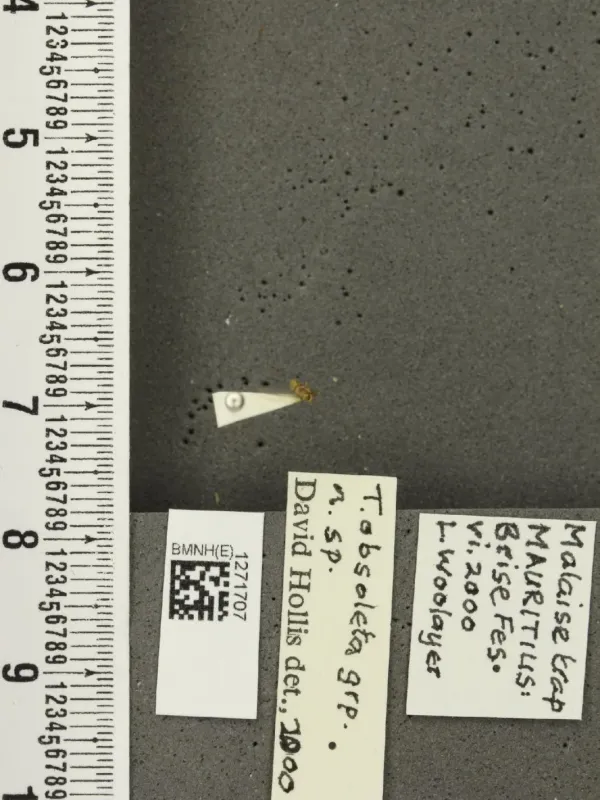
The common triozid (Trioza obsoleta) belongs to the Triozidae family within the order Hemiptera. These are tiny insects, with adults measuring approximately 2–3 mm in length, often overlooked due to their size and camouflage capabilities.
Adults possess clear, transparent wings and typically have a greenish to brownish coloration, allowing them to blend perfectly with the foliage of their host plants.
The nymphs of this species are flat and encased in a waxy, protective secretion, which acts as a shield against environmental stressors and many traditional chemical treatments.
As hemimetabolous insects, they undergo a gradual metamorphosis, progressing through several nymphal stages before reaching the adult winged form. Both nymphs and adults rely on specialized piercing-sucking mouthparts.
Due to the jumping behavior of the adults, they are often referred to as jumping plant lice. This agility makes it difficult to detect them early, as they rapidly disperse when disturbed.
What it damages
Common triozids primarily feed on trees from the Rosaceae family, with a preference for wild plum, blackthorn, and various pear species. They tend to infest the most tender, actively growing parts of the plant.
The insect feeds by piercing the leaf epidermis and injecting salivary enzymes. This process disrupts the plant's physiological functions and causes localized tissue damage.
As a result, leaves often exhibit curling and deformation, frequently turning inward. This damage impairs the plant's photosynthetic efficiency, leading to stunted shoot growth.
Young nursery trees are particularly vulnerable, as heavy infestations can lead to significant growth loss and decreased vigor, making them susceptible to further environmental stress.
Furthermore, these insects are known vectors for certain phytoplasmas and plant viruses, posing a serious long-term threat to the overall health and productivity of the orchard.
When it appears
Adults overwinter in protected locations, such as cracks in tree bark, dead leaves, or sheltered areas near the orchard, emerging when temperatures begin to rise in early spring.
Upon emergence, they move to the developing buds and young leaves to feed and begin the reproductive cycle. This timing coincides with the most critical growth phase of the trees.
The peak activity period typically occurs from late spring through mid-summer, when the environmental conditions favor rapid population growth and multiple generational cycles.
High temperatures and dry spells often accelerate the development of the nymphs, leading to population explosions within a single growing season.
As autumn approaches and temperatures drop, the insects begin their migration toward hibernation sites, entering a state of diapause to survive the winter months.
Signs of infestation
The first indicator of an infestation is the appearance of small, pale or yellowish spots on the upper leaf surface, corresponding to the feeding sites on the underside.
Significant curling or thickening of the leaves, often accompanied by a rigid texture, is a classic symptom of triozid presence. In some cases, gall-like deformations may form.
A careful inspection of the leaf underside will reveal nymphs covered in white, waxy filaments, which may appear similar to a mealy substance or fine webbing.
Severe infestations frequently result in premature leaf drop, which can significantly weaken the tree's energy reserves for the following season.
- Small pale spots on leaves
- Leaf curling and deformation
- White waxy deposits on the underside of leaves
- Stunted terminal shoot growth
- Premature shedding of foliage
Control measures
Sanitation is a primary defense; removing and disposing of fallen leaves and debris in the autumn is crucial to reduce the population of overwintering adults.
Pruning and destroying heavily infested shoots during the growing season can help limit the spread of the colony throughout the tree canopy.
Systemic insecticides are generally the most effective method for controlling the nymphs, as they ensure the active ingredient reaches the insect through the plant's sap.
Integrated Pest Management (IPM) practices, including the use of biological control agents or soft, eco-friendly pesticides, help minimize the impact on beneficial insect populations.
It is essential to monitor the population levels and apply treatments only when necessary, following local agricultural guidelines to ensure both efficacy and environmental safety.
Taxonomy
- Latin name
- Trioza obsoleta
- Order
- Hemiptera (bugs, aphids, leafhoppers)
- Family
- Triozidae
- EPPO code
- TRIZOB
Discussion
No discussions yet — be the first.