
Carrot psyllid
Trioza nigricornus
Description
How to identify
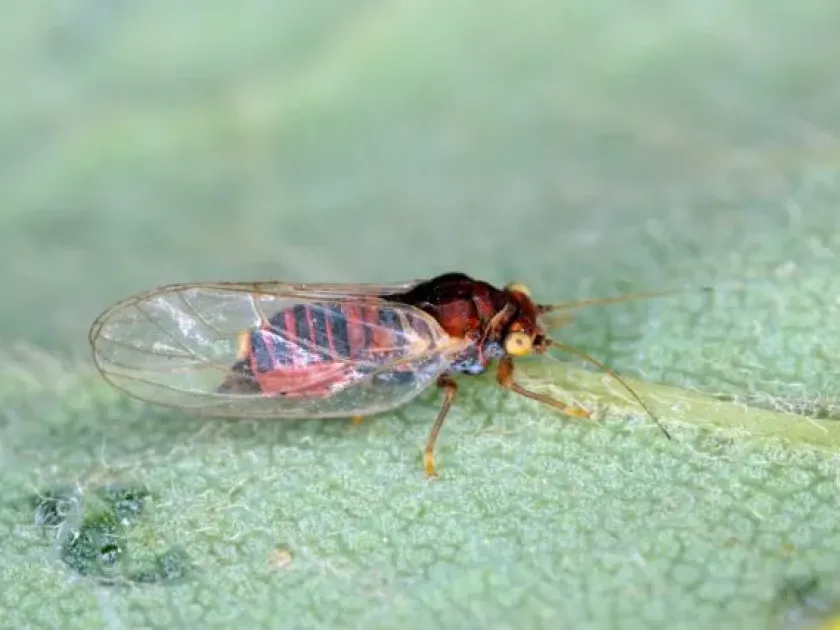
The carrot psyllid (Trioza nigricornis) belongs to the family Triozidae and is a significant pest primarily affecting various Umbelliferae crops.
The adult insect is a small, jumping creature, approximately 1.5–2 mm long, which migrates from its overwintering sites in coniferous forests to vegetable fields in early spring.
Females lay their eggs on the underside of leaves, which are attached by tiny stalks, ensuring the larvae have immediate access to food upon hatching.
The larvae are flat, scale-like insects that stay fixed in one position for long periods, feeding on the plant sap and hindering the normal development of the host.
Because the species can complete multiple generations within a single growing season, environmental conditions like warm, dry springs significantly accelerate population growth.
What it damages
The pest primarily targets commercial and garden crops including carrots, parsley, celery, parsnips, and dill, often causing localized outbreaks.
Signs of infestation
The characteristic symptom is severe leaf curling, where the edges roll inwards, resulting in a tight, wrinkled appearance often referred to as "curled leaves."
Discoloration of the foliage to a reddish or purplish hue is common, which often mimics nutrient deficiencies or viral diseases in the field.
Plant growth becomes stunted, and the resulting roots are often undersized, deformed, and woody, leading to a significant reduction in marketable harvest.
The honeydew secreted by the nymphs creates a sticky surface on the leaves, which encourages the growth of sooty mold and further stresses the plant.
If left uncontrolled, the infestation can lead to a complete loss of vitality in the carrot tops, ultimately causing the plants to wither prematurely.
Control measures
Physical barriers such as floating row covers are highly recommended to prevent adult psyllids from reaching the young seedlings during the spring migration.
Implementing strict crop rotation and keeping carrot patches away from forest edges, especially those with conifers, helps reduce the initial pest pressure.
Regular sanitation of the area, including the removal of weeds from the Apiaceae family, minimizes the available habitat for the pest in the vicinity.
Chemical control using systemic or contact insecticides should be applied only when economic injury thresholds are reached and in accordance with local regulations.
- Monitor for early signs of infestation.
- Use resistant varieties where possible.
- Practice autumn tillage to destroy overwintering sites.
- Support natural predators in the garden ecosystem.
Taxonomy
- Latin name
- Trioza nigricornus
- Order
- Hemiptera (bugs, aphids, leafhoppers)
- Family
- Triozidae
- EPPO code
- TRIZNI
Discussion
No discussions yet — be the first.