
Magnolia psyllid
Trioza magnoliae
Description
How to identify
The Magnolia psyllid (Trioza magnoliae) belongs to the family Triozidae within the order Hemiptera. These small insects are known for their ability to jump using their well-developed hind legs, which is a characteristic feature of adult psyllids.
Adults exhibit specific body structures and transparent wings with distinct venation. Their coloration changes during their lifespan, typically ranging from light yellow to greenish or brownish hues.
The nymphs of the magnolia psyllid are relatively sedentary and are often covered with a waxy secretion that acts as a protective shield against predators and environmental stress.
The insect undergoes a complete life cycle, and the timing of each developmental stage is synchronized with the phenology of the host plant, specifically the magnolia species.
Field identification is usually performed by inspecting the undersides of young, developing leaves where these insects establish their colonies during the growing season.
What it damages
The primary host for this pest is the Southern Magnolia (Magnolia grandiflora). The psyllid targets young, tender shoots and leaves that are still in the active growth phase.
In nursery settings and managed landscapes, the magnolia psyllid can infest various magnolia cultivars, significantly detracting from their aesthetic value and vigor.
Heavy infestations can lead to severe leaf distortion and significantly stunted growth of the terminal shoots, which is especially detrimental to young trees and nursery stock.
The feeding activity of the nymphs often creates entry points for secondary pathogens and promotes the growth of sooty mold, which thrives on the honeydew excreted by the insects.
Severe infestations can trigger premature leaf drop and weaken the plant's overall vitality, making it more susceptible to environmental stress and frost damage during winter.
When it appears
The activity of the magnolia psyllid begins with the flushing of new buds in early spring, as overwintered adults emerge to lay eggs on tender leaf tissue.
Population peaks are typically observed in late spring and early summer when warm temperatures accelerate the developmental stages of the nymphs.
The insect may produce multiple generations throughout the summer, provided that the climate remains warm and moderately humid, which are ideal conditions for their reproduction.
By autumn, the activity levels decline as the insects prepare for overwintering, often finding refuge in tree bark crevices or under leaf litter.
Agronomists recommend systematic monitoring from March through September to detect early signs of infestation before the population reaches damaging levels.
Signs of infestation
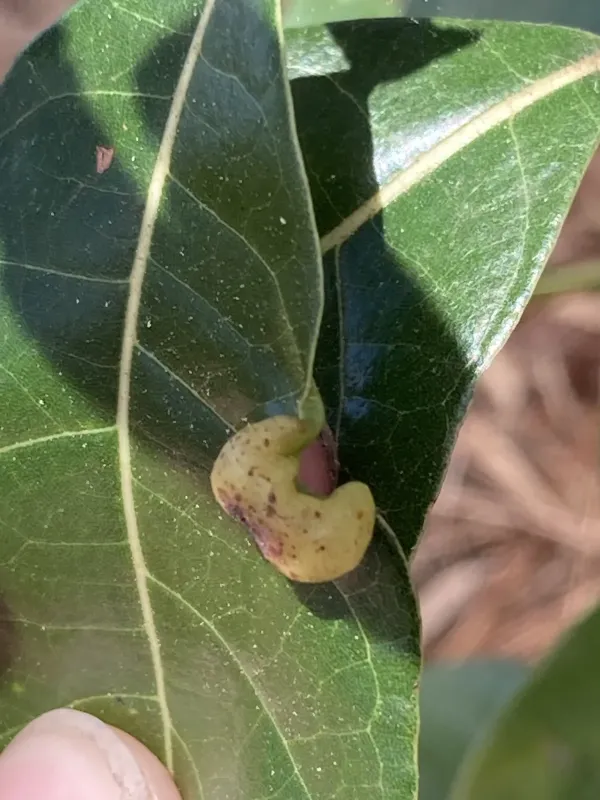
The most prominent sign of infestation is the characteristic distortion of the leaf blades. Leaves often curl and fold, creating pockets or galls where nymphs reside for protection.
Chlorotic spotting or yellowing on the upper surface of the leaves is a common symptom resulting from the injection of salivary toxins during the feeding process.
The presence of sticky honeydew secretions is a telltale sign, which often turns black due to the rapid colonization by sooty mold fungi.
Visible white waxy filaments or scale-like structures on the underside of the leaves serve as definitive proof of a Triozidae family infestation.
- Leaf curling and deformation.
- Presence of waxy residue on leaf undersides.
- Development of black sooty mold.
- Stunted development of terminal shoots.
- Foliar chlorosis and yellow spotting.
Control measures
Managing the magnolia psyllid requires an integrated approach that combines cultural practices with targeted insecticide applications.
Cultural control involves the pruning and destruction of heavily infested foliage and terminal shoots to reduce the localized population of the pest.
For chemical control, products within the neonicotinoid or pyrethroid classes are highly effective against sap-sucking insects like psyllids.
Applications should be made in the early morning or late evening, ensuring thorough coverage of the leaf undersides where nymphs are protected by their waxy secretions.
Maintaining optimal plant health through balanced fertilization and adequate irrigation is crucial, as vigorous plants are more resilient to pest attacks and recover faster from damage.
Taxonomy
- Latin name
- Trioza magnoliae
- Order
- Hemiptera (bugs, aphids, leafhoppers)
- Family
- Triozidae
- EPPO code
- TRIZMG
Discussion
No discussions yet — be the first.