
Bay sucker
Trioza magniforceps
Description
How to identify
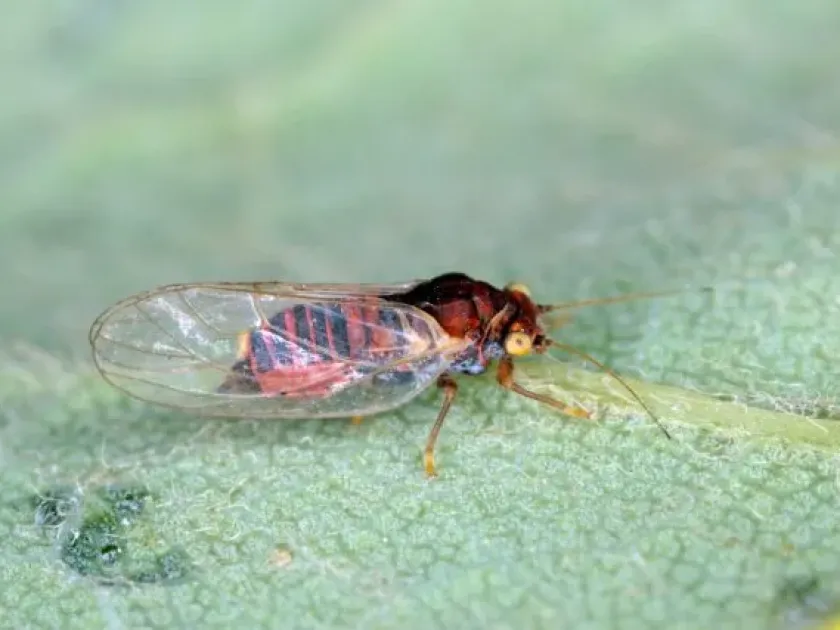
The bay sucker (Trioza magniforceps) is a small sap-sucking insect belonging to the family Triozidae. It is a specialized pest primarily affecting the Laurus nobilis species.
Adult insects are typically greenish-yellow to brownish in color, featuring well-developed hind legs adapted for jumping. They have transparent wings with a distinct vein pattern that aids in identification.
Nymphs are sedentary and often reside on the underside of leaves. They are frequently covered in waxy secretions, which provide a protective layer against environmental stress and predators.
The presence of these insects is often confirmed by observing the distinctive curling and gall-like deformities on young leaves, rather than spotting the tiny insects themselves.
Using a magnifying glass is essential for early detection, especially when inspecting the apical buds where nymphs typically begin their life cycle each spring.
What it damages
The primary damage is caused by both nymphs and adults feeding on the sap of young, succulent laurel leaves. This feeding process triggers abnormal growth in leaf tissues.
Affected leaves curl downwards, thicken, and develop unsightly pockets or galls where the insects shelter. This deformity is the most prominent symptom of a bay sucker infestation.
Severe infestations can lead to stunted growth of new shoots, discoloration of the foliage, and, in extreme cases, the premature shedding of leaves, which weakens the overall tree.
The sticky honeydew secreted by the nymphs often attracts sooty mold, a fungus that covers the leaf surface in a black, powdery layer, further reducing photosynthesis.
In nursery settings, damage caused by Trioza magniforceps significantly lowers the marketability of laurel plants due to the loss of aesthetic value.
When it appears
The life cycle of the bay sucker is tightly synchronized with the growth phases of its host plant. The emergence of adults occurs in early spring as soon as buds begin to break.
The highest population density is typically observed between late spring and early summer, corresponding with the period of maximum production of fresh, young foliage.
Multiple generations can occur throughout the growing season, especially in regions with mild climates where temperatures allow for continuous development.
As autumn progresses, the insects seek shelter to enter a diapause state. They typically hibernate in crevices in the bark or amongst leaf litter until the following spring.
Monitoring the plant during the early growth flush is the most effective way to intercept the pest before the population reaches damaging levels.
Control measures
Managing the bay sucker requires a multifaceted approach involving both cultural practices and targeted chemical interventions. Early action is key to preventing widespread damage.
Regular maintenance, including the pruning of heavily infested shoots, helps reduce the immediate source of infestation within the garden or nursery.
Chemical control usually involves systemic insecticides that are absorbed by the plant tissues, effectively targeting the sap-feeding nymphs inside the galls.
- Regular inspection of the laurel canopy throughout the spring.
- Physical removal and destruction of heavily curled, infested leaves.
- Use of systemic insecticides when necessary, adhering to label guidelines.
- Encouraging natural predators such as ladybirds and lacewings.
Always rotate different classes of insecticides if multiple treatments are required to minimize the risk of the pest developing resistance to specific active ingredients.
Taxonomy
- Latin name
- Trioza magniforceps
- Order
- Hemiptera (bugs, aphids, leafhoppers)
- Family
- Triozidae
- EPPO code
- TRIZMA
Discussion
No discussions yet — be the first.