
Carrot psyllid
Trioza flavipennis
Description
How to identify
The carrot psyllid (Trioza flavipennis) is a small insect belonging to the order Hemiptera and the family Triozidae. Adults are approximately 2-3 mm long and are easily recognized by their clear wings with a distinct yellowish tint.
The body coloration ranges from light green to brownish, providing excellent camouflage on host plants. Like other psyllids, they possess strong hind legs adapted for jumping, which they use to escape when disturbed.
Nymphs are relatively sedentary and often appear flattened against the leaf surface. They are frequently covered in a waxy secretion, which serves as a protective layer against environmental stress and predators.
The life cycle involves seasonal migration. Adults typically overwinter on coniferous trees and migrate to carrot fields during the spring as temperatures rise, signaling the start of the growing season.
Monitoring for the presence of this pest is best achieved using yellow sticky traps placed at the edge of the fields to catch adults during their initial spring migration phase.
What it damages
The primary host of the carrot psyllid is the domestic carrot, but it also readily infests other plants within the Apiaceae family, such as parsley, parsnip, and celery, causing significant economic losses.
Both adults and nymphs feed by piercing plant tissues and extracting cell sap. This feeding process causes severe stress to the plant and interrupts the normal flow of nutrients to the root.
Damage is particularly detrimental during the root-bulking phase, leading to stunted, malformed roots that lack market value. Infested crops often show reduced overall vigor and lower yield potential.
A major concern is that this psyllid can act as a vector for phytoplasma diseases. These pathogens cause symptoms such as leaf curling, chlorosis, and general growth arrest in the host plant.
In years with high pest pressure, infestation levels can be severe, leading to significant financial impact on commercial carrot production if management practices are not implemented in time.
Signs of infestation
The most prominent sign of infestation is "carrot yellows" or leaf curling, where the leaves become distorted and tightly curled. The foliage typically appears stunted and smaller than normal.
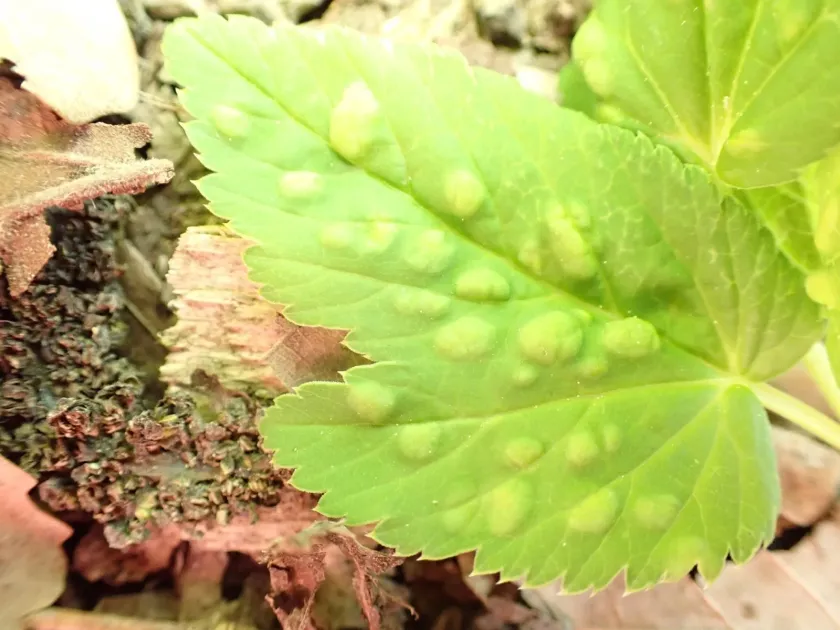
Close inspection of the underside of the leaves reveals the presence of psyllid nymphs clustered together. The feeding sites often show pale or yellowish necrotic spots on the leaf tissue.
In response to the feeding, the plants often exhibit an anthocyanin reaction, where the leaves turn a reddish or purple hue, indicating severe physiological disruption due to toxic saliva.
Roots from infested plants are often thin, woody, and possess a bitter, unpleasant taste. This quality degradation makes the produce unsuitable for fresh market sales or long-term storage.
The field appearance of an infested crop often shows patches of wilted or stunted plants, allowing growers to identify hotspots of infection and take targeted action to prevent further spread.
Control measures
Strategic field placement is essential; maintaining distance from coniferous forests or shelterbelts helps reduce the initial colonization of psyllids emerging from their winter sites.
Early sowing can help the crop establish enough size to tolerate pest pressure before the migration of adults reaches its peak, which is a common and effective cultural practice.
Chemical control involving systemic insecticides is recommended when population thresholds are exceeded. It is crucial to choose products that are effective and safe for use on root vegetables.
Sanitation practices, such as removing weeds from the Apiaceae family around the field, help eliminate alternative hosts for the psyllid population during the summer months.
Implementing an Integrated Pest Management (IPM) program, which includes scouting, biological controls where possible, and rotational use of insecticides, is key to sustainable long-term success.
Taxonomy
- Latin name
- Trioza flavipennis
- Order
- Hemiptera (bugs, aphids, leafhoppers)
- Family
- Triozidae
- EPPO code
- TRIZFL
Discussion
No discussions yet — be the first.