
African citrus psyllid
Trioza erytreae
Description
How to identify
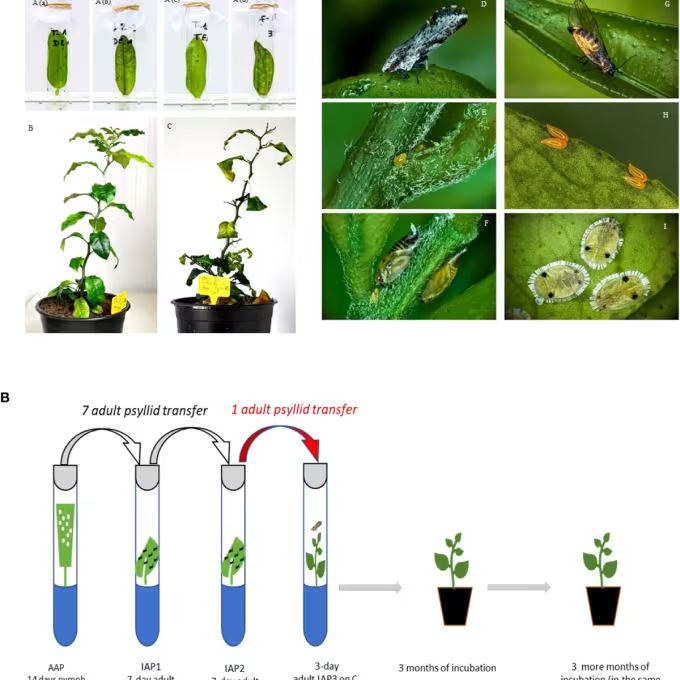
The African citrus psyllid (Trioza erytreae) is a small insect belonging to the family Triozidae (order Hemiptera). Adults are approximately 3–4 mm long and have transparent wings with a distinct vein pattern.
The body color of the adult ranges from light green to brownish-yellow. They are highly active and can jump rapidly, which is a typical behavioral trait of the Psyllidae family.
Females lay yellow eggs in large numbers on the margins of young leaves. The nymphs are flattened and often produce honeydew, which makes them difficult to remove manually.
The life cycle involves incomplete metamorphosis. Development is heavily influenced by climate; the psyllid prefers cool, humid environments, which limits its distribution to specific zones.
Nymphs remain relatively stationary while feeding on the underside of leaves, causing tissue irritation that leads to the formation of characteristic galls.
What it damages
This pest exclusively attacks plants within the Rutaceae family, with citrus species like lemon, orange, and lime being the primary targets for feeding and oviposition.
The African citrus psyllid is widely recognized as the primary vector of the bacterium responsible for the African form of citrus greening disease (Huanglongbing or HLB).
Feeding by large populations of psyllids causes severe distortion of new leaves and shoots. The injection of saliva containing toxins disrupts the plant's normal growth hormones.
In addition to transmitting fatal diseases, the psyllid causes direct damage by sucking plant sap, which weakens the overall vigor of the tree and reduces the quality of fruit.
If left unmanaged, infestation in citrus nurseries can be devastating, leading to total loss of seedlings and creating a reservoir of infection for surrounding plantations.
Signs of infestation
The most distinctive symptom is the appearance of small, open galls on the upper leaf surface, created by nymphs feeding on the underside. These galls provide protection for the developing insects.
Infested shoots appear stunted, and the leaves become curled, twisted, and brittle. Heavy infestations often result in massive leaf drop and poor shoot development.
Honeydew secretion is common, which promotes the growth of sooty mold on the foliage and fruit, further reducing the photosynthetic capacity of the tree.
Signs are most prominent during the active flushing periods of citrus trees when soft, succulent tissue is available for the psyllids to colonize.
- Characteristic pit-like galls on leaves.
- Twisted, curled, and stunted new growth.
- Presence of honeydew and black sooty mold.
- Increased incidence of chlorosis on leaves.
Control measures
The primary control strategy involves strict quarantine measures to prevent the spread of the insect to non-infested regions. Nursery stock should always be certified as pest-free.
Chemical control focuses on the use of systemic insecticides during flush periods. Effective timing is critical, as nymphs are most vulnerable when they first hatch.
Cultural control involves pruning and destroying infested branches to reduce the population density of the psyllid within the orchard.
Biological control using natural predators, such as the parasitoid wasp Tamarixia dryi, has shown significant success in reducing population outbreaks in several regions.
Integrated Pest Management (IPM) programs utilize yellow sticky traps for monitoring populations and determining the economic threshold for intervention.
Taxonomy
- Latin name
- Trioza erytreae
- Order
- Hemiptera (bugs, aphids, leafhoppers)
- Family
- Triozidae
- EPPO code
- TRIZER
Discussion
No discussions yet — be the first.