
Laurel psyllid
Trioza brevigenae
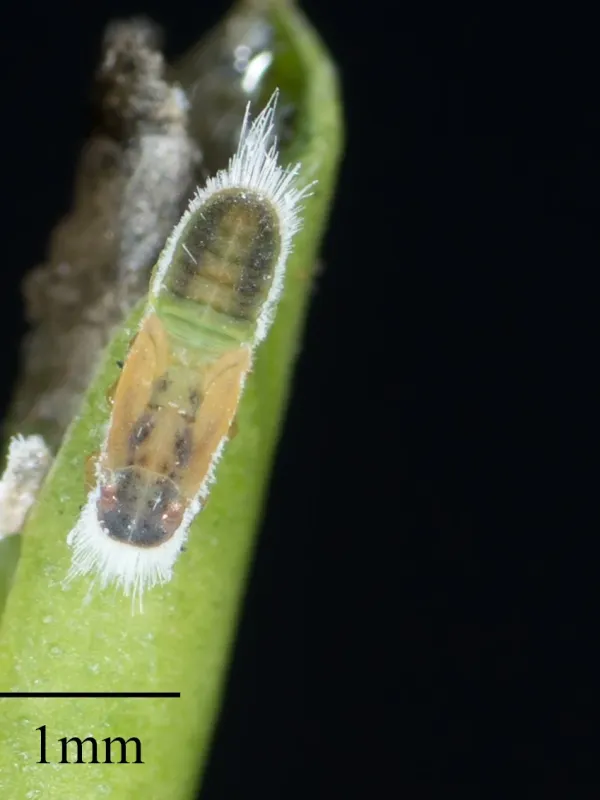
Description
How to identify
The laurel psyllid (Trioza brevigenae) is a small sap-sucking insect belonging to the order Hemiptera and the family Triozidae. These tiny insects are closely related to aphids but are distinguished by their jumping ability and specific host preference.
Adult psyllids are typically small, winged insects with a body length of only a few millimeters. Their color ranges from pale green to brownish, providing excellent camouflage against the foliage of their host plant, the laurel tree.
What it damages
This pest primarily targets the bay laurel (Laurus nobilis), feeding on the sap of young shoots and newly formed leaves. By inserting their piercing-sucking mouthparts into the plant tissue, they extract essential nutrients required for plant growth.
Severe infestations can lead to stunted growth, reduced leaf size, and overall physiological stress for the plant. If left untreated, the cumulative damage can significantly weaken a healthy shrub or tree over several seasons.
When it appears
The life cycle of the laurel psyllid is synchronized with the flushing phase of the laurel tree in early spring. Adults emerge from overwintering sites to lay eggs on the newly emerging soft leaf buds.
Depending on local climate conditions, several overlapping generations can occur throughout the growing season. Their population typically peaks during warm, dry periods when the supply of fresh, succulent growth is abundant.
Signs of infestation
The most visible sign of an infestation is leaf curling and distortion. The leaves often develop characteristic galls or swellings where the nymphs feed, resulting in a twisted and unsightly appearance.
The presence of honeydew, a sticky substance secreted by the insects, is a clear indicator of their activity. This substance often promotes the growth of sooty mold, which creates a black, powdery layer on the surface of the leaves, hindering photosynthesis.
Control measures
Integrated pest management starts with regular monitoring of the laurel canopy during the spring months. Pruning away and disposing of infested branches can help reduce the population density of the pest manually.
In cases of severe outbreaks, systemic insecticides are the most effective solution, as they reach the insects through the plant's vascular system. It is important to rotate products to prevent the development of resistance and to minimize the impact on beneficial insects.
Taxonomy
- Latin name
- Trioza brevigenae
- Order
- Hemiptera (bugs, aphids, leafhoppers)
- Family
- Triozidae
- EPPO code
- TRIZBV
Discussion
No discussions yet — be the first.