
Golden Silk Orb-Weaver
Trichonephila clavipes
Description
How to identify
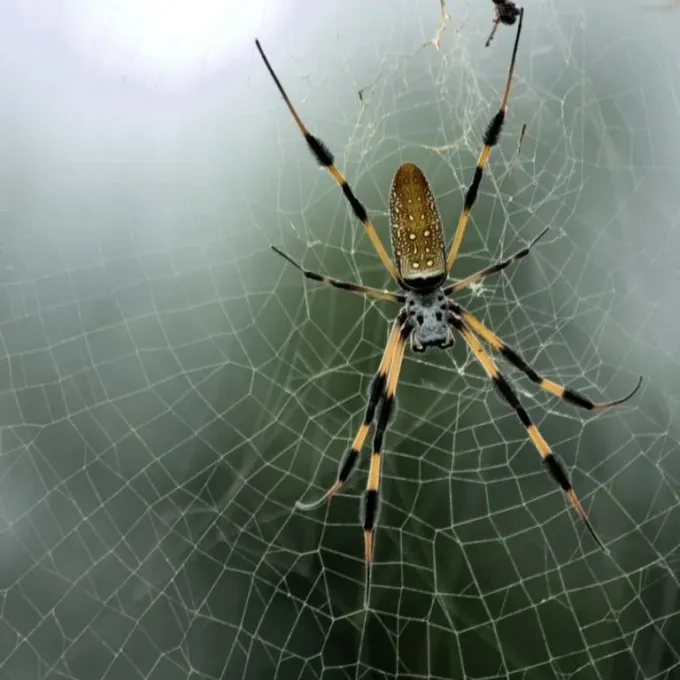
The Golden Silk Orb-Weaver (Trichonephila clavipes) is a prominent spider species in the Araneidae family, widely recognized for its impressive size and the characteristic golden hue of its silk. Females exhibit a dramatic size advantage over males and feature distinct tufts of hair on their legs.
These spiders are identifiable by their elongated bodies and vibrant markings. They typically inhabit tropical and subtropical environments, frequently building their large, circular webs in sunny areas between trees, shrubs, or garden infrastructure.
The biology of Trichonephila clavipes revolves around its highly efficient prey-capture mechanism. The webs are incredibly strong and sticky, allowing the spider to trap a variety of flying insects, which serve as its sole food source.
The lifecycle consists of several molting stages. After mating, the female produces egg sacs, which are carefully concealed near the web to protect the offspring from predators and environmental stressors.
While often feared by the public, these spiders are non-aggressive toward humans unless handled and do not pose any threat to the integrity of agricultural vegetation.
What it damages
It is critical to clarify that Trichonephila clavipes does not feed on plant tissues. It is an obligate carnivore and does not consume leaves, fruits, roots, or sap, making it harmless to crops and horticultural plants.
From an agronomic perspective, this species is considered a beneficial predator. By capturing various flying insects, including those that may act as minor pests, the spider contributes to the natural regulation of insect populations within the ecosystem.
There are no known instances where this spider has caused damage to crops. Any perceived negative impact is usually limited to the physical presence of the web, which may be an inconvenience during harvesting or mechanical operations in orchards.
The presence of golden silk orb-weavers in agricultural landscapes is often a sign of a healthy, biodiverse environment where chemical pesticide usage is not excessive, allowing predatory arthropods to thrive.
In conclusion, labeling this spider as a pest is scientifically inaccurate. It should be categorized as an auxiliary species that assists in maintaining the balance of the local agricultural ecosystem.
Control measures
There are no recommended control measures for the Golden Silk Orb-Weaver, as they are not pests. Implementing eradication programs against this species would be detrimental to the balance of local beneficial insect populations.
In cases where web density interferes with farm machinery or access paths, simple mechanical removal of the webs is sufficient. Chemical control is strictly discouraged due to the unnecessary ecological harm it causes.
To discourage spiders from establishing webs in sensitive areas such as greenhouses, focus on sanitation. Regularly pruning vegetation and ensuring good ventilation can make the environment less suitable for web attachment.
Integrated Pest Management (IPM) practices encourage the protection of generalist predators. Including species like Trichonephila clavipes in the list of allies allows for a more natural approach to crop protection.
Farmers and agronomists are advised to educate staff on the distinction between actual agricultural pests and beneficial predators to ensure that non-target species are preserved in their habitats.
Taxonomy
- Latin name
- Trichonephila clavipes
- Family
- Araneidae
- EPPO code
- NEPLCL
Discussion
No discussions yet — be the first.