
Circe garden spider
Araneus circe
Description
How to identify
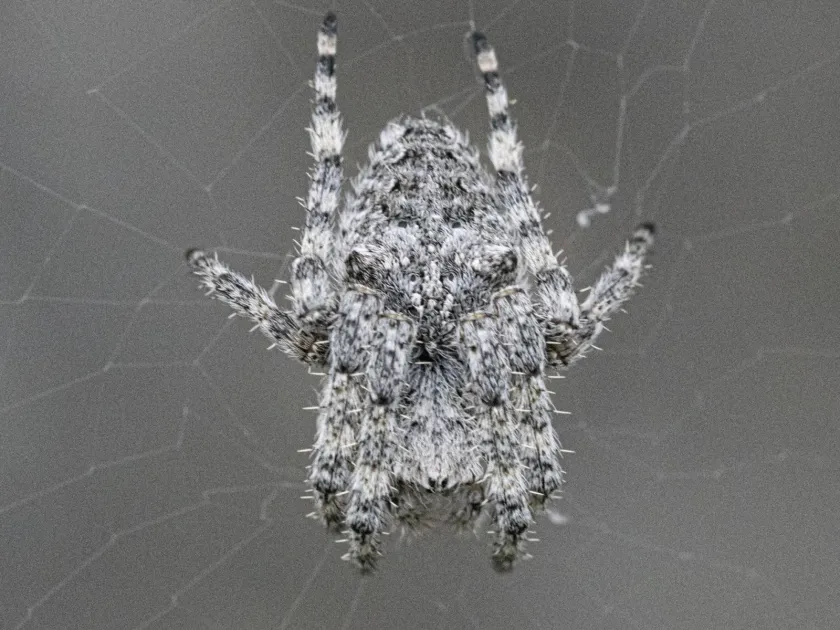
The Circe garden spider (Latin Araneus circe) is a species within the Araneidae family. It is known for its intricate camouflage patterns on the abdomen, which perfectly mimic the texture and color of tree bark.
Adult females are significantly larger than males and possess strong chelicerae. The body is covered in dense hairs, often appearing gray or brownish, allowing them to remain inconspicuous while stationary.
They typically inhabit forest edges, gardens, and vineyards, where they construct large orb-web structures between branches or dense foliage to trap their prey.
Unlike many other spiders, Araneus circe tends to remain hidden, avoiding direct sunlight and preferring shady areas of the plant canopy to minimize exposure.
Taxonomically, the species belongs to the order Araneae and follows the typical orb-weaving behavior, which makes them highly efficient predators in their micro-habitats.
What it damages
While spiders are generally beneficial as insect predators, high densities of Araneus circe can cause indirect damage to agricultural crops due to the scale of their webs.
Dense, multi-layered webs can physically obstruct light from reaching leaves, potentially interfering with the photosynthesis process in young, developing shoots.
In orchards and vineyards, the weight and tension of large webs can bend or deform tender young stems, fruit clusters, or sensitive leaves, leading to mechanical stress.
Large webs often collect debris, dust, and moisture, creating a substrate for opportunistic fungal pathogens like sooty mold to thrive on the plant surface.
Furthermore, extensive webbing acts as a physical shield during chemical spraying, preventing pesticides from reaching the intended leaf surfaces effectively.
When it appears
The biological activity of the Circe garden spider is highly dependent on ambient temperature and the progression of the growing season.
Peak activity is usually observed during the summer months, aligning with the prime foraging period when prey availability is at its highest in agricultural settings.
The breeding season typically occurs in mid-to-late summer, after which the presence of webs becomes most noticeable throughout the garden or vineyard.
As nighttime temperatures drop in autumn, the spiders prepare for dormancy, seeking refuge under tree bark or deep within leaf litter to survive the winter.
The lifecycle resumes in spring when temperatures rise, allowing juveniles to hatch and begin constructing their initial small webs near their hatching sites.
Signs of infestation
The most reliable sign of an Araneus circe infestation is the presence of large, symmetrical orb-webs stretched across the canopy of fruit trees or shrubs.
Frequent observations of molted skins (exuviae) on tree trunks indicate an established population that is actively growing and molting within the orchard.
Distorted or curled leaves wrapped in silk threads serve as daytime retreats where the spiders hide to escape predators and heat stress.
Visual confirmation can be easily achieved at dusk or night when the spiders move to the center of their webs to monitor for vibration and prey movement.
Remnants of prey items stuck in the web are strong indicators of active hunting, even if the spider itself is hiding in nearby foliage or bark crevices.
Control measures
Effective management of Araneus circe focuses on sanitation, starting with the removal of old, loose bark and leaf litter where the spiders often overwinter.
Manual removal of webs using a high-pressure water stream or specialized grooming brushes is the most eco-friendly way to deter spiders from sensitive plant areas.
Regular pruning and maintenance of canopy density are essential as they improve airflow and light penetration, making the environment less favorable for web building.
Chemical intervention should be used only as a last resort, prioritizing selective insecticides that minimize harm to beneficial natural enemies in the ecosystem.
Encouraging natural predators, such as insectivorous birds, can also help regulate spider populations naturally without the need for intensive chemical applications.
Taxonomy
- Latin name
- Araneus circe
- Family
- Araneidae
- EPPO code
- ARAUCI
Discussion
No discussions yet — be the first.