
Aculepeira
Aculepeira
Description
How to identify
The genus Aculepeira belongs to the orb-weaver spider family (Araneidae). In an agronomic context, these spiders are not considered pests as they do not feed on plant tissues or crops.
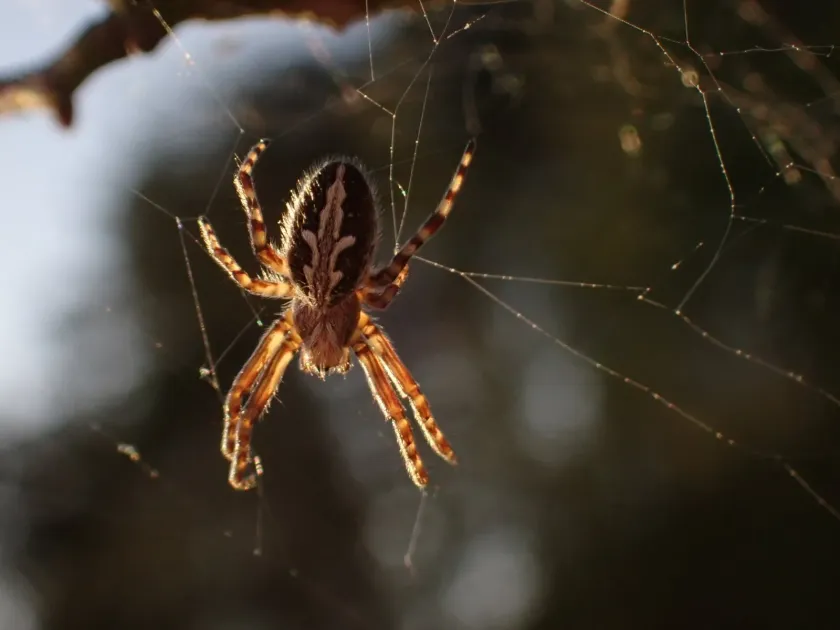
They are easily identified by a characteristic pattern on their dorsal abdomen, which often resembles an oak leaf or a complex geometric design. Their body structure is typical for orb-weavers, consisting of a distinct cephalothorax and abdomen.
These spiders are known for weaving large, symmetrical, and strong orb-webs. They typically anchor these webs between the stems of tall crops or adjacent weeds to maximize the capture of flying insects.
Adult females are generally larger than males and exhibit a more rounded, robust abdomen. Their coloration ranges from light brown to deep grey, providing effective camouflage against vegetation and tree bark.
The life cycle encompasses eggs, nymphs, and adults. They often overwinter as juveniles in sheltered areas like dry plant debris or crevices, becoming active as soon as temperatures rise in the spring.
What it damages
It is crucial to understand that Aculepeira are predators, not phytophagous insects. They do not damage crops by feeding on leaves, stems, or roots; in fact, they do not consume plant matter at all.
Their significance in agriculture is primarily ecological. Their presence indicates a healthy, biologically active environment where they help regulate populations of various harmful insect species.
In certain scenarios, dense webbing on crops might cause minor inconveniences during manual harvesting or routine field scouting. It is a physical presence rather than a chemical or physiological threat.
Occasionally, heavy webbing could potentially restrict airflow around the lower parts of dense crop canopies, though this is rarely a primary cause of disease outbreaks in well-managed systems.
Ultimately, Aculepeira is viewed as a beneficial component of the ecosystem, as they hunt and consume various pests that would otherwise damage agricultural production.
Signs of infestation
The most visible sign of an Aculepeira presence is the characteristic radial orb-web strung between crops or weeds. These webs are structurally sound and exhibit high symmetry.
When searching for them, one can usually spot the spider waiting at the hub of the web or in a nearby retreat, resting head-down while waiting for the vibrations of trapped prey.
Observing the remnants of insect chitinous shells caught in the web is a primary indicator of active hunting. This confirms their role in maintaining insect balance within the field.
During the early season, spiders are often found on weeds that act as necessary structural supports before the main crop grows tall enough to host their webs.
In the evening, they are easily detected with a flashlight, as their eyes reflect light and their webs become highly visible when covered in early morning or evening dew.
Control measures
There are no targeted control measures for Aculepeira in agriculture, as they serve as natural pest controllers. Their presence is generally encouraged in integrated pest management programs.
If web density becomes problematic in specialized horticultural settings, mechanical cultivation of field margins and weed control are sufficient to discourage web construction in those specific areas.
The use of broad-spectrum insecticides is discouraged, as these chemicals kill beneficial predators. Eliminating spiders can lead to secondary pest outbreaks that are significantly more destructive to crops.
Biological control strategies emphasize preserving habitats for these predators. This ensures that natural insect balance remains intact without the need for intensive chemical interventions.
Integrated Pest Management (IPM) practices prioritize the presence of these spiders as vital allies in achieving sustainable yields and reducing reliance on synthetic pesticides.
Taxonomy
- Latin name
- Aculepeira
- Family
- Araneidae
- EPPO code
- ACUESP
Discussion
No discussions yet — be the first.