
Star Orb Weaver
Acanthepeira
Description
How to identify
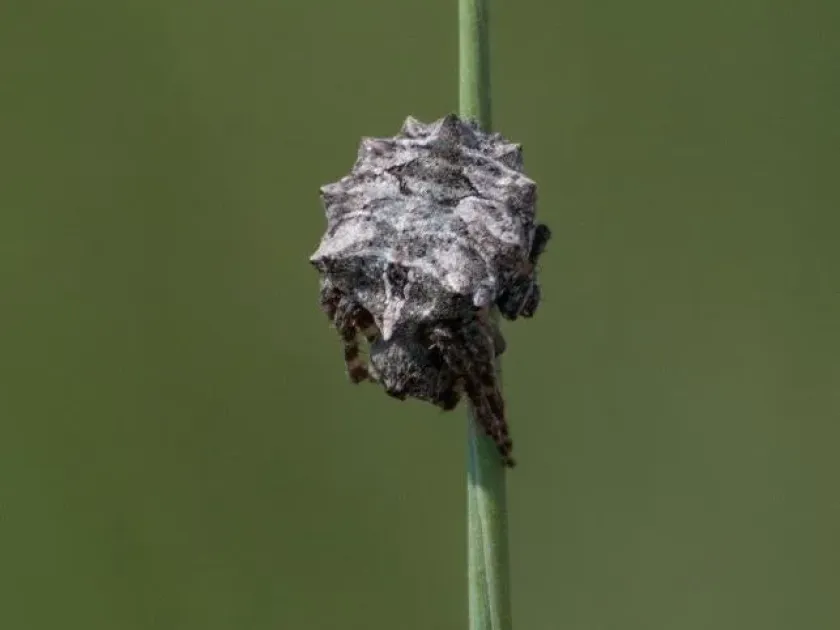
The Star Orb Weaver (genus Acanthepeira) is a spider belonging to the orb-weaver family, Araneidae, known for its distinct and complex abdominal patterns.
These spiders are characterized by a star-shaped or angular abdomen, which provides excellent camouflage against their natural surroundings in meadows and gardens.
As nocturnal or crepuscular hunters, they construct intricate, circular webs between plant stems, utilizing these as traps for various flying insects.
In terms of systematic classification, they are predators that play a crucial role in maintaining the balance of insect populations in diverse ecosystems.
It is critical to note that while they are found on crops, they are not pests. They lack the biology to feed on plant matter or damage agricultural yields.
What it damages
The Star Orb Weaver causes no damage to agricultural crops. They are obligate carnivores that feed solely on insects trapped in their webs.
They do not consume plant sap, foliage, or fruit. Their presence on a farm is entirely benign and, in many cases, highly beneficial for the grower.
By consuming agricultural pests such as aphids, flies, and beetles, they act as silent defenders of the crop, providing natural pest suppression services.
There is no record of economic loss attributed to this spider. Instead, they contribute to the natural biological control of harmful insect populations.
For any modern farmer, the presence of these orb weavers serves as a positive indicator of an active and healthy local environment surrounding their fields.
When it appears
The activity of the Star Orb Weaver typically begins in the spring as temperatures rise, signaling the emergence of their insect prey.
Peak populations are usually observed during the summer months when crop canopy development provides ideal conditions for building webs and catching food.
As autumn approaches and temperatures drop, these spiders begin to wind down their activity and focus on reproductive cycles, laying egg sacs in protected areas.
Their life cycle is closely synchronized with the growing season, allowing them to provide continuous support against pest outbreaks during the most vulnerable plant stages.
By overwintering in protected sites, the population remains stable, ensuring that the next generation of predators is ready for the following planting season.
Signs of infestation
The primary sign of their presence is the formation of circular, radial-patterned webs attached to tall plants, fences, or garden structures.
The spiders themselves often retreat to a hidden corner or the edge of their web during the day, making them difficult to spot without close inspection.
There will be an absence of plant distress markers such as holes in leaves, wilting, or discolored spots, confirming that the spider is not a threat to the plant.
Observing these webs indicates that your field or garden possesses a strong biodiversity level, which is a major advantage for sustainable farming practices.
No special scouting for "signs of damage" is required for this species, as they are not causative agents of any plant disease or mechanical plant injury.
Control measures
There are no control measures recommended for the Star Orb Weaver because they are not pests; in fact, they are considered valuable allies in the field.
Farmers should avoid using broad-spectrum insecticides that can inadvertently kill these beneficial predators, as this often leads to pest population surges.
Promoting a mosaic of non-crop vegetation around fields can help support and increase the number of these beneficial spiders, enhancing natural pest control.
In cases where web presence is undesirable for aesthetic or logistical reasons, mechanical removal is the only action needed; chemical intervention is entirely unnecessary.
Integrated Pest Management (IPM) programs prioritize the conservation of such species, recognizing their significant contribution to sustainable and healthy crop production.
Taxonomy
- Latin name
- Acanthepeira
- Family
- Araneidae
- EPPO code
- ATHPSP
Discussion
No discussions yet — be the first.