
European garden spider
Araneus diadematus
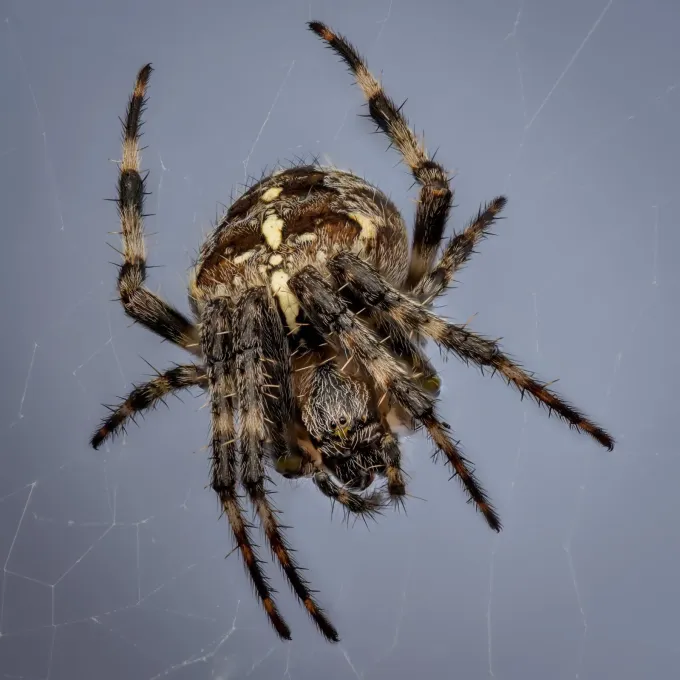
Description
How to identify
The European garden spider (Araneus diadematus) is a common spider species belonging to the family Araneidae, known as orb-weavers.
It is easily recognized by the white, cross-like markings on its dorsal abdomen, which gave it its common name. Females grow to 20-25 mm.
These spiders are primarily nocturnal, spending most of their time in a retreat near their web or at the hub, waiting for vibrations.
The life cycle typically lasts one to two years. Eggs are laid in a protected cocoon during autumn and hatch in the following spring.
They are widely distributed throughout Europe and North America, commonly found in gardens, meadows, and forest edges.
What it damages
The European garden spider is not a plant pest. It feeds exclusively on flying insects that get trapped in its orb-shaped web.
There is no evidence that this species causes any damage to plant tissues, including leaves, stems, or fruits of agricultural crops.
On the contrary, these spiders provide biological pest control by consuming harmful insects like flies, aphids, and midges present in the garden.
They are considered beneficial organisms within the ecosystem as they contribute to the natural reduction of insect populations.
No agricultural damage has ever been attributed to the feeding habits of this spider species, making them safe for any crop environment.
Signs of infestation
The presence of this spider is confirmed by the large, intricate circular webs built between plants, fences, or garden structures.
Remains of trapped insects inside the web represent a clear sign of the spider's hunting activity.
Egg sacs may be found in late autumn on bark or wooden structures, appearing as yellowish-brown, dense silk bundles.
Adult spiders are often visible in their webs, especially during late summer and early autumn when they reach their maximum size.
Early season growth often involves small spiderlings, which can be seen dispersing during sunny spring days.
Control measures
No control measures are required for the European garden spider, as it does not pose a threat to plant health or crop productivity.
If webs interfere with garden aesthetics or access, they can be removed manually without harming the plants.
Maintaining a clean garden environment, such as clearing debris and pruning old branches, naturally limits the sites available for web building.
Encouraging natural predators such as birds and certain predatory wasps helps keep spider populations balanced without chemicals.
- Manual removal of webs if necessary.
- Pruning of old or dense foliage.
- Cleaning of garden structures to prevent nesting.
Taxonomy
- Latin name
- Araneus diadematus
- Family
- Araneidae
- EPPO code
- ARAUDI
Discussion
No discussions yet — be the first.