
European garden spider
Araneus
Description
How to identify
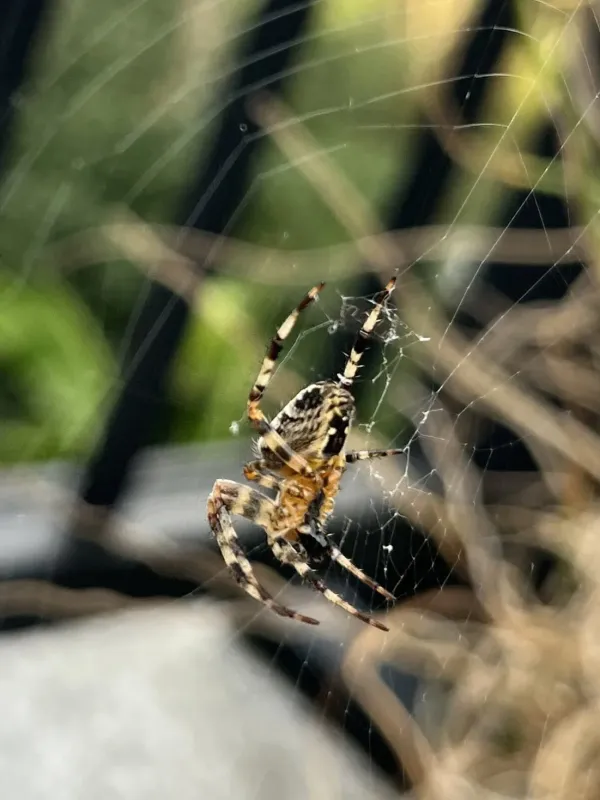
The European garden spider (Latin name: Araneus diadematus) is a common orb-weaver spider from the Araneidae family. It is easily identified by the white cross-like pattern on its abdomen.
Adult females typically reach sizes between 15 and 20 mm, while males are smaller. They exhibit varying shades of brown and grey, providing excellent camouflage against foliage.
Their body consists of a cephalothorax and an abdomen, both protected by a hard exoskeleton that helps prevent water loss in various environments.
They are primarily nocturnal animals. During the day, they often retreat to a hidden spot in the leaves or under tree bark to avoid direct sunlight and predators.
From an agronomic perspective, it is crucial to state that the European garden spider is not a plant pest, as it does not feed on vegetation.
What it damages
Araneus is a carnivorous predator that feeds solely on insects. It does not damage any agricultural or ornamental plants, including roots, stems, or leaves.
Their diet consists of flies, mosquitoes, moths, and other flying insects that are trapped within their silk webs throughout the growing season.
Their presence is considered beneficial for a garden ecosystem because they act as natural controllers of flying insect populations.
No damage to the plant's health occurs due to their activity; rather, they help reduce the pressure of some minor insect pests in the immediate area.
Therefore, they should be considered allies rather than enemies in any garden or farm management plan.
When it appears
The life cycle of the garden spider begins in spring when the eggs hatch from their overwintered cocoons hidden in protected areas.
During the summer months, the spiders grow rapidly, actively expanding their webs and hunting insects to support their development.
The peak of their activity occurs in late summer and autumn, which corresponds with the mating season and the final growth stage before the winter cold.
Once temperatures drop significantly in late autumn, adult spiders die off, leaving behind egg sacs to ensure the survival of the next generation.
Throughout the winter, the species remains dormant in the egg stage, waiting for the return of warmer weather conditions to emerge.
Signs of infestation
The most prominent sign of a garden spider's presence is the classic orb-shaped web, usually constructed between tree branches, shrubs, or garden fences.
The web is composed of strong radial lines and a sticky spiral capture area designed to immobilize small insects upon contact.
The spider can often be found resting at the center of the web or tucked away in a nearby leaf retreat, waiting for prey to vibrate the threads.
In addition to the web, you may notice small silk-wrapped packages, which represent the remains of the insects that the spider has consumed.
Leaf clusters that appear loosely tied together with silk are also common resting sites for the spider during the heat of the day.
Control measures
There is no need for chemical pest control against Araneus because they do not cause any harm to crops or garden plants.
Using insecticides to eliminate spiders is counterproductive as it destroys beneficial predators that contribute to natural pest suppression.
If the webs become a nuisance, such as near garden gates or walkways, simply brush them away gently with a long-handled broom.
Maintaining a neat and tidy garden by pruning dead wood and removing debris can naturally reduce the frequency of web-building in undesired areas.
Always practice integrated pest management by targeting only the actual plant-harming insects while protecting the general biodiversity of your ecosystem.
Taxonomy
- Latin name
- Araneus
- Family
- Araneidae
- EPPO code
- ARAUSP
Discussion
No discussions yet — be the first.