
European garden spider
Araneus atricus
Description
How to identify
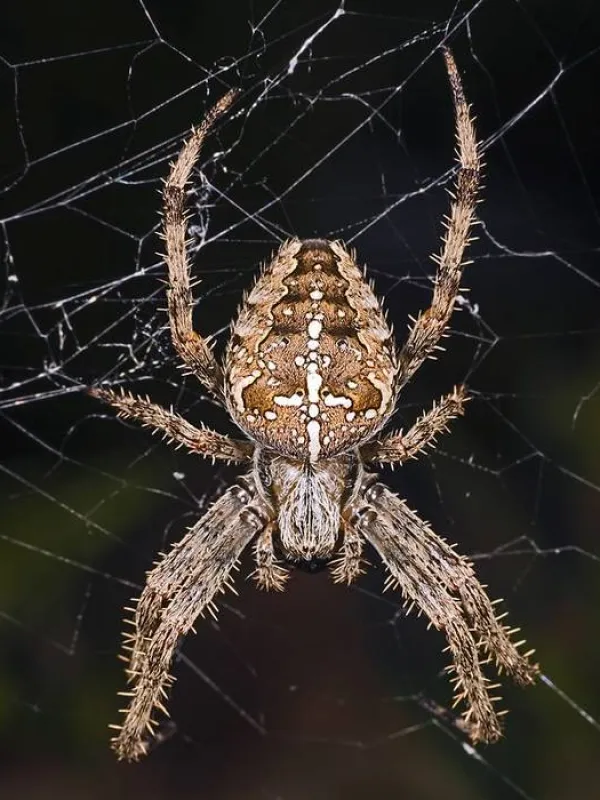
The European garden spider Araneus diadematus belongs to the orb-weaver spider family (Araneidae). They are easily identified by a prominent white, cross-like pattern on their abdomen.
Adult females are typically larger than males, ranging from 15 to 25 mm in length, while males are much smaller and slimmer.
These spiders are famous for constructing highly organized, geometric circular webs used to trap prey during the active growing season.
They are primarily nocturnal or twilight-active predators, often retreating to a secluded spot near their web during the brightest hours of the day.
The species life cycle is annual, with eggs overwintering in a silk cocoon and spiderlings emerging in late spring to disperse by ballooning.
What it damages
The European garden spider is not a plant pest. It does not damage any agricultural or horticultural crops, as its diet consists entirely of small insects.
In fact, these spiders provide significant ecosystem services by capturing large numbers of flies, aphids, and other flying pests that frequent gardens and fields.
They are considered beneficial organisms because they contribute to natural population control of harmful insects without the use of synthetic chemicals.
There are no recorded instances where Araneus diadematus causes economic damage to yields or degrades the health of ornamental or edible plants.
While their webs can sometimes be obstructive in greenhouse environments, this is considered a minor inconvenience rather than a form of damage.
Control measures
No chemical control is necessary or recommended for the European garden spider, as they are non-toxic allies in integrated pest management (IPM).
If webs interfere with horticultural activities, manual removal using a broom or a gentle water spray is the most effective and eco-friendly method.
Avoiding the use of broad-spectrum insecticides is crucial to protect the spider population, which serves as a natural barrier against true agricultural pests.
Maintaining a balanced environment with diverse plantings helps ensure that spider populations remain stable and effective in their role as predators.
Integrated control strategies should prioritize the preservation of such predators to minimize the need for external chemical inputs in your garden.
Taxonomy
- Latin name
- Araneus atricus
- Family
- Araneidae
- EPPO code
- ARAUAR
Discussion
No discussions yet — be the first.