
Golden silk orb-weaver
Trichonephila
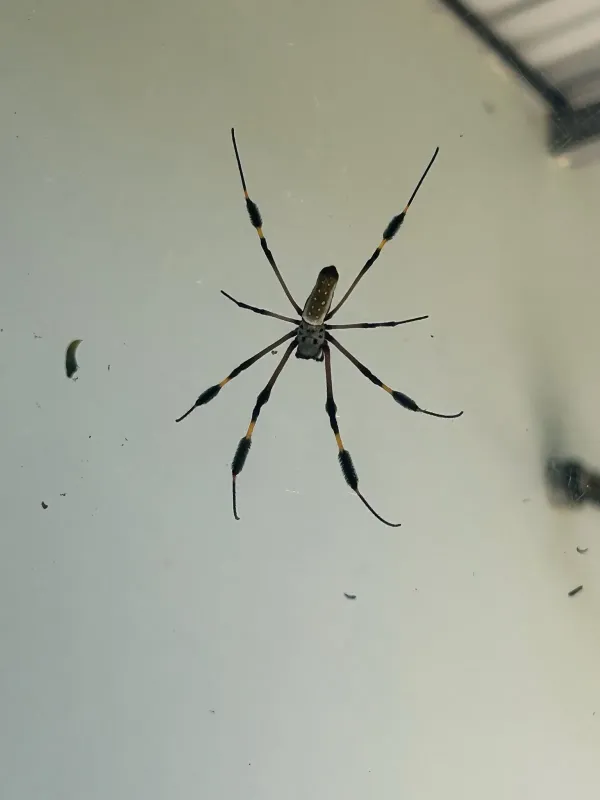
Description
How to identify
The golden silk orb-weaver (genus Trichonephila, family Nephilidae) is widely recognized for its large size and distinct, strong webs.
Females are typically much larger than males, displaying vibrant colors and patterns that serve to attract prey or act as a deterrent to predators.
These spiders are characterized by their specialized silk glands that produce exceptionally durable and golden-colored spiderwebs.
They prefer warm environments and are often found in gardens where they construct their webs between trees and large shrubbery.
Biologically, they are sit-and-wait predators that occupy a specific niche in the garden's ecosystem as insect controllers.
What it damages
The golden silk orb-weaver does not feed on plant tissues, meaning it causes no direct mechanical damage or sap-sucking injuries to vegetation.
Indirectly, the primary issue arises from the massive web structures, which can obstruct regular maintenance activities like spraying or pruning.
In some cases, the strong silk threads can cause physical tension on tender young shoots, leading to slight deformations as the plant attempts to grow.
The presence of large webs can also inadvertently trap beneficial pollinators, potentially interfering with the fruit set of flowering garden plants.
Despite these minor inconveniences, they provide significant ecological services by catching common garden pests such as moths and flies.
When it appears
These spiders are most active during the summer and autumn months when temperatures remain consistently warm throughout the day and night.
As winter approaches, they transition into a reproductive phase, where females deposit egg sacs in sheltered spots on tree bark or foliage.
In greenhouses or controlled indoor environments, their lifecycle can be extended, allowing for year-round activity if prey availability is high.
The peak period for web building typically aligns with the most intense activity of flying insects, providing an abundant food source.
Their lifespan is relatively short, often limited to a single growing season in temperate climates, ending with the onset of cold weather.
Signs of infestation
The most prominent sign is the massive, complex orb-web that features a distinct golden sheen, especially visible under sunlight.
Remnants of prey, including the wings and chitinous remains of various insects, are often found caught within the sticky web structure.
The spider itself is frequently observed stationed at the center of its web, waiting for vibrations caused by trapped insect movement.
Tangled or slightly bent plant foliage around web attachment points serves as an indicator that a large spider is active in that area.
Dense accumulations of spider droppings directly below the web site are another sign of a long-established spider presence.
Control measures
Control measures are rarely necessary, as Trichonephila are considered beneficial predators that help manage pest insect populations naturally.
If webs become a nuisance in specific gardening areas, manual removal using a broom or water spray is the most efficient and eco-friendly approach.
In greenhouse settings, ensure regular structural inspection and maintain good ventilation to prevent the establishment of large colonies.
Relocation is preferred over eradication, as moving the spider to an edge of the garden preserves its role as a biological pest controller.
Avoid broad-spectrum insecticide use, as these chemicals do more harm to beneficial spider populations than they do to the target pests themselves.
Taxonomy
- Latin name
- Trichonephila
- Family
- Araneidae
- EPPO code
- TNEPSP
Discussion
No discussions yet — be the first.