
Trichodorus viruliferus
Trichodorus viruliferus
Description
How to identify
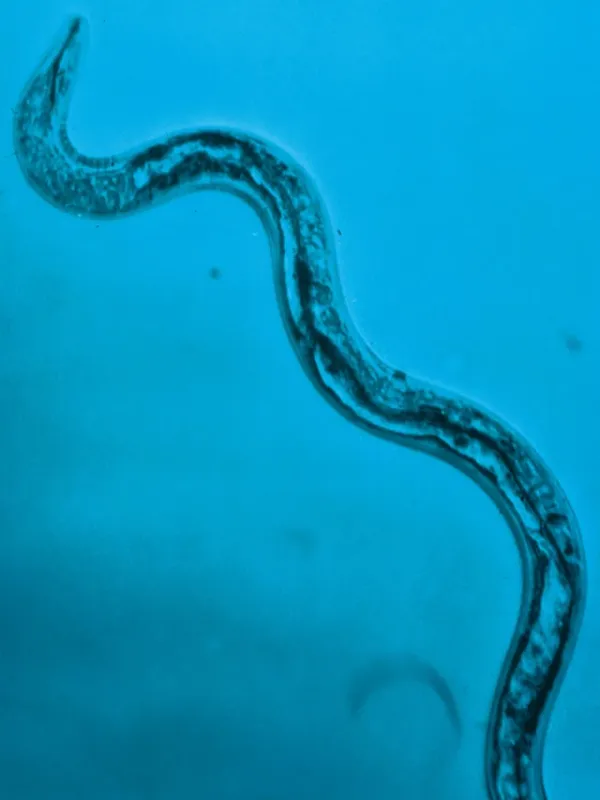
Trichodorus viruliferus is a migratory ectoparasitic nematode belonging to the Trichodoridae family, known for its ability to damage a wide variety of cultivated plants.
These nematodes are microscopic, vermiform, and possess a unique feeding apparatus called an onchiostyle, which is used to pierce plant cells from the outside.
Identification of this species requires expert laboratory examination of soil and root samples, as they cannot be seen with the naked eye in the field.
They are particularly known for being vectors of several plant viruses, most notably the Tobacco Rattle Virus (TRV), which causes significant agricultural losses.
Their distribution is highly dependent on soil texture, with sandy and light-textured soils providing the most suitable environment for their mobility and survival.
What it damages
The nematode feeds on the root tips of diverse crops, including potatoes, sugar beets, onions, and various small grains, causing significant physiological stress.
Feeding damage results in the inhibition of root elongation and the stimulation of lateral branching, leading to a stunted or stubby root system appearance.
In potatoes, the primary economic damage is the transmission of viruses that create necrotic rings and spots within the tubers, drastically reducing market value.
The reduction of the functional root surface area severely impairs the plant's ability to absorb water and nutrients, leading to decreased biomass and yields.
Severe infestations can lead to complete failure of crop establishment, especially under conditions where the plants are already under environmental stress.
When it appears
Activity levels fluctuate throughout the growing season, primarily driven by temperature and soil moisture availability, with peaks in spring and autumn.
The optimal soil temperature for nematode activity ranges between 15°C and 20°C, which often corresponds to the critical early growth stages of agricultural crops.
During unfavorable winter temperatures, these nematodes move deeper into the soil profile to survive in a quiescent, low-activity state until conditions improve.
The lifecycle involves several larval stages, and the rate of development is directly proportional to soil temperature and the presence of suitable host roots.
Nematode movement within the soil pores is restricted by extreme moisture conditions, such as saturated soils or drought, which limit their access to roots.
Signs of infestation
Symptoms in the field usually appear as irregular patches of stunted, chlorotic plants that do not reach their expected growth height for the season.
When observing the root system, one can see shortened, thickened, and often browned root tips, which is a hallmark symptom of stubby root damage.
Leaves may show signs of yellowing or mosaic patterns, indicating that the nematode has transmitted a virus while feeding on the roots.
Tubers or root crops may display internal necrosis, scabbing, or deformities that become apparent during harvest or after a period of storage.
Reduced uniformity across the field and a general decline in plant vigor over several seasons are reliable indicators of high nematode pressure in the soil.
Control measures
Crop rotation remains the cornerstone of management; alternating host crops with non-host plants can effectively reduce the nematode population over time.
Chemical control involving soil fumigation or the application of specialized nematicides is possible but must be carefully managed to prevent environmental impact.
Effective weed control is essential because various weeds serve as alternative hosts and reservoirs for the viruses that these nematodes carry.
Utilizing certified, disease-free seed potatoes and resistant plant varieties helps to mitigate the impact of the nematode and the associated viral diseases.
Improving soil organic matter content and using bio-fumigant cover crops can enhance natural soil suppression and improve plant resilience against nematode attacks.
Taxonomy
- Latin name
- Trichodorus viruliferus
- Order
- Nematodes
- Family
- Trichodoridae
- EPPO code
- TRIHVI
Discussion
No discussions yet — be the first.