
Stubby root nematode
Paratrichodorus allius
Description
How to identify
The stubby root nematode (Paratrichodorus allius) belongs to the phylum Nematoda, class Enoplea, order Triplonchida, and the family Trichodoridae. These are microscopic, soil-dwelling organisms characterized by a specialized feeding apparatus known as an onchiostyle.
Unlike endoparasitic nematodes, this species is an ectoparasite. It resides in the soil pores surrounding plant roots, using its stylet to pierce root cells from the outside to extract cell sap, which is the primary mode of its nutrition.
Adults of Paratrichodorus allius are typically 0.6–1.0 mm long. They are transparent and elusive, making them impossible to detect without specialized laboratory soil sampling and extraction procedures during field monitoring.
These nematodes prefer light-textured, sandy, and loamy soils where they can move freely through the soil moisture film. The physical structure of the soil is a primary factor limiting their distribution and reproduction density.
Their biological development is temperature-dependent. At optimal temperatures ranging from 15°C to 25°C, the lifecycle can be completed in as little as 3 to 4 weeks, allowing for several generations per growing season in moderate climates.
What it damages
This pest has a wide host range, significantly affecting crops such as garlic, onions, potatoes, tomatoes, and various vegetables. It is particularly destructive during the early stages of plant growth when root development is most critical.
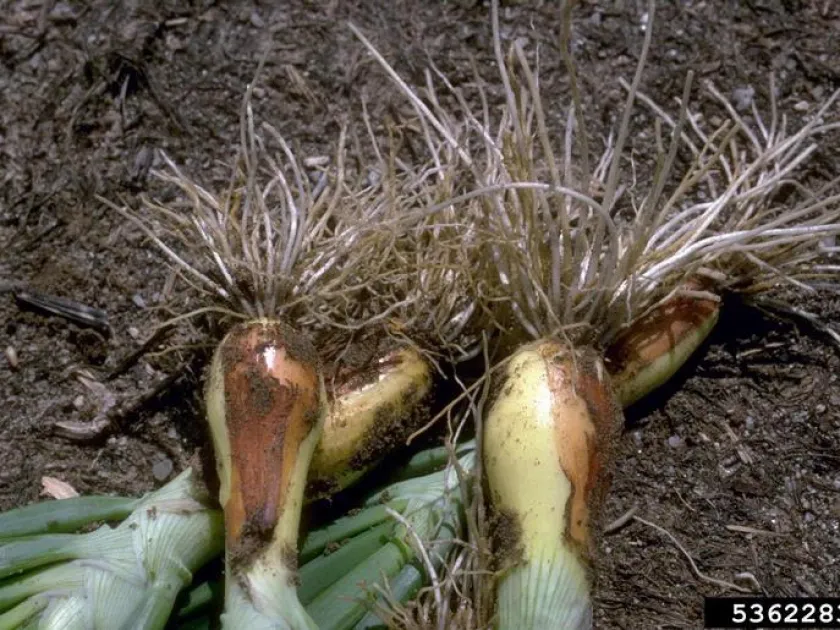
The feeding process results in severe damage to root tips, which stops longitudinal growth. This forces the plant to initiate secondary lateral roots, giving the root system a stunted, «stubby,» and excessively branched appearance.
Beyond direct physical damage, Paratrichodorus allius is a recognized vector for the Tobacco Rattle Virus (TRV). This viral transmission can cause severe crop quality issues, including ring spot patterns and necrotic lesions on tubers and bulbs.
Plants affected by the nematode suffer from reduced uptake of water and nutrients. This manifests as nutrient deficiency symptoms, even when soil fertility is sufficient, ultimately leading to significant yield losses and stunted growth.
Economic damage is exacerbated by the fact that wounded root tissue provides an easy entry point for secondary bacterial and fungal pathogens, which further accelerate the decline of the plant and cause rot in stored harvests.
Signs of infestation
The most common sign of infestation in the field is the occurrence of uneven, patchy growth. Affected areas often show stunted, chlorotic plants compared to the surrounding healthy foliage in the same crop block.
When plants are carefully excavated, the characteristic «stubby root» symptom becomes visible. Roots appear short, thickened, and lack healthy root hairs, often exhibiting dark brown necrotic spots on the tips.
Above-ground symptoms include general unthriftiness, yellowing of the leaves, and wilting during periods of high temperature, as the damaged root system cannot supply sufficient water to the foliage.
In bulb crops, the base of the bulb may show signs of tissue breakdown or rot. If the Tobacco Rattle Virus is present, leaves may show mottling, mosaic patterns, or misshapen growth typical of viral disease.
Definitive identification requires laboratory analysis to isolate the nematodes from the rhizosphere soil. Visual symptoms alone can often be confused with drought stress or other soil-borne diseases like Rhizoctonia.
Control measures
Effective management begins with strict crop rotation. Avoiding host crops for several years in infested fields helps to exhaust the nematode population by removing their food source and breaking their reproductive cycle.
Cover cropping with antagonistic species is a biological strategy to suppress nematode populations. Certain plants, such as marigolds (Tagetes), produce root exudates that are toxic or repellent to Paratrichodorus species.
Chemical control involves the application of nematicides or soil fumigants before planting. Due to the high toxicity and environmental impact of these substances, they should only be used in high-value production areas and under strict regulatory guidance.
Preventive measures are vital, including the use of certified, clean propagation material. In protected environments like greenhouses, steam sterilization of the soil is an effective way to eliminate existing populations before new crops are planted.
- Implement long-term crop rotation cycles.
- Use nematode-suppressive cover crops.
- Regular soil testing and pest population monitoring.
- Strict hygiene protocols for farm equipment moving between fields.
Taxonomy
- Latin name
- Paratrichodorus allius
- Order
- Nematodes
- Family
- Trichodoridae
- EPPO code
- TRIHAL
Discussion
No discussions yet — be the first.