
Paratrichodorus mirzai
Paratrichodorus mirzai
Description
How to identify
Paratrichodorus mirzai is a genus of plant-parasitic nematodes belonging to the family Trichodoridae. These are ectoparasites that feed on the roots of host plants while remaining in the surrounding soil profile.
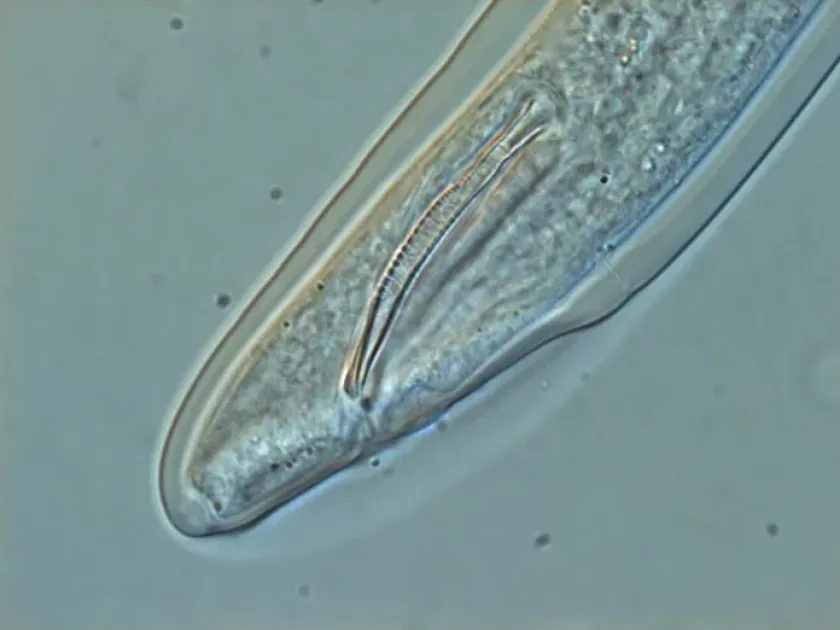
They are characterized by a short, stubby body shape, which is a hallmark of the Trichodoridae family. Their specialized mouthpart, a curved onchiostyle, allows them to feed on the epidermal cells of roots without permanently attaching to them.
Identification at the species level requires expert taxonomic analysis using microscopy. Specialists examine the structure of the stoma and the male copulatory apparatus to distinguish them from other closely related species.
These nematodes thrive in sandy and light-textured soils. Their mobility is facilitated by the presence of water films between soil particles, where they move efficiently to locate new roots for feeding.
The life cycle is relatively simple and rapid under favorable temperature and moisture conditions. Unlike some other nematode groups, they do not form protective cysts, meaning their populations are vulnerable to environmental changes and lack of host roots.
What it damages
Paratrichodorus mirzai affects a wide range of crops, including potatoes, vegetables, and sugar beets. They inflict damage by piercing root cells and injecting digestive enzymes, which causes cell death and inhibits growth.
The primary direct damage involves the stunted development of the root system. As the nematode kills the meristematic tissues at the root tips, the plant loses its ability to absorb essential water and nutrients effectively.
One of the most critical aspects of their presence is their role as a vector for plant pathogenic viruses. They are efficient at transmitting specific tobraviruses, which can devastate entire crops by causing systemic infections.
Wounded roots are highly susceptible to secondary colonization by soil-borne fungi and bacteria. This complex interaction often leads to rotting of the root system and complete collapse of the plant's vascular integrity.
Agricultural losses are often significant, characterized by reduced yield and poor product quality. Severely infested fields may show significant patches of dead or weak plants, leading to a substantial decrease in economic output.
Signs of infestation
The most visible sign of infestation is the development of irregular, patchy growth patterns within a field. Crops in these areas may appear stunted, chlorotic, and lacking in vigor compared to adjacent healthy areas.
Root system examination typically reveals a condition known as "stubby root." The roots are shortened, thickened, and lack secondary lateral branching, often turning dark or necrotic due to constant nematode feeding.
When the nematode vectors viruses, symptoms appear on the foliage. These include mosaic patterns, leaf curling, necrosis, or severe dwarfing, which are distinct from the signs of direct nutrient deficiency.
In highly infested areas, seedlings may fail to emerge or die shortly after germination. This leads to gaps in the field that do not recover throughout the season, causing uneven stand density.
Diagnostic confirmation requires a laboratory analysis of soil and root samples. Nematologists use the Baermann funnel technique or other extraction methods to count the nematode population and confirm the presence of P. mirzai.
Control measures
Management of this pest relies heavily on long-term crop rotation. Rotating host crops with non-host species or resistant cultivars helps to naturally deplete the nematode population in the soil over time.
Effective agricultural practices, such as weed control, are essential. Many weeds can act as reservoir hosts for both the nematodes and the viruses they carry, maintaining the population even in the absence of primary crops.
Chemical control involving soil-applied nematicides is an option in high-value production systems. However, these applications must be strictly regulated due to their environmental impact and the need for precision application.
Biological control strategies, such as incorporating organic amendments, can stimulate beneficial soil microflora. These antagonistic organisms can parasitize nematodes or compete for resources, naturally reducing the pest density.
Continuous monitoring and soil testing are crucial for farm management. Early detection of a localized population allows for targeted interventions, which prevents the further spread of the nematode via farm machinery or irrigation runoff.
Taxonomy
- Latin name
- Paratrichodorus mirzai
- Order
- Nematodes
- Family
- Trichodoridae
- EPPO code
- PATRMI
Discussion
No discussions yet — be the first.