
Stubby root nematode
Trichodorus cylindricus
Description
How to identify
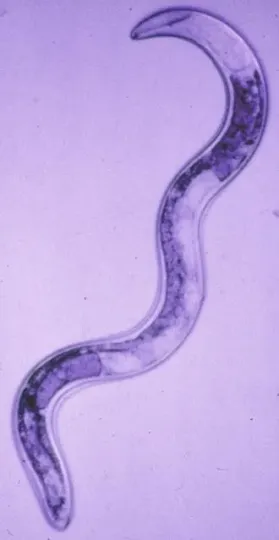
Trichodorus cylindricus is a species of free-living soil-dwelling nematode belonging to the order Dorylaimida and the family Trichodoridae. These nematodes are ectoparasites, meaning they remain outside the root tissue while feeding.
Adult nematodes are cylindrical in shape, typically measuring between 0.7 and 1.2 mm in length. They are characterized by a unique curved feeding stylet (onchium), which they use to pierce the epidermal cells of plant roots.
The life cycle consists of an egg stage, four larval stages, and the adult stage. All stages except for the eggs are capable of feeding on plant roots, making the population persistent and dangerous throughout the growing season.
These nematodes show a marked preference for light-textured soils, particularly sandy or sandy-loam types. In these environments, the pore spaces are ideal for their movement toward root tips.
Beyond the direct physical damage they cause, Trichodorus cylindricus acts as a vector for various plant viruses, most notably the Tobacco Rattle Virus (TRV), which causes significant economic losses in potato and vegetable production.
What it damages
The host range of this nematode is wide, including major crops such as potatoes, sugar beets, onions, carrots, and various cereals. Damage typically occurs during the early establishment phase of the crop.
Feeding on root tips inhibits the growth of the primary root, causing the plant to produce numerous, short, and stubby lateral roots. This leads to the formation of a characteristic "stubby root" appearance.
The compromised root system is unable to efficiently take up water and nutrients from the soil. Consequently, the plants show symptoms of stunted growth, chlorosis, and reduced vigor, which is often misinterpreted as drought stress.
When the nematode transmits the Tobacco Rattle Virus, the internal tubers of potatoes exhibit corky rings, arcs, or necrotic spots. This condition, often called "spraing," renders the tubers completely unmarketable.
Economic damage is twofold: direct yield reduction due to poor plant development, and severe quality losses caused by viral symptoms that prevent the produce from meeting market standards.
When it appears
The activity of Trichodorus cylindricus is strictly governed by soil temperature and moisture. Development and feeding are most active in the spring when soil temperatures reach 15–20 degrees Celsius.
If host crops are continuously available, the nematode can complete multiple generations within a single season. The rate of reproduction is closely tied to the ambient temperature and the availability of root food sources.
As soil temperatures drop in the autumn, the nematodes slow their metabolism and enter a dormant or quiescent state. In this form, they successfully overwinter in the soil, even at lower temperatures.
The population can persist in the soil for several years without host crops, as they can feed on the roots of various weeds. This resilience makes them difficult to eradicate once a field is infested.
Infestation risk is highest in fields with sandy soil, where the loose structure facilitates rapid nematode migration toward the roots, ensuring they can locate a food source easily.
Signs of infestation
Infestations are often patchy across a field, appearing as irregular areas of stunted or uneven crop growth. These "hotspots" may show clear differences in plant size compared to the rest of the field.
If affected plants are carefully excavated, the root system will clearly lack a well-developed primary root. Instead, the roots are stunted, often thickened, and exhibit a dense cluster of short, brownish side roots.
In potatoes, the primary diagnostic sign for TRV infection is the appearance of internal necrotic patterns, such as rings or spots, which are only visible after slicing into the tuber.
Because the above-ground symptoms resemble general malnutrition or drought, it is easy to misdiagnose. However, the lack of response to water or fertilizer application is a key indicator of root-level issues.
Definitive identification requires laboratory examination of soil and root samples. Specialized techniques are used to extract and count the nematodes to confirm the cause of the crop failure.
Control measures
Effective crop rotation is the primary strategy for managing populations. By excluding host crops from the field for three to four years, the nematode population can be significantly reduced.
Aggressive weed control is essential, as many common weeds serve as reservoir hosts for both the nematodes and the viruses they transmit. Keeping fields clean is a major preventive measure.
The use of resistant or tolerant crop cultivars is often the most practical and environmentally friendly method for managing fields with a known history of stubby root nematode presence.
Nematicides can be used in extreme cases, though their application is often subject to strict environmental regulations and high costs. They are typically applied locally to the soil prior to planting.
Agronomic practices that improve soil structure and organic matter content support robust root growth, allowing plants to compensate for the damage and maintain growth despite the presence of the pest.
Taxonomy
- Latin name
- Trichodorus cylindricus
- Order
- Nematodes
- Family
- Trichodoridae
- EPPO code
- TRIHCY
Discussion
No discussions yet — be the first.