
Trichodorus
Trichodorus
Description
How to identify
Trichodorus is a genus of free-living soil nematodes belonging to the family Trichodoridae. These microscopic organisms are known as stubby root nematodes and are recognized as significant agricultural pests due to their role as vectors for plant viruses.
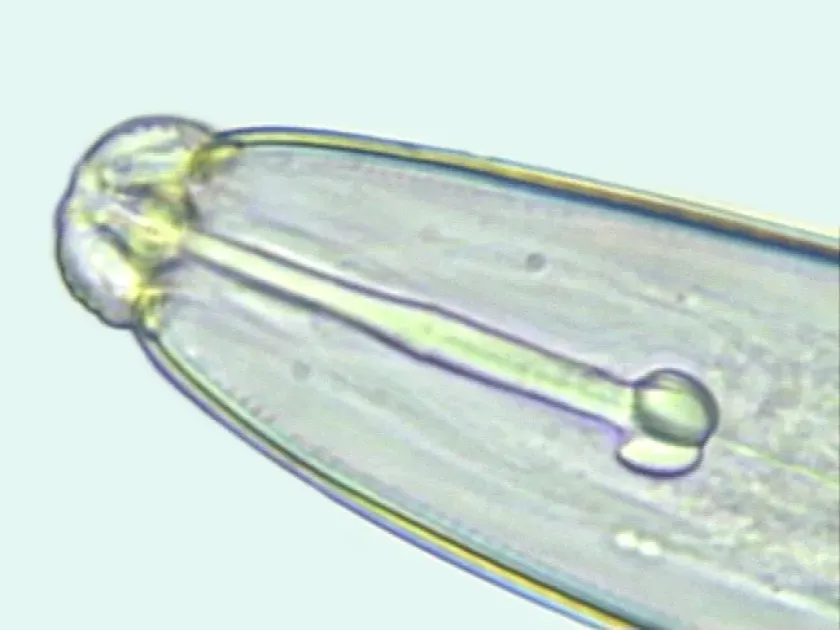
The adults are cylindrical, measuring approximately 0.5 to 1.5 mm in length. They possess a unique feeding apparatus called an onchiostyle (a hollow, curved tooth), which they use to penetrate the cell walls of plant roots to extract cellular contents.
These nematodes lead an ectoparasitic life, meaning they feed on the exterior of roots without entering the plant tissue. They are highly mobile in the soil water film and prefer light, sandy soils, which offer better aeration and movement capacity.
The life cycle of Trichodorus is relatively rapid, consisting of an egg stage, four larval stages, and an adult stage. In favorable environmental conditions, they can produce multiple generations within a single growing season, leading to high population densities.
They are notorious for transmitting the Tobacco Rattle Virus (TRV). When the nematode feeds on an infected root, the virus adheres to the lining of the alimentary canal and can be transmitted to healthy plants during subsequent feeding events.
What it damages
Trichodorus nematodes attack a wide array of crops, including potatoes, sugar beets, cereals, and various horticultural plants. The damage is particularly severe during the early stages of plant development when root systems are most fragile.
By feeding on the root tips, these nematodes cause necrosis and the cessation of root elongation. This leads to the classic 'stubby root' symptom, where the root system becomes stunted, thickened, and heavily branched as the plant attempts to compensate for the damaged tips.
The impaired root system reduces the plant's ability to uptake water and nutrients, resulting in stunted top growth, yellowing (chlorosis), and overall lack of vigor. In severe cases, large patches of the crop may fail to emerge or die off entirely.
Economic damage is most significant in the potato industry due to the association with the Tobacco Rattle Virus. The infection causes 'spraing' or internal necrosis in tubers, which renders them unsalable for the fresh market or processing.
The severity of the damage is correlated with the population density of the nematodes. In sandy soils, even moderate populations can cause substantial yield losses, whereas in clay-heavy soils, the impact is generally lower due to reduced nematode mobility.
Signs of infestation
In the field, infestations typically present as irregular patches of stunted, chlorotic plants. These patches often vary in size and may expand as the nematode population spreads across the soil through cultivation or water movement.
Root symptoms are distinct: the root tips appear blunt, thickened, and lack the fine white root hairs necessary for water uptake. In crops like sugar beet, this leads to a distorted 'bearded' root appearance.
Potato tubers affected by the virus carry internal symptoms often invisible from the outside. When sliced, these tubers reveal brown necrotic spots, arcs, or rings, a condition commonly referred to as corky ringspot or spraing.
Stunted growth, reduced foliage, and delayed maturity are classic indicators of a nematode-stressed crop. If these symptoms occur in patchy areas, it is a strong indicator of soil-borne pathogens like Trichodorus.
Verification requires laboratory analysis. Soil and root samples should be collected from the rhizosphere of symptomatic plants and processed using nematode extraction techniques to determine population density and species identification.
Control measures
Managing Trichodorus is challenging due to its wide host range and deep vertical distribution in the soil. An integrated management strategy is essential to minimize the risk of yield loss and viral spread.
- Crop rotation: Implementing a rotation with non-host crops to starve the nematode population over several seasons.
- Weed control: Eliminating host weeds that serve as reservoirs for both the nematodes and the viruses they transmit.
- Soil management: Maintaining proper soil moisture and structure to limit the mobility of nematodes and promote vigorous root growth.
- Use of resistant cultivars: Selecting plant varieties that exhibit tolerance to virus infection, particularly in high-risk potato growing areas.
- Green manure: Utilizing cover crops, such as certain brassicas, that may provide some biofumigation effects against soil-borne pests.
Chemical control via nematicides is an option in high-value, intensive cropping systems, but it is expensive and subject to strict regulatory oversight regarding environmental impact and safety.
Biological control, involving the application of fungal antagonists or beneficial soil bacteria, is an area of ongoing research. While promising, their efficacy is highly dependent on specific soil conditions, temperature, and moisture levels.
Taxonomy
- Latin name
- Trichodorus
- Order
- Nematodes
- Family
- Trichodoridae
- EPPO code
- TRIHSP
Discussion
No discussions yet — be the first.