
Birch sawfly
Trichiosoma
Description
How to identify
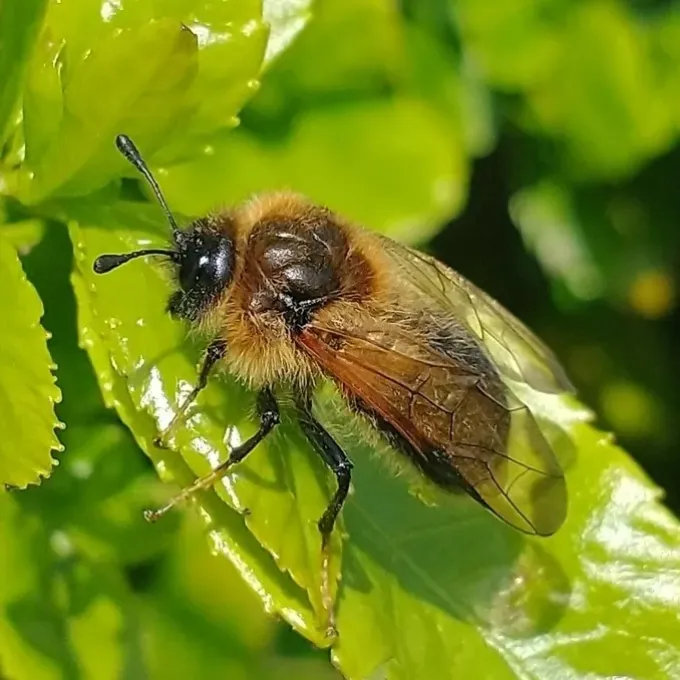
Trichiosoma is a genus of sawflies belonging to the family Cimbicidae (the club-horned sawflies). These insects are notable for their robust, bee-like appearance, often covered in dense hair, which serves as a form of mimicry.
Adult sawflies typically feature a club-shaped thickening at the ends of their antennae, a diagnostic trait of the Cimbicidae family. Their coloration varies, commonly ranging from dark brown to yellowish hues.
The larvae, known as false caterpillars, are visually similar to butterfly larvae but possess 22 legs and a distinct habit of curling into a spiral when disturbed. Their skin often features small warts or a fine powder coating.
Pupation occurs within thick, parchment-like cocoons which are securely attached to the twigs of host plants. This structure provides significant protection against environmental stressors during their dormant phase.
The life cycle typically spans one generation per year, with the insects overwintering as prepupae inside the cocoon until the following spring.
What it damages
Trichiosoma primarily infests deciduous trees and shrubs, with a strong preference for birch (Betula), willow (Salix), alder (Alnus), and rowan (Sorbus). Occasionally, they may affect fruit trees located near wooded areas.
The larvae are the destructive stage, utilizing their strong mandibles to consume foliage. They feed aggressively on leaf blades, often leaving only the primary veins, which leads to significant defoliation of the affected branches.
Severe infestations can lead to weakened tree health, stunted growth, and a reduction in the plant's overall vitality. Young trees are particularly susceptible to damage, which can sometimes lead to branch dieback.
The damage is most noticeable during peak larval activity, when the cumulative effect of hundreds of individuals can result in a thinned canopy and reduced photosynthetic capacity.
While adult feeding is relatively harmless, the reproductive success of the females directly dictates the potential severity of the larval damage in the following weeks.
When it appears
Adult Trichiosoma typically emerge during the late spring to early summer, usually between May and June. This period is dedicated to mating and the selection of suitable host plants for egg-laying.
The females use their saw-like ovipositor to insert eggs into the leaf tissue. This strategic placement protects the eggs from predators and drying out while they develop into larvae.
Larval emergence occurs in early summer, and the insects spend the next few weeks feeding and molting through several larval stages. Peak damage typically occurs throughout June and July.
By late summer, the larvae conclude their growth phase and proceed to spin their cocoons on the branches. They remain in this stage throughout the autumn and winter months.
Monitoring for signs of larval feeding should be prioritized throughout June to ensure early detection and prevent potential outbreaks.
Signs of infestation
Early symptoms of an infestation include small, irregular holes or jagged edges on the leaves of young shoots. Because larvae may feed on the underside of leaves or remain stationary, they can be easy to overlook at first.
The presence of larval frass (droppings) on the ground or stuck to the foliage below the canopy is a clear indicator that an active population is feeding in the upper branches.
Observing the presence of firm, oblong cocoons attached to twigs is another definitive sign. These cocoons can often be mistaken for dried buds or natural growths on the bark.
Larvae often exhibit a defensive behavior where they curl up or drop from the branch when vibrated. Detecting this movement is a key indicator during a manual tree inspection.
A thin canopy or visibly defoliated branches in mid-summer, when the foliage should be at its peak, suggest a heavy infestation that requires immediate attention.
Control measures
In residential gardens, the most effective control method is the manual removal of larvae and the collection of cocoons from branches during the winter months. This is non-toxic and highly effective for small trees.
Biological control options include fostering environments for birds and other natural predators that feed on larvae. Microbial insecticides, such as those containing Bacillus thuringiensis, are also effective against sawfly larvae.
Chemical control should be reserved for severe infestations where the tree's health is at immediate risk. Contact-type insecticides applied during the early larval stages provide the best results.
- Manual pruning and destruction of branches containing cocoons.
- Encouraging natural predators and entomophages in the landscape.
- Regular canopy inspection during the spring and summer.
- Use of targeted insecticides if economic thresholds are exceeded.
Maintaining tree vigor through proper irrigation and fertilization is a fundamental long-term strategy, as healthy trees are better equipped to tolerate and recover from pest damage.
Taxonomy
- Latin name
- Trichiosoma
- Order
- Hymenoptera
- Family
- Cimbicidae
- EPPO code
- TCSMSP
Discussion
No discussions yet — be the first.