
Hairy snail
Trichia hispida
Description
How to identify
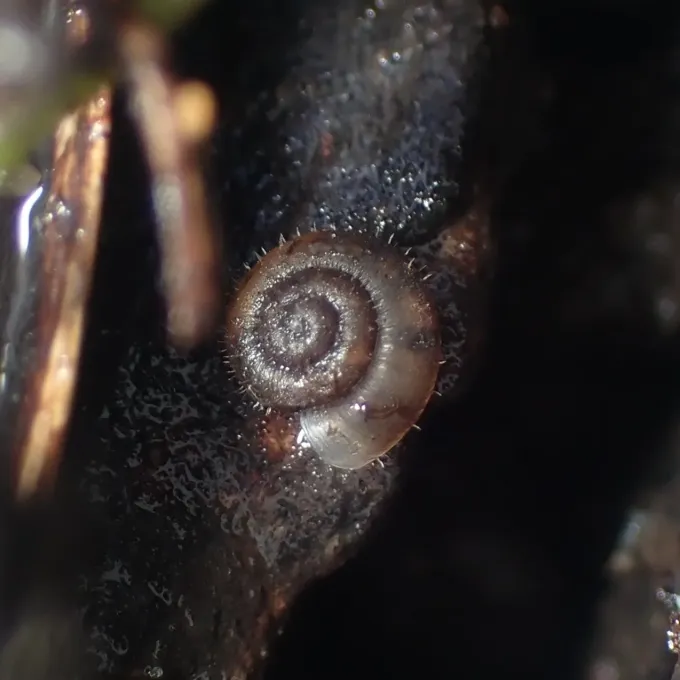
The hairy snail (Trichia hispida) belongs to the order Stylommatophora and the family Hygromiidae. It is a small land mollusk with a shell typically measuring 10 to 12 millimeters in diameter.
The defining feature of this species is the presence of fine, dense hairs on the shell surface, which are most visible on younger individuals and may wear off as they age. The shell color ranges from pale horn to brownish, often featuring a faint spiral band.
The body of the snail is generally a light grey or yellowish color. These snails thrive in moist, shaded environments, frequently hiding beneath leaf litter, stones, or dense vegetation to avoid dehydration.
The life cycle of the hairy snail is closely linked to humidity levels. Being hermaphroditic, they are capable of rapid population growth under favorable, damp weather conditions.
They overwinter as adults or juveniles in the upper soil layers or under dense plant debris, becoming active again in early spring when temperatures and humidity levels rise.
What it damages
The hairy snail is a polyphagous pest, capable of feeding on a wide range of vegetable crops, berries, and ornamental seedlings. They are particularly destructive to young, tender plant tissues.
They pose a significant threat in greenhouses and garden beds where high humidity and regular irrigation create ideal conditions for feeding and reproduction.
Snails graze on leaves, leaving behind irregular holes and notches. This damage reduces the photosynthetic capacity of the plant and leaves the foliage looking unsightly, which is especially critical for market crops.
The slime trails left by these snails can attract mold and bacteria, promoting the spread of secondary fungal infections that lead to rot in weakened plant tissues.
Severe infestations during prolonged rainy seasons can lead to total crop failure of seedlings and stunted development of more mature plants, making management essential.
Signs of infestation
The primary symptom of a hairy snail infestation is the appearance of irregular holes on leaf blades, usually starting at the edges and working inward toward the veins.
Silvery, dried mucus trails on leaves, stems, and surrounding soil serve as a definitive indicator that gastropods are present and active in the area.
During morning or evening hours, or on overcast, drizzly days, the snails themselves can often be found near the base of stems or tucked into the underside of low-growing foliage.
Plants affected by heavy feeding often show signs of wilting or yellowing, as the structural damage impairs their internal transport of water and nutrients.
- Irregular ragged edges on leaves.
- Visible slime trails on the soil surface.
- Stunted growth of young shoots.
Control measures
Cultural control practices are the first line of defense. This includes regular weeding and clearing of plant debris to eliminate the moist, dark hiding spots that snails prefer for daytime shelter.
Physical barriers such as wood ash, lime, or coarse sand placed around the base of vulnerable plants can deter movement and prevent the snails from reaching the foliage.
Manual collection at night or the use of fermented liquid baits (beer or yeast traps) can be highly effective in reducing local population numbers on smaller garden plots.
When infestation levels are high, commercial molluscicides containing metaldehyde can be used. These must be applied carefully according to local regulations to avoid impact on non-target species.
Encouraging natural predators, such as hedgehogs, toads, and thrushes, helps maintain ecological balance and provides long-term, low-maintenance control of the snail population.
Taxonomy
- Latin name
- Trichia hispida
- Order
- Molluscs
- Family
- Hygromiidae
- EPPO code
- TRHIHI
Discussion
No discussions yet — be the first.