
Tragelaphus
Tragelaphus
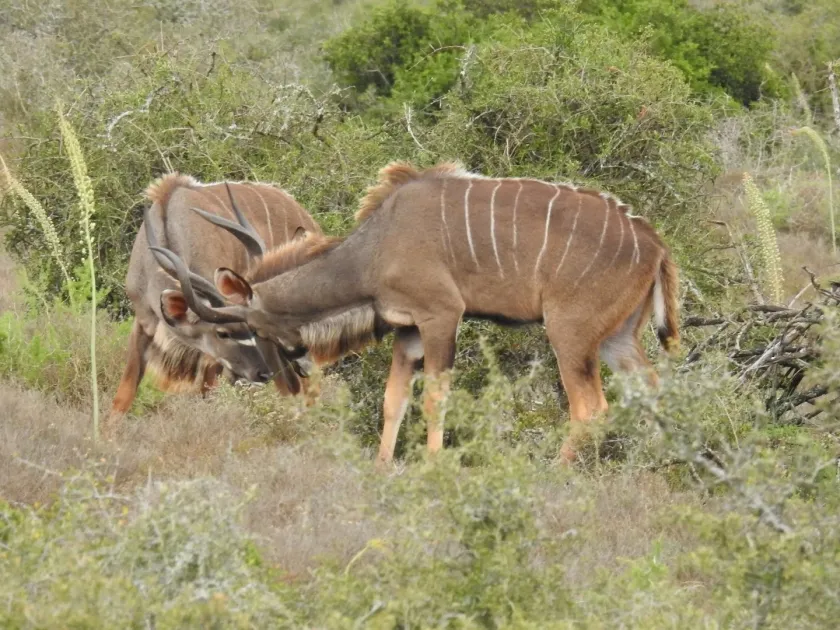
Description
How to identify
The genus Tragelaphus consists of several species of large spiral-horned antelopes, including bushbucks, nyalas, and kudus, belonging to the Bovidae family.
They are characterized by a graceful build and, in males, distinctive spiraling horns which are essential for identifying the species within their habitat.
Their coats often feature white stripes or spots, which serve as camouflage, allowing them to remain concealed in tall vegetation and shrubbery near fields.
These animals are highly adaptable and display social behavior, often foraging in groups, which increases their potential impact on nearby vegetation.
Due to their cautious nature, they are primarily active during crepuscular or nocturnal hours, making direct observation in agricultural settings difficult.
What it damages
Tragelaphus species are recognized as significant pests for a variety of crops, particularly where agricultural land meets their native savanna or forest habitats.
They consume large quantities of cereal crops, such as maize, millet, and sorghum, causing direct damage to seedlings and ripening grains.
Legumes, sweet potatoes, and other horticultural crops are also frequently targeted, leading to substantial yield reductions across affected farm plots.
Beyond consumption, the physical presence of herds results in trampled soil and broken stalks, which hinders the healthy development of the remaining crop stand.
In forestry and orchard management, these antelopes are known to debark young trees, potentially stunting growth or causing the death of saplings.
When it appears
The intensity of crop raids often correlates with the dry season, when natural forage in the surrounding wild areas becomes scarce, forcing animals toward irrigated fields.
Crops in their active growth phase are highly vulnerable, as they offer the most succulent and nutrient-rich biomass for the antelopes.
During the grain-filling stage, the nutritional content of the crops attracts herds, leading to a higher frequency of overnight visits.
Seasonal migrations of these antelopes often align with the agricultural cycle, putting seedlings at risk during the early planting months.
While damage can occur year-round, the risk profile significantly increases during periods of drought or when cultivated plants reach peak palatability.
Signs of infestation
The presence of cloven hoof prints at the edge of cultivated fields is the most reliable indicator that Tragelaphus have accessed the area.
Grazing signs, such as plants with ragged, uneven edges or missing stems, confirm that the damage is caused by browsing animals rather than insects or rodents.
Distinctive pathways through tall crops, created by the repeated movement of herds, are strong evidence of localized feeding activity.
Droppings found in proximity to the crop lines help agronomists determine the presence of a herd and its approximate size.
Visual confirmation of flattened crop patches, combined with browsed terminal buds, provides clear identification of Tragelaphus activity in the field.
Control measures
Physical exclusion through the use of sturdy wire fencing is the most reliable method to prevent antelopes from accessing vulnerable crop areas.
Auditory and visual deterrents, including motion-activated lights or noise-emitting devices, can effectively reduce the frequency of nocturnal raids.
Applying olfactory repellents around the perimeter of the field can create a non-lethal chemical barrier that discourages animals from entering.
Agro-management strategies, such as planting less palatable border crops, can serve as a buffer zone between natural habitats and high-value plantings.
In high-conflict regions, employing guardian dogs or organized night patrolling remains a proven strategy to protect developing harvests from wild ungulates.
Taxonomy
- Latin name
- Tragelaphus
- Family
- Bovidae
- EPPO code
- TRGPSP
Discussion
No discussions yet — be the first.