
Bison
Bison bison
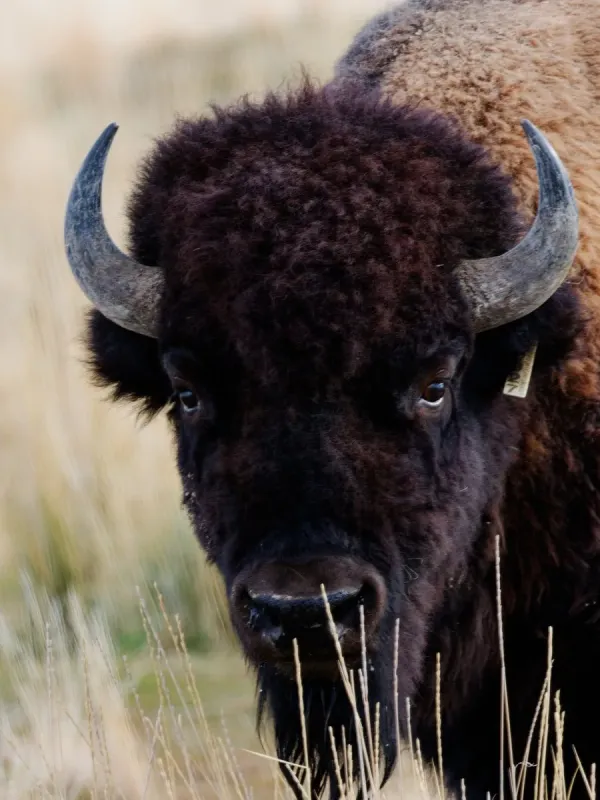
Description
How to identify
The American bison (Bison bison) is a large bovid known for its immense size and impact on landscapes. While not a traditional "pest" in an entomological sense, it is classified as a major agricultural nuisance when encroaching on croplands.
Biologically, bison are characterized by a massive shoulder hump, dense brown fur, and strong, curved horns. They belong to the Bovidae family and are highly social, living in large herds.
Bison are extremely resilient and can thrive in various climates, often crossing vast distances. Their herd mentality makes them difficult to deter once they have identified a food source.
Adult males can weigh up to a ton, which explains their immense destructive capacity when they move through agricultural fields, damaging both crops and infrastructure.
As wild animals, they are strictly governed by wildlife regulations, which complicates management strategies for farmers needing to protect their assets from roaming herds.
What it damages
The most significant damage caused by bison is the trampling of standing crops. A large herd can destroy entire fields of grain or corn in just a few hours of movement.
Bison consume vast amounts of green biomass, directly reducing yields and interfering with the overall productivity of forage and cereal crops in the region.
Physical damage to farm infrastructure, such as fences, automated water systems, and storage facilities, often results in high repair costs and operational downtime.
Soil compaction from heavy hooves is a long-term issue, as it destroys the soil structure, reduces water infiltration, and negatively impacts the growth of future crops.
Inter-species conflict arises when bison consume hay bales intended for domestic livestock, creating feed shortages that threaten the profitability of the farm.
Signs of infestation
The primary sign of bison presence is the presence of large, deep hoof prints throughout the field, often occurring in distinct trails rather than random patterns.
Significant amounts of dung and traces of grazing at ground level serve as immediate evidence that a herd has been feeding or resting in the area.
Broken fencing and crushed perimeter vegetation are clear indicators that a herd has breached the farm boundaries or is currently exerting pressure on the barriers.
Patches of completely denuded soil within a crop field, where vegetation has been pulled out by the roots, signify that the area is being utilized as a grazing site.
Audible vocalizations and the sight of large, dark shapes in proximity to field edges during dawn or dusk confirm the presence of animals in the vicinity.
Control measures
The most effective strategy is the installation of heavy-duty, high-tension fencing designed specifically to withstand the weight and force of large herbivores.
High-voltage electric fencing, if installed correctly with appropriate grounding and spacing, serves as a significant deterrent against herd encroachment.
- Utilization of motion-activated light and noise deterrents.
- Creating natural vegetation buffers that are unattractive to bison.
- Strategic water placement to guide movement away from crops.
Farmers should conduct regular patrols of perimeter fences to ensure there are no weak points that could encourage bison to enter the farming area.
Collaboration with local wildlife agencies is essential for developing long-term mitigation strategies, such as relocation or habitat modification to keep bison away from agricultural hubs.
Taxonomy
- Latin name
- Bison bison
- Family
- Bovidae
- EPPO code
- BISOBI
Discussion
No discussions yet — be the first.