
Domestic cattle
Bos
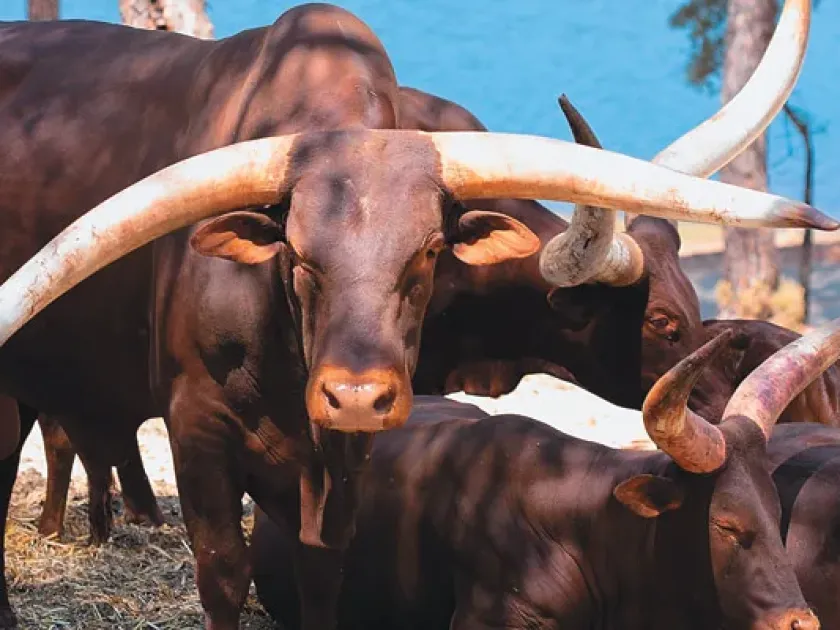
Description
How to identify
Domestic cattle (Latin: Bos taurus) are large ruminant mammals. Within agricultural systems, these animals can act as significant agents of physical disturbance, causing stress to soil structure and vegetation when entering crop areas.
Their anatomy, characterized by significant mass and heavy hooves, makes them capable of causing severe mechanical damage to fields if they are not confined to designated grazing areas.
The biology of cattle involves a high daily intake of vegetative matter, leading to rapid consumption of crops when access to cultivated fields occurs, particularly in semi-intensive or free-range farming environments.
Cattle are social, herd-oriented animals. This behavior means that if one individual finds a gap in the fencing, the entire herd typically follows, multiplying the damage to the crops within a short timeframe.
Understanding the spatial requirements and mobility of cattle is essential for farmers to design effective defensive strategies, including proper fencing and land zoning near livestock farms.
What it damages
The primary damage caused by cattle is the direct consumption of green biomass. They graze on cereal crops, pulses, and forage grasses, leading to immediate yield reduction and significant financial loss.
Soil compaction is a severe consequence of cattle entering crop fields. The high pressure exerted by their hooves destroys soil porosity, negatively affecting water infiltration and root development for the plants.
Cattle also trample plants, breaking stems and uprooting seedlings. These damaged plants often fail to recover, leaving gaps in the field that are quickly exploited by weeds.
Beyond crop loss, cattle can damage expensive agricultural infrastructure, such as irrigation systems, drain pipes, and field equipment, through their sheer weight and curiosity.
- Total destruction of young crop stands.
- Severe soil structural degradation and compaction.
- Introduction of weed seeds through bovine feces.
- Destruction of irrigation and drainage infrastructure.
When it appears
The risk of cattle damage is highest during the active growing season, particularly in the spring when young sprouts are soft, succulent, and highly palatable to ruminants.
During the summer, when natural pastures may dry out, cattle are more likely to seek greener, nutrient-rich crops like corn or soybeans, leading to incursions into arable land.
Autumn brings the harvest phase, where grain and mature fruits become attractive sources of carbohydrates, incentivizing cattle to break through perimeter barriers in search of food.
In winter, if fields are left uncovered or have winter wheat crops, cattle grazing can lead to mechanical destruction of the plant's growing point, hindering spring regrowth.
Seasonal migratory patterns through or near agricultural zones significantly increase the probability of accidental entry into production fields during transit.
Signs of infestation
The most reliable sign of cattle presence is the appearance of deep hoof prints in the soil, which are particularly visible in moist or freshly tilled field surfaces.
Ragged, uneven edges on foliage indicate that the plants were torn away by the animal's tongue rather than being cleanly cut, which distinguishes this damage from mechanical harvesting.
The presence of manure (feces) on the field serves as a definitive indicator that livestock have been present, which also poses a risk of biological contamination.
Broken or pushed-over perimeter fencing and trodden-down vegetation paths along the field margins are clear evidence of entry points used by the herd.
Circular or irregular areas of depressed vegetation with hardened, muddy soil indicate spots where the cattle have congregated or stood for extended periods.
Control measures
The most effective method for protecting crops is the installation of robust physical barriers, such as high-tensile wire fences or permanent sturdy wooden or steel partitions.
Electric fencing systems are a common and effective tool in agricultural management, providing a deterrent that prevents cattle from approaching or crossing into crop zones.
Regular maintenance of all field boundaries is essential. Periodic inspections help identify potential weaknesses in fences before an incursion can occur.
Cooperation with local cattle owners is a crucial aspect of integrated management, ensuring that livestock are properly supervised and kept away from sensitive production areas.
In some cases, the use of natural repellents or noise-based deterrents can be applied to protect high-value plots, although these are typically less effective than physical barriers.
Taxonomy
- Latin name
- Bos
- Family
- Bovidae
- EPPO code
- BOVSSP
Discussion
No discussions yet — be the first.