
Impala
Aepyceros melampus
Description
How to identify
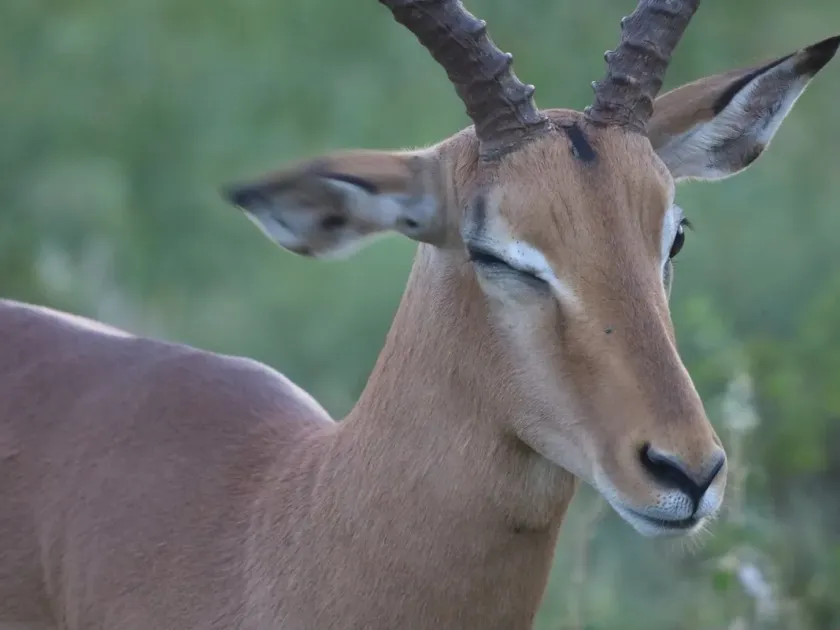
The impala (Aepyceros melampus) is a medium-sized antelope belonging to the Bovidae family and the Artiodactyla order. Adults reach a shoulder height of up to 95 cm and have distinctive lyre-shaped horns in males.
The species is characterized by a reddish-brown coat with lighter flanks and a white belly. A notable feature is the presence of black glands on the hind legs, which play a role in herd communication during movement.
Impala are highly social animals that live in herds. This gregarious behavior allows them to forage efficiently, often leading them into conflict with local agricultural activities in their native African range.
From an agronomic perspective, the impala acts as a large vertebrate pest. Their high mobility and adaptability to various environments make them a challenge for farmers in specific climatic zones.
Identification in the field is based on their physical appearance, hoof prints, and the unique pattern of their foraging behavior which targets specific heights of vegetation.
What it damages
Impala are versatile herbivores that consume a wide range of vegetation. In agricultural contexts, they cause significant damage to grain crops such as maize, sorghum, and millet, especially during the early growth stages.
The feeding habit involves stripping young shoots and leaves, which disrupts the photosynthetic capacity of the plants and results in stunted growth or complete loss of the seedling.
In addition to direct consumption, impala cause extensive mechanical damage by trampling crops. Herd movement through fields results in soil compaction and the destruction of irrigation infrastructure.
Leguminous crops like beans are also favored by impala, particularly when wild forage is scarce. This creates substantial economic losses for smallholders and commercial farms alike.
The damage severity increases when impala populations are dense, as their high numbers can decimate large areas of crops within a short timeframe during peak foraging hours.
When it appears
The presence of impala in agricultural areas is highly seasonal, driven by rainfall patterns and the availability of natural vegetation in surrounding wild habitats.
During the rainy season, the emergence of succulent green forage on agricultural lands serves as a magnet for impala herds. They exploit these highly nutritious food sources as they become available.
In the dry season, the pressure on crops increases as natural pastures wither. Irrigated fields become critical oases, attracting impala from vast distances during times of food scarcity.
Impala are primarily crepuscular, meaning they are most active during dawn and dusk. This behavioral pattern dictates the timing for potential monitoring and protection efforts.
Effective management requires understanding these seasonal migratory patterns to implement protective measures before the herds arrive in high numbers.
Signs of infestation
The most prominent sign of impala presence is the characteristic hoof print found in the soil. These prints are distinct and serve as an primary indicator for identifying the pest in the field.
Feeding signs include jagged edges on plant stems and leaves, often located between 30 and 100 cm above the ground. Unlike machinery damage, these marks show specific animal bite patterns.
The presence of small, rounded fecal pellets in high concentrations confirms that the field is being used as a regular feeding ground for the herd.
Damage to perimeter fencing and water supply lines is a secondary but significant indicator that large mammals have breached the agricultural security measures.
A visible reduction in plant density and the formation of paths through the crop rows provide clear visual evidence of regular visitation by impala herds.
Control measures
The most effective strategy for impala control is the construction of robust physical barriers. Fences must be at least 2 meters high and reinforced at the base to prevent entry.
Electric fencing is a highly recommended solution for protecting large fields. It provides a non-lethal deterrent that discourages impala from entering the area without causing permanent injury.
Acoustic and visual deterrents, including predator-mimicking sounds and reflective materials, can offer short-term relief. However, these must be rotated frequently to prevent habituation.
Landscape management plays a role, as creating buffer zones with unpalatable vegetation around the field perimeter can help minimize the attractiveness of the crops to grazing animals.
Integrated wildlife management, combining physical barriers with vigilant monitoring and non-lethal deterrents, provides the most sustainable defense against impala in agricultural landscapes.
Taxonomy
- Latin name
- Aepyceros melampus
- Family
- Bovidae
- EPPO code
- AEPYME
Discussion
No discussions yet — be the first.