
Springbok
Antidorcas
Description
How to identify
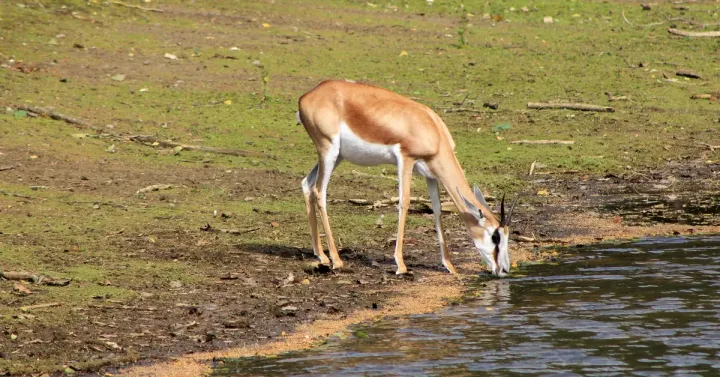
The springbok (Antidorcas marsupialis) is a medium-sized antelope of the Bovidae family, native to the arid regions of southwestern Africa.
This species is characterized by a unique dorsal skin pocket that opens during jumps to reveal a bright white crest of hair, which helps in identifying the animal.
In agronomy, springboks are considered problematic herbivores when they encroach upon cultivated lands in large herds.
They are highly adapted to harsh environments and can quickly capitalize on irrigation-fed crops during periods of severe drought.
Their agility and high-speed movement make them difficult to manage without specialized exclusion techniques in farming areas.
What it damages
Springboks cause significant agricultural damage by grazing on cereal crops such as wheat, barley, and maize, often destroying them at the seedling stage.
Large herds of springbok are capable of trampling entire fields, leading to soil compaction and the destruction of the crop structure.
Beyond feeding on green matter, they may consume the leaves and stems of various vegetables, significantly reducing potential market yields.
Mechanical damage caused by their hooves and teeth creates entry points for fungal and bacterial diseases in the surviving crop.
Economic losses arise not only from the direct consumption of plants but also from the necessity of replanting fields affected by herd incursions.
When it appears
The risk of springbok damage peaks during the dry season, when natural forage is scarce and animals move towards greener pastures.
Crop damage is most severe when agricultural growing cycles coincide with periods of water and nutrient scarcity in the surrounding landscape.
These animals are primarily active during the early morning and late evening, making these times critical for monitoring.
Regional climate variability plays a major role; in years of extreme drought, the frequency of crop incursions by springbok herds increases dramatically.
Management planning should prioritize the protection of crops during the vegetative stages when the plants are most vulnerable to foraging.
Signs of infestation
Signs of infestation include distinctive hoof tracks found around the perimeter of agricultural fields and throughout the cultivated areas.
Damaged plants exhibit clean, precise cuts on their leaves and stems, resulting from the antelope’s specialized dental structure.
- Patches of flattened, trampled soil within the crop area.
- Presence of droppings throughout the fields or near boundaries.
- Broken stalks and stunted plant growth at the field edges.
- Visible thinning of the crop stand where foraging has occurred.
Regular visual inspections of the field perimeter provide early evidence of herd activity before significant losses are sustained.
Control measures
The most effective method for crop protection is the installation of high-tensile wire fencing designed to prevent large mammals from entering.
Electric fencing, commonly known as an electric shepherd, provides a robust barrier against springbok intrusions into high-value fields.
Visual and acoustic deterrents, such as motion-activated sound emitters, can be used to temporarily discourage herds from entering crop zones.
Maintaining clear buffer strips around fields can reduce the proximity of natural cover, making the area less attractive to springboks.
Cooperative management with wildlife authorities and neighboring farms helps in monitoring herd movements and implementing integrated pest management strategies.
Taxonomy
- Latin name
- Antidorcas
- Family
- Bovidae
- EPPO code
- ATDCSP
Discussion
No discussions yet — be the first.