
Tmolus echion
Tmolus echion
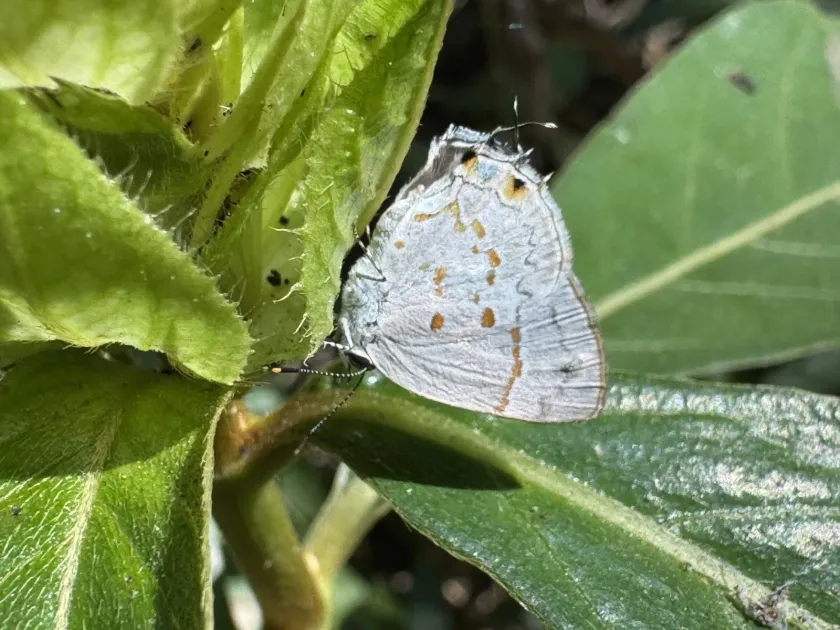
Description
How to identify
Tmolus echion is a species of butterfly in the family Lycaenidae. Adult butterflies have a wingspan of approximately 25–30 mm, with the upper side of the wings displaying a dark brown color often accompanied by a distinct bluish sheen.
The larvae (caterpillars) are characterized by a flattened body shape and a green or yellowish-green coloration, which provides excellent camouflage against host plants. Their bodies are covered in fine, short hairs.
The life cycle encompasses egg, larva, pupa, and imago stages. Females typically lay eggs singly, often targeting flower buds or young developing fruits, ensuring larvae have immediate access to food.
Pupae usually attach themselves to the underside of leaves or stems using a silk girdle. They exhibit cryptic coloration, ranging from light brown to deep green depending on their immediate environment.
This species is most active in regions with warm and humid climates, where environmental conditions support the development of multiple generations within a single growing season.
What it damages
The larval stage is responsible for the economic damage caused by Tmolus echion. These caterpillars are specialized phytophages that prefer feeding on the reproductive organs of agricultural plants.
Host plants primarily include members of the Solanaceae family. They pose a significant threat to commercial crops such as tomatoes, eggplants, and peppers by damaging developing ovaries and fruits.
Caterpillars bore into the fruit, which often facilitates secondary infections by fungal or bacterial pathogens, leading to rapid rot and decay of the harvested product.
Damage results in reduced commercial quality and substantial yield losses. Infested fruits lose their shape, stop growing, and become unsuitable for market or long-term storage.
In the absence of preferred host plants, larvae may occasionally feed on certain wild Solanaceous species, which allows the population to persist between cropping cycles.
Signs of infestation
One of the earliest signs of infestation is the appearance of small entry holes on the surface of young fruits, frequently surrounded by frass (caterpillar excrement).
Premature fruit drop is a common symptom; fruits may appear healthy externally but have internal tissue damage near the peduncle attachment point.
Closer inspection of damaged fruits reveals dark, sunken patches on the skin, underneath which are tunnels carved out by the feeding larvae.
During periods of high population density, leaves may show signs of grazing, although the primary agricultural indicator remains the direct injury to the fruit.
Pheromone traps are used for effective monitoring, allowing farmers to detect the onset of adult flights and implement control measures before peak oviposition occurs.
Control measures
Cultural control measures include deep autumn plowing of the soil, which helps destroy pupae that hibernate in the topsoil or within plant debris left on the field.
Maintaining field sanitation is critical; removing wild Solanaceous weeds around field borders helps eliminate natural reservoirs that support pest population growth.
Biological control involves the application of Bacillus thuringiensis-based products. These are highly effective against early-instar larvae while remaining safe for non-target beneficial insects.
In cases of severe infestation, chemical insecticides such as pyrethroids may be used, provided that application protocols and pre-harvest intervals are strictly observed to ensure safety.
Consistent field scouting is recommended, particularly during the flowering and fruit-set stages, as these are the periods when crops are most vulnerable to larval attack.
Taxonomy
- Latin name
- Tmolus echion
- Order
- Lepidoptera (butterflies)
- Family
- Lycaenidae
- EPPO code
- THECEC
Discussion
No discussions yet — be the first.