

Pest · Hemiptera (bugs, aphids, leafhoppers) · affects Apple, Potato, Winter wheat
Especially harmful
Green apple aphid
Aphis pomi
Description
How to identify
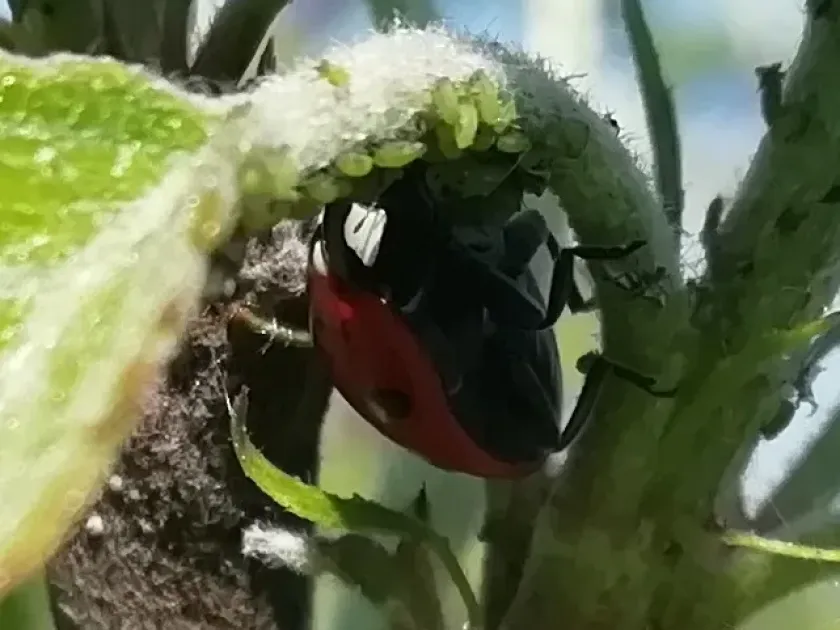
The green apple aphid (Aphis pomi) belongs to the order Hemiptera and the family Aphididae. It is a small insect, approximately 1.5–2 mm in length, characterized by a bright green body and dark antennae.
They overwinter as shiny black eggs, which are deposited by females in the crevices of bark on young shoots or at the base of buds to ensure protection from winter frosts.
In the spring, fundatrix larvae emerge from the eggs and begin feeding on the sap of young plant tissues, establishing the first colonies of the season.
Several generations develop throughout the growing season, including both wingless and winged individuals, allowing the pest to colonize new areas quickly.
These insects are highly gregarious, typically clustering in large colonies on the underside of leaves and along the succulent tips of growing apple shoots.
What it damages
While primarily affecting the apple tree (Malus domestica), this aphid species is highly adaptable and can be found on a variety of other agricultural crops.
Known host plants include onion, fodder beet, cucumber, common hop, plum, tomato, and potato, where they cause significant stress by feeding on plant sap.
The extraction of phloem sap leads to a severe loss of nutrients and water, which stunts the overall growth and development of the host plant.
Damage to apical shoots is particularly severe, causing leaves to curl and shoots to twist, which ultimately weakens the tree and reduces the harvest yield.
Furthermore, the aphid acts as a vector for various viral and fungal diseases, exacerbating the damage and complicating plant health management.
When it appears
The life cycle commences in early spring as temperatures rise, triggering the emergence of larvae from the overwintered eggs on the twigs.
The population peaks during the months of May and June, coinciding with the rapid growth of apple tree shoots and the development of young fruit.
During the hot summer months, the reproduction rate increases, resulting in multiple generations that can cover extensive areas of the orchard.
As autumn approaches and photoperiods decrease, sexual individuals are produced to mate and deposit the eggs that will survive the winter dormancy.
The biological cycle concludes with the onset of winter, as the aphids die off, leaving only the dormant eggs to survive until the following growing season.
Signs of infestation
The most prominent sign of infestation is the tight curling and wrinkling of young leaves at the tips of shoots, providing shelter for the aphid colonies.
Leaves and stems become coated with honeydew, a sticky substance excreted by the aphids, which serves as a substrate for secondary fungal infections.
The presence of ants patrolling the tree is a classic indicator, as they form a symbiotic relationship with the aphids to feed on their sugary secretions.
Sooty mold, a black fungal growth, often appears on the sticky honeydew, further blocking sunlight and inhibiting the photosynthesis process of the leaves.
- tightly curled young leaves at shoot tips
- sticky honeydew residue on foliage
- large numbers of ants on branches
- black sooty mold covering leaves and stems
- stunted growth and shoot deformation
Control measures
Effective management begins with dormant season sprays using horticultural oils to destroy overwintered eggs before they hatch in the spring.
During the growing season, the application of systemic or contact insecticides is recommended to manage outbreaks and reduce pest density significantly.
Cultural practices, such as the pruning of water sprouts and root suckers, help remove the primary sites where aphid colonies establish their presence.
Promoting the population of natural predators, such as ladybugs, lacewings, and hoverflies, is a sustainable way to keep aphid numbers under control.
Careful monitoring and timing of applications are essential to protect beneficial insects while ensuring the health and productivity of the apple trees.
In brief
10
Damages crops
Content graph
Damages crops · 10
Content graph
Connections · Green apple aphid
Most often together:
Marketplace
Products · 11


Alfazol
Nanjing No.1 Pesticide Factory of Red Sun Group Co., Ltd.
Insecticides
0
0
·
2.6K
1 offer
11.59 €per 1 l
Buy


Komandor
«Юнісіті Ентерпрайсіс Л.П.», Единбург, Великобританія
Insecticides
0
0
·
66
No offers
—
Details

Biology
Taxonomy
- Latin name
- Aphis pomi
- Order
- Hemiptera (bugs, aphids, leafhoppers)
- Family
- Aphididae
- EPPO code
- APHIPO
Community
Discussion
No discussions yet — be the first.