
Thistle lace bug
Tingis cardui
Description
How to identify
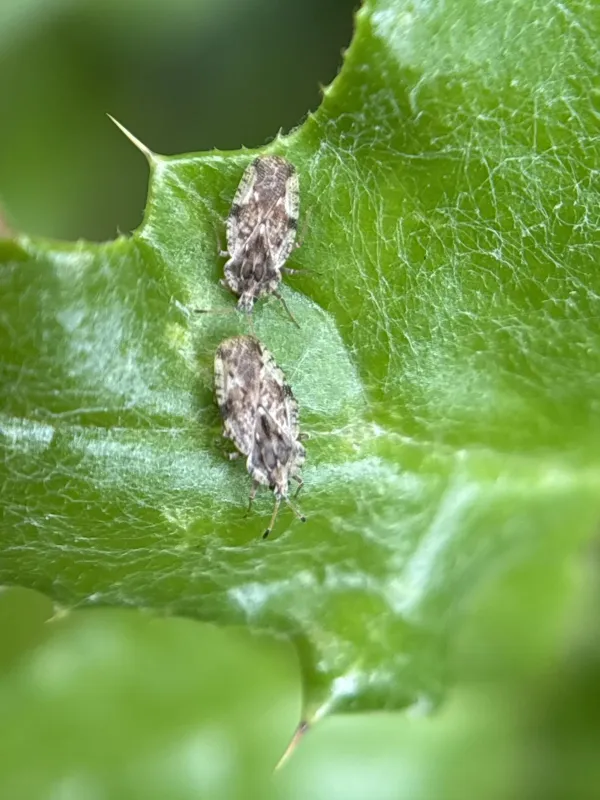
The thistle lace bug (lat. Tingis cardui) is a small insect belonging to the order Hemiptera and the family Tingidae. Adults typically measure about 3–4 mm in length.
They are named for their distinctive, lace-like appearance. The pronotum and the wings have a delicate, semi-transparent reticulated pattern that looks like fine netting or lace.
The body is generally flattened and broad, with coloration ranging from pale brown to grey, providing excellent camouflage against the foliage of their host plants.
Nymphs, or immature stages, are darker and often covered with small spines. They lack functional wings but share similar feeding habits with the adults throughout their development.
The species overwinters as an adult in sheltered locations, such as leaf litter, dried vegetation, or cracks in the bark of nearby trees, emerging in the spring to begin feeding.
What it damages
The primary hosts of this pest are plants in the Asteraceae family, most notably thistles (Carduus), creeping thistles (Cirsium), and burdock species.
While often considered pests of weeds, these bugs can sporadically move onto cultivated crops within the same botanical family, including sunflowers and various garden flowers.
Both adults and nymphs feed by piercing plant tissues with their specialized mouthparts and extracting sap. They typically colonize the undersides of leaves, which allows them to remain hidden while feeding.
Their persistent sap-sucking activity disrupts the photosynthetic capacity of the plant. This leads to weakened growth, stunted development, and reduced overall plant vitality.
In cases of heavy infestations, the damage can be significant enough to cause premature leaf drop, making the plants more susceptible to environmental stress and other diseases.
Signs of infestation
The most common sign of an infestation is the appearance of tiny, whitish stippling or chlorotic spots on the upper surface of the leaves, resulting from the bugs feeding below.
As the infestation progresses, these individual spots coalesce, causing the leaf to lose its green color and turn pale, yellow, or even necrotic at the margins.
Inspecting the underside of the leaf usually reveals the presence of adult lace bugs, clusters of nymphs, and small dark spots of excrement left behind on the surface.
Severely attacked plants may show signs of wilting, leaf curling, and poor development of new shoots, which detracts from the plant's health and aesthetic appeal.
While lace bugs do not produce large amounts of honeydew like aphids, the overall deterioration of the leaf surface creates conditions that may attract opportunistic fungal pathogens.
Control measures
Cultural control is highly effective; removing host weeds such as thistles from the vicinity of your garden reduces the habitat available for the bugs to overwinter and reproduce.
Monitoring is crucial. Regularly checking the underside of leaves for early signs of stippling allows for prompt action before the population reaches an damaging level.
If chemical intervention is necessary, apply insecticides targeting the underside of the leaves to ensure direct contact with the insects, as they are rarely found on the top of the foliage.
Systemic insecticides are generally the most effective against lace bugs because they affect the insects directly through the sap that they consume.
Encouraging natural predators such as lacewings, lady beetles, and spiders in the garden can help maintain low population levels of lace bugs without the need for intensive chemical use.
Taxonomy
- Latin name
- Tingis cardui
- Order
- Hemiptera (bugs, aphids, leafhoppers)
- Family
- Tingidae
- EPPO code
- TINGCA
Discussion
No discussions yet — be the first.