
Thistle lace bug
Tingis ampliata
Description
How to identify
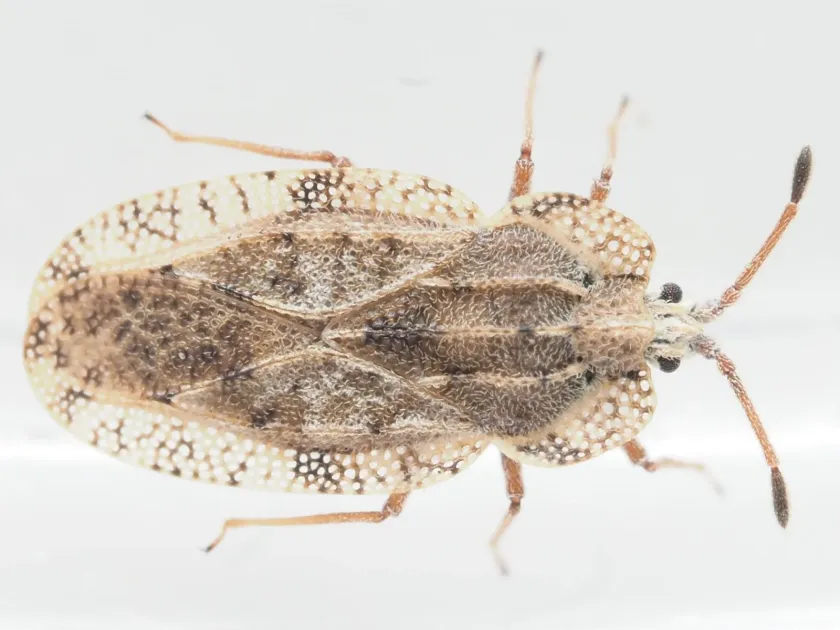
The thistle lace bug (Tingis ampliata) is a small insect belonging to the Hemiptera order and the Tingidae family. Typically, these insects measure between 3 to 4 millimeters in length.
The most distinctive feature of this species is the delicate, lace-like appearance of its pronotum and hemelytra. This unique structure provides effective camouflage against various plant surfaces, making the insects difficult to spot in dense foliage.
The insect possesses a piercing-sucking mouthpart, specialized for feeding on plant fluids. Its antennae are divided into four segments, a crucial morphological feature for field identification by entomologists and agronomists.
The development cycle is characterized by incomplete metamorphosis. Nymphs resemble miniature versions of the adults, although they lack functional wings and are often adorned with small spines to deter potential predators.
In the field, these bugs are primarily associated with host plants in the Asteraceae family. They are most commonly found in habitats where thistles and related weeds are abundant, from where they may invade nearby crops.
What it damages
The primary hosts for Tingis ampliata are plants within the Asteraceae family. The pest is frequently documented on thistles (Cirsium spp.), creeping thistles, and various ornamental species belonging to the same botanical group.
In agricultural settings, these bugs can spill over from weeds onto cultivated crops if the primary host plants are removed or insufficient. Both adults and nymphs contribute to the feeding damage.
Feeding occurs predominantly on the abaxial (lower) surface of the leaves. By extracting cell contents, the insects disrupt the plant's photosynthetic capacity and physiological balance, leading to localized tissue necrosis.
High population densities can cause significant stress to the host plants, resulting in stunted growth and diminished vigor. While total crop loss is rare, the cumulative effect of the damage can reduce the overall yield and plant health.
Economic damage is most notable in nursery settings and specialized seed production fields, where the aesthetic quality and plant vitality are paramount for commercial success.
When it appears
Adults overwinter in a state of diapause, seeking shelter in plant debris, leaf litter, deep crevices in the soil, or at the base of dense perennial weeds that provide insulation against winter temperatures.
As spring temperatures stabilize, the bugs emerge from their overwintering sites to feed on emerging shoots and foliage. This period of early-season feeding is critical for population establishment.
Egg-laying takes place over an extended timeframe, with females inserting eggs directly into the leaf tissue, usually along the veins, which offers protection from environmental stressors and some predators.
The thistle lace bug may undergo one or two generations per season, depending largely on the prevailing climate and the duration of the growing season in the specific geographic region.
Peak population levels and maximum feeding damage typically occur during the mid-to-late summer months, coinciding with the maturation of the nymphs and their dispersal across the field.
Signs of infestation
The primary indicator of an infestation is the appearance of small, chlorotic spots on the leaf surface, often referred to as "stippling." This is a direct consequence of cell fluid extraction at the feeding sites.
Careful inspection of the leaf undersides usually reveals the presence of both the bugs and their dark, spot-like excrement. Cast-off nymphal skins (exuviae) are also common indicators of an active colony.
- Widespread yellowing (chlorosis) of leaf areas.
- Premature senescence and drying of damaged foliage.
- Loss of turgor pressure in heavily infested plants during high heat.
- Distortion of young, apical growth in severe cases.
The combination of these visual symptoms and the presence of small, lace-winged insects serves as a reliable confirmation of a Tingis ampliata infestation.
Control measures
Cultural management serves as the foundation for control. Effective weed management, particularly the removal of thistle and other Asteraceae weeds in and around fields, is the most successful preventative strategy.
Deep autumn plowing and the destruction of post-harvest crop residues are essential practices that eliminate overwintering sites, significantly reducing the survival rate of the adult population for the following year.
In instances where population thresholds are exceeded, the strategic application of registered contact insecticides may be necessary to suppress the infestation and prevent further economic loss.
Encouraging the presence of natural enemies is highly beneficial. Predators such as pirate bugs, lacewings, and lady beetles actively consume lace bug nymphs and eggs, providing natural biological suppression.
Regular field scouting and monitoring with yellow sticky traps allow for early detection of migratory patterns, enabling targeted control interventions before the pest population reaches a critical level.
Taxonomy
- Latin name
- Tingis ampliata
- Order
- Hemiptera (bugs, aphids, leafhoppers)
- Family
- Tingidae
- EPPO code
- TINGAM
Discussion
No discussions yet — be the first.