
Timocratica albella
Timocratica albella
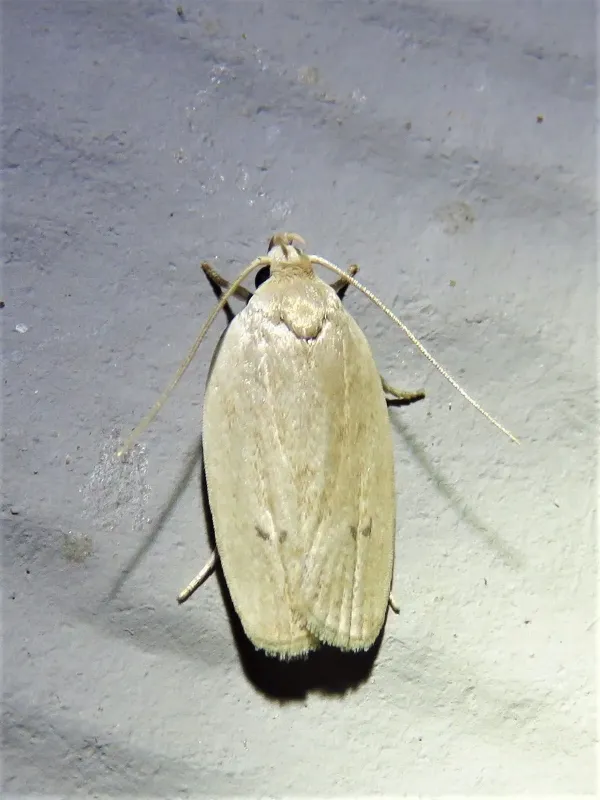
Description
How to identify
Timocratica albella is a species of moth belonging to the family Oecophoridae. It is recognized as a potential pest of various tree species in its native range.
Adult moths have a wingspan of approximately 25–30 mm, with pale white forewings that often feature small dark spots, providing excellent camouflage against tree bark.
The larvae, or caterpillars, possess a light-colored body with a darkened head capsule, which is a common diagnostic feature for this family of moths.
Taxonomically, it is classified within the order Lepidoptera, and accurate identification often requires expert examination of the moth's morphological traits.
Being nocturnal insects, adults are primarily active at night, which often makes them difficult to observe during standard daylight agricultural surveys.
What it damages
This pest is primarily a xylophagous insect, meaning its larvae feed on the wood and cambium layers of various broad-leaved trees.
By creating galleries beneath the bark, the larvae disrupt the vascular system of the tree, which can lead to the wilting and eventual death of branches.
Heavy infestations can significantly weaken a tree's structural integrity, making it more susceptible to secondary attacks by fungi or other wood-boring insects.
Young trees are particularly at risk, as larval feeding can effectively girdle the stem, leading to rapid decline or death of the sapling.
Economic damage is observed in both forest stands and ornamental plantings, where the loss of foliage and branch dieback reduces the aesthetic and commercial value.
When it appears
The life cycle of Timocratica albella is governed by environmental cues, with activity peaking during the warmer months of the spring and summer.
Adult moths typically emerge in late spring, coinciding with the onset of the active growing season for host plants, and begin mating soon after emergence.
Eggs are deposited on the bark, and upon hatching, larvae immediately seek shelter, boring into the tree tissue to establish their feeding galleries.
The larval stage is the longest phase of the life cycle, lasting through the summer and into autumn as the insects continue to feed and grow.
Winter is typically spent in the larval stage, with the insects remaining within their protective galleries under the bark, dormant until temperatures rise again.
Signs of infestation
The most reliable sign of an infestation is the presence of small entry holes in the tree bark, often accompanied by frass (larval waste) pushed out to the surface.
Larvae construct distinctive silk galleries on the surface of the bark, which serve as protective pathways while they forage for entry points.
Trees affected by the moth often show signs of general stress, such as yellowing leaves or premature leaf drop, resulting from disrupted nutrient transport.
In stone fruit trees, sap or resin exudation at the site of larval entry is a very common reaction, indicating the plant's attempt to seal the wound.
Upon closer inspection, patches of dead or lifting bark may reveal the intricate network of tunnels created by the feeding larvae underneath.
Control measures
Mechanical control, such as carefully scraping away dead bark to expose and remove larvae, can be effective on individual, high-value ornamental trees.
Chemical control using systemic or contact insecticides is best applied during the window when young larvae are emerging from eggs but before they bore deep into the bark.
Biological control methods, including the use of Bacillus thuringiensis-based products, provide an environmentally responsible way to manage populations.
Maintaining orchard hygiene, specifically by removing and destroying heavily infested branches during the dormant season, prevents the spread of the moth.
Implementing a monitoring program using light or pheromone traps helps track adult activity, allowing for the precise timing of protective interventions.
Taxonomy
- Latin name
- Timocratica albella
- Order
- Lepidoptera (butterflies)
- Family
- Oecophoridae
- EPPO code
- TIMOAL
Discussion
No discussions yet — be the first.